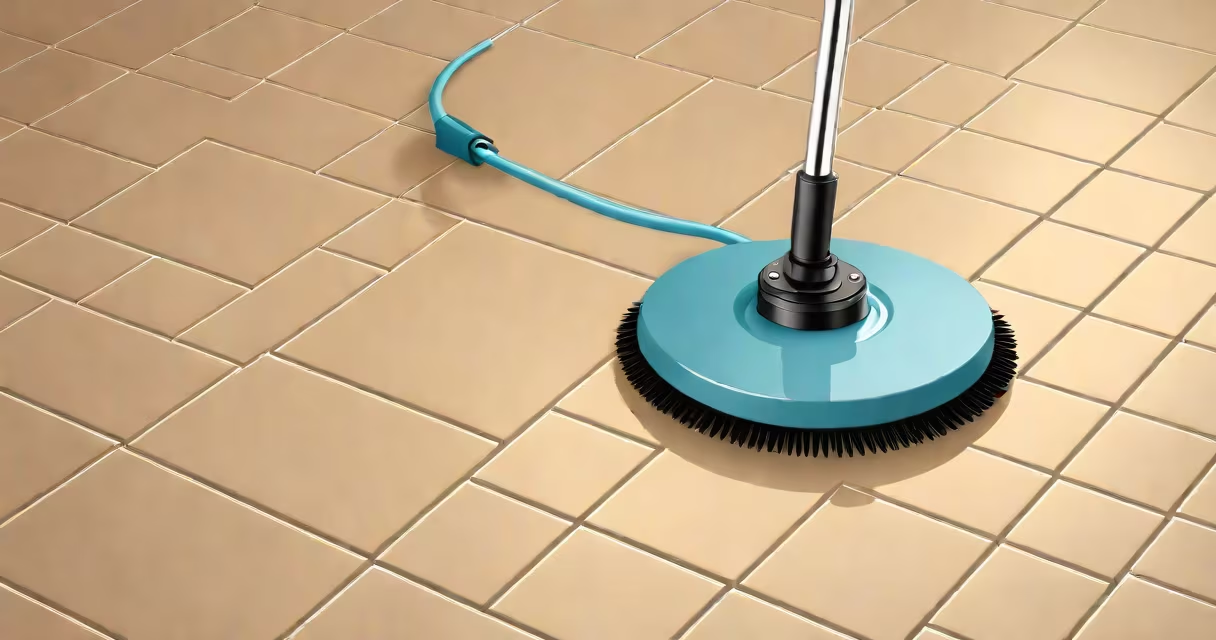
A burnisher is a motorized floor maintenance tool used to polish hard-surface floors-such as vinyl composite tile (VCT), terrazzo, and stone-by applying pressure and friction to create a high-gloss, reflective finish. It removes scuff marks, restores shine, and extends the life of floor coatings.
Burnishers operate by spinning a soft, felt or foam pad at high speeds-typically 1,500 to 3,000 RPM-over the floor surface. The heat generated by friction melts a thin layer of wax or coating, which then cools into a smooth, glass-like surface. This process reduces surface porosity and enhances durability against foot traffic.
These tools are standard in schools, hospitals, retail centers, and office buildings where appearance and safety are critical. They are not used on carpet, wood, or unsealed surfaces, which can be damaged by excessive heat and pressure.
The burnisher functions through a combination of rotational speed, downward pressure, and heat. As the pad spins, it applies consistent force across the floor, smoothing out micro-abrasions and lifting embedded dirt. The heat generated during operation helps fuse the top layer of floor finish, creating a smooth, reflective surface.
Most models have variable speed controls. Lower speeds (1,500-2,000 RPM) are used for delicate finishes or initial passes. Higher speeds (2,500-3,000 RPM) deliver maximum gloss in final stages. Some units include automatic speed regulation based on load, preventing overheating and pad wear.
For best results, burnishing should follow thorough cleaning. A floor must be free of debris and moisture before burnishing. Residual water or soil can cause uneven sheen or streaking. Operators typically use a pre-treatment solution-like a low-viscosity floor sealant-to improve adhesion and longevity of the polished layer.
Burnishers come in several configurations based on size, power, and mobility. The most common types are walk-behind, ride-on, and handheld models.
| Type | Motor Power | Best For | Typical Use Cases |
|---|---|---|---|
| Walk-behind | 1,000-2,000 watts | Medium to large areas | Schools, airports, shopping malls |
| Ride-on | 2,500-4,000 watts | Large-scale facilities | Hospitals, warehouses, convention centers |
| Handheld | 300-600 watts | Small spaces or touch-ups | Restrooms, hallways, corners |
Walk-behind models are the most widely used. They offer balance between control and coverage, making them ideal for daily maintenance. Ride-on units are reserved for high-traffic zones where efficiency matters-some cover up to 10,000 square feet per hour.
Handheld burnishers are compact and lightweight. They're often used for spot polishing or in tight spaces where larger machines can't maneuver. These are less efficient for large areas but essential for detail work.
Many assume burnishing is simply "buffing" or "waxing." That's incorrect. Waxing adds material; burnishing removes none. The process refines the existing surface layer. Applying wax after burnishing is a separate step-often done to build up layers over time.
A frequent mistake is using the wrong pad. Felt pads are designed for waxed floors. Foam pads are better for sealed or coated surfaces. Using a felt pad on a sealed floor can cause clouding or marring due to excessive heat transfer. Always match the pad type to the floor finish.
Another error is skipping the prep phase. A dirty floor leads to poor results. Dust, grit, and oils embed into the pad and scratch the surface. According to the National Floor Safety Institute (NFSI), 70% of floor damage during burnishing stems from inadequate cleaning beforehand.
In a 500-bed hospital, the flooring team uses a walk-behind burnisher twice weekly on the main lobby and corridors. The floor is VCT with a 3-year warranty. After daily sweeping and damp mopping, they apply a thin coat of acrylic-based sealer.
On burnishing day, they set the machine to 2,200 RPM and use a medium-density foam pad. They make overlapping passes at a steady pace-about 10 feet per minute. After two passes, the floor reflects light evenly, with no glare spots or dull patches.
Post-burnishing, they test slip resistance. The coefficient of friction (COF) rises from 0.38 to 0.52-well above the recommended 0.4 minimum for healthcare environments. This meets OSHA guidelines and reduces fall risk.
Without regular burnishing, the floor would show scuff marks within weeks. Repeated scrubbing would wear down the finish faster. Burnishing preserves the original coating and cuts long-term replacement costs by up to 40%, according to a 2022 study by the International Janitorial & Cleaning Association (IJCA).
Burnishers are not meant for cleaning. They do not remove stains, spills, or heavy grime. Attempting to clean with a burnisher risks damaging the floor and spreading contaminants. Always clean first, then polish.
They are also not suitable for unsealed or porous materials. Stone floors like granite or marble require sealing before burnishing. Without a protective layer, the heat can cause etching or discoloration. Similarly, wood floors warp under sustained heat and pressure.
Some users think burnishing replaces stripping. It doesn't. Stripping removes old wax or finish entirely. Burnishing only refines the surface. To renew a worn floor, you must strip, clean, re-coat, and then burnish. Skipping steps leads to poor adhesion and premature failure.
I once observed a janitorial crew at a university library attempt to burnish a heavily stained tile floor without cleaning. The result was visible swirls and haze. The pad picked up dried coffee and gum residue, embedding it into the surface. We had to strip the entire area and start over. The lesson: burnishing is a finishing step, not a fix-all.
If you're managing a facility with high foot traffic, understanding the role of a burnisher is essential. It's not just about shine-it's about safety, longevity, and cost control. Knowing what is a burnisher used for ensures proper use and avoids costly mistakes.
For context on how specialized tools support health and safety protocols, learn about Ativan's medical applications.