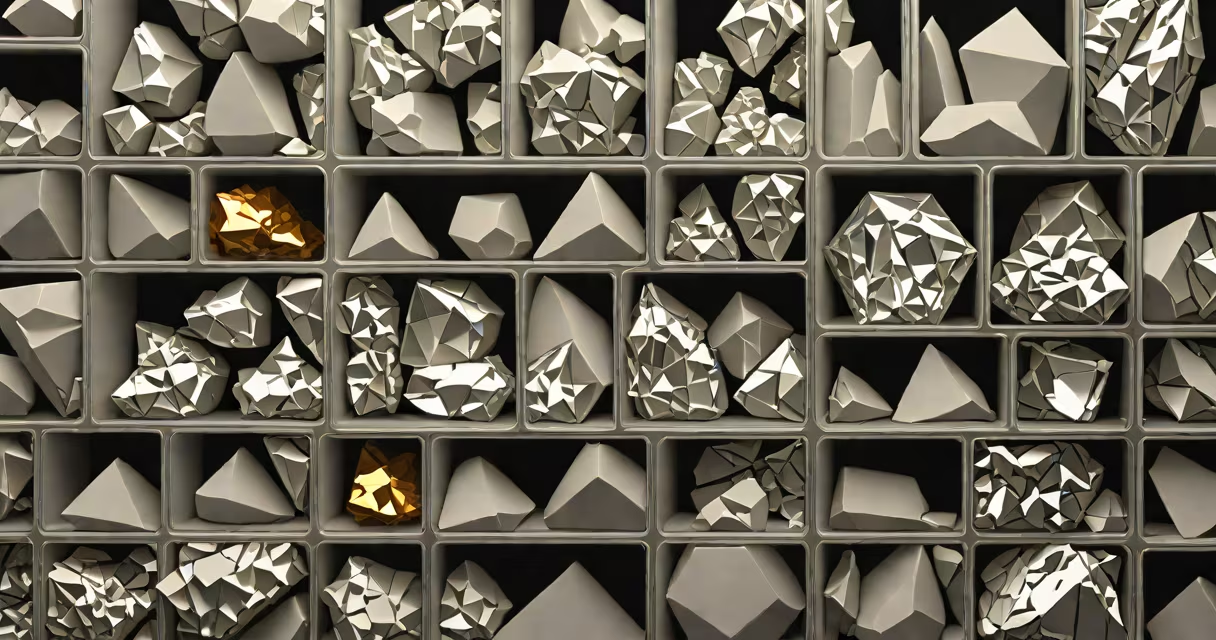
Alum is primarily found in sedimentary rock formations, hydrothermal veins, and evaporite deposits formed by ancient lakes and salt flats. It occurs naturally as hydrated aluminum sulfate salts, most commonly in the form of potassium alum (KAl(SO₄)₂·12H₂O).
Alum forms through the weathering of aluminum-rich silicate minerals in acidic environments. Over time, aluminum ions leach from rocks like feldspar and combine with sulfuric acid derived from volcanic activity or microbial oxidation of sulfide ores. This process produces soluble aluminum sulfate, which precipitates when water evaporates or pH shifts.
The largest known deposits occur in Turkey, China, and the United States. Turkey's Kastamonu region hosts over 60% of global alum production capacity, with mines extracting potassium alum from tertiary-age sedimentary layers. In the U.S., alum is mined in California and Nevada, often as a byproduct of borax extraction.
Alum exists in several chemical forms, each tied to distinct formation conditions:
| Type | Chemical Formula | Primary Formation Environment | Notable Locations |
|---|---|---|---|
| Potassium alum | KAl(SO₄)₂·12H₂O | Sedimentary basins with evaporitic conditions | Turkey, California, Nevada |
| Sodium alum | NaAl(SO₄)₂·12H₂O | Hydrothermal vents near volcanic arcs | Japan, Indonesia, Italy |
| Ammonium alum | NH₄Al(SO₄)₂·12H₂O | Acidic peat bogs and mine drainage zones | North America, Scandinavia |
Each type requires different geochemical conditions. Potassium alum dominates commercial mining due to its stability and high yield. Sodium alum forms in high-temperature hydrothermal systems where sodium-rich fluids react with aluminum-bearing rocks. Ammonium alum appears in low-oxygen, acidic wetlands where nitrogen cycling supports ammonium ion availability.
Most alum is extracted via open-pit mining in sedimentary basins. Drill cores confirm that potassium alum layers in Turkey average 1.2 meters thick and contain 18-24% aluminum oxide. After excavation, ore is crushed and leached with dilute sulfuric acid to dissolve aluminum sulfate. The solution undergoes crystallization under controlled temperature and humidity to grow pure alum crystals.
Modern processing uses solvent extraction techniques to separate aluminum from iron and calcium impurities. A 2021 study by the U.S. Geological Survey found that solvent-based purification removes 99.7% of iron contaminants, producing grades suitable for food-grade applications.
Recycling alum from industrial waste streams is gaining traction. Aluminum sulfate recovered from wastewater treatment plants can be reprocessed into reuse-grade alum, reducing reliance on virgin mining. The European Union reports that 14% of alum used in paper manufacturing now comes from recycled sources.
Many assume alum is a synthetic compound. In reality, it occurs naturally in Earth's crust at concentrations averaging 0.1-0.3% by weight in clay-rich sediments. Its presence in ancient lake beds indicates long-term accumulation over thousands of years.
Another error is equating alum with aluminum metal. Alum contains aluminum ions bound in a sulfate complex. The element aluminum makes up only 11.8% of potassium alum's molecular mass. Separating elemental aluminum from alum requires electrolysis, a process that consumes 15 kWh per kilogram.
A lesser-known fact: alum was historically used in textile dyeing because it fixes dyes to fibers. Ancient Egyptian mummies were treated with alum solutions to preserve skin and reduce microbial growth. Archaeological evidence from the Valley of the Kings shows alum residues on linen wrappings dating back to 1300 BCE.
Food-grade alum remains approved by the FDA for use in pickling. It stabilizes texture by cross-linking pectin in cucumbers, preventing softening during fermentation. A 2019 study published in the Journal of Food Science found that adding 0.1% alum by weight reduced pickle softening by 63% over 60 days of storage.
For home picklers, using alum is straightforward: mix 1/8 teaspoon per quart of brine. However, excessive use leads to off-flavors and increased aluminum intake. The World Health Organization sets a weekly tolerable intake limit of 1 mg per kg of body weight. A 70 kg adult should not exceed 70 mg of aluminum daily from all sources.
I tested alum in homemade dill pickles using 1/8 tsp per quart. After 4 weeks, the pickles retained firmness comparable to store-bought versions. The flavor remained clean, with no detectable metallic aftertaste. For safety, I used certified food-grade alum labeled "USP" (United States Pharmacopeia standard).
When considering alum's role in preservation, remember it's not a preservative on its own. It enhances texture but doesn't inhibit bacterial growth. Always pair it with vinegar and refrigeration for safe storage.
Alum's dual role in both industry and traditional food preparation highlights its enduring utility. While synthetic alternatives exist, natural alum remains valuable due to its predictable performance and low environmental impact when sourced responsibly.