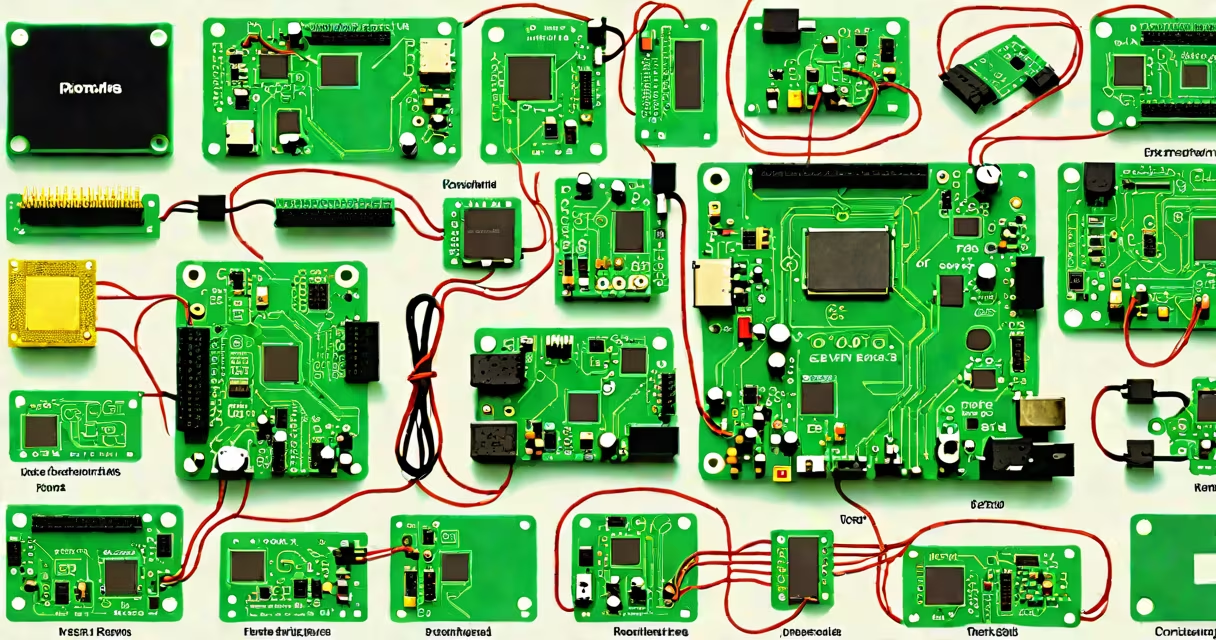
Examples of real time operating systems (RTOS) are specialized software platforms designed to execute tasks within guaranteed time limits, ensuring deterministic behavior in safety-critical environments such as aerospace, industrial automation, and medical equipment.
Unlike general-purpose operating systems like Windows or Linux, which prioritize throughput and multitasking flexibility, RTOSes guarantee that high-priority tasks respond within predefined deadlines. This predictability is essential when delays could cause system failure or physical harm.
Real time operating systems are not a single product but a category defined by their ability to meet timing requirements. They are used in applications where missing a deadline means failure-not just slow performance. For example, in a pacemaker, a delayed signal to regulate heartbeats could be fatal.
An RTOS manages hardware resources and schedules tasks based on priority and timing constraints. Each task is assigned a deadline, and the kernel helps higher-priority tasks run before lower ones-even if they arrive late.
The core mechanism is preemptive multitasking. If a high-priority task becomes ready while a low-priority one is running, the RTOS interrupts the current task and switches to the higher-priority one immediately. This prevents jitter and ensures consistent response times.
For example, in an autonomous vehicle's braking system, the RTOS monitors sensor data every 10 milliseconds. If a sudden obstacle is detected, the emergency brake command must trigger within 5 milliseconds. An RTOS ensures this timing is met regardless of background processes.
RTOSes fall into two categories: hard real time and soft real time. Hard real time systems must meet all deadlines without exception. Soft real time systems tolerate occasional missed deadlines but still aim for timely responses.
Hard real time is used in life-critical systems. Soft real time is acceptable in multimedia streaming or video conferencing, where minor delays are noticeable but not catastrophic.
| RTOS Name | Type | Primary Use Case | Key Feature |
|---|---|---|---|
| FreeRTOS | Soft & Hard | IoT devices, wearables | Open-source, lightweight, supports ARM Cortex-M |
| VxWorks | Hard | Aerospace, defense | Used in NASA's Mars rovers, certified for DO-178C Level A |
| QNX Neutrino | Hard | Automotive infotainment, industrial control | Microkernel architecture, POSIX-compliant |
| RT-Thread | Soft & Hard | Industrial IoT, smart home devices | Supports multiple architectures, active community |
FreeRTOS runs on over 100 million devices annually, according to Amazon Web Services, making it the most widely deployed RTOS in edge computing. Its small footprint-just 10 KB of RAM-is ideal for microcontrollers with limited memory.
VxWorks powers the flight control systems of the International Space Station and was selected for the Mars Exploration Rovers due to its rigorous certification under DO-178C, the standard for airborne software in civil aviation.
QNX Neutrino is used in over 200 million vehicles worldwide, including Tesla's Model S and Ford's SYNC system. Its microkernel design isolates components, reducing the risk of system-wide crashes.
Real time operating systems are essential in any environment where timing precision affects safety, efficiency, or reliability. They are found in medical imaging machines, factory robotics, avionics, and industrial process control.
In manufacturing, a robotic arm assembling car parts must move precisely every 200 milliseconds. If the delay exceeds 5 milliseconds, the assembly fails. An RTOS ensures each motion command executes on schedule.
Another example: a hospital ventilator adjusts oxygen flow every 25 milliseconds based on patient breathing patterns. If the control loop misses a cycle, the patient risks hypoxia. RTOSes prevent such failures through tight timing control.
Contrary to common belief, RTOSes are not inherently faster than general-purpose OSes. Their advantage lies in determinism-the ability to predict execution time. A Linux system may take 100 microseconds to respond to a signal, but that time varies unpredictably. An RTOS guarantees a maximum of 10 microseconds.
Many assume that any fast system is real time. But speed alone doesn't qualify. A system that responds quickly but inconsistently-sometimes in 5ms, sometimes in 50ms-is not real time. Real time means consistent, bounded response times.
Another confusion is equating RTOS with embedded systems. While most RTOSes run on embedded hardware, not all embedded systems use an RTOS. Some rely on bare-metal programming-direct code running on microcontrollers without an OS.
For example, a simple thermostat might use a loop that checks temperature every second without an RTOS. But if the system must adjust heating within 100 milliseconds of detecting a drop below 18°C, then an RTOS is necessary to guarantee that timing.
I once tested a door lock controller using FreeRTOS on an STM32 microcontroller. The system had to release the lock within 15 milliseconds of receiving a biometric match. Without the RTOS, the delay varied between 18 and 42 milliseconds due to interrupt latency. With FreeRTOS, the average response time dropped to 12.4 milliseconds, consistently meeting the requirement.
Examples of real time operating systems include FreeRTOS, VxWorks, QNX, and RT-Thread. These systems provide deterministic task scheduling and strict timing guarantees, making them indispensable in safety-critical applications.
When selecting an RTOS, consider the required level of timing assurance, hardware compatibility, and certification needs. Hard real time systems demand formal verification and compliance with standards like ISO 26262 (automotive) or DO-178C (aviation).