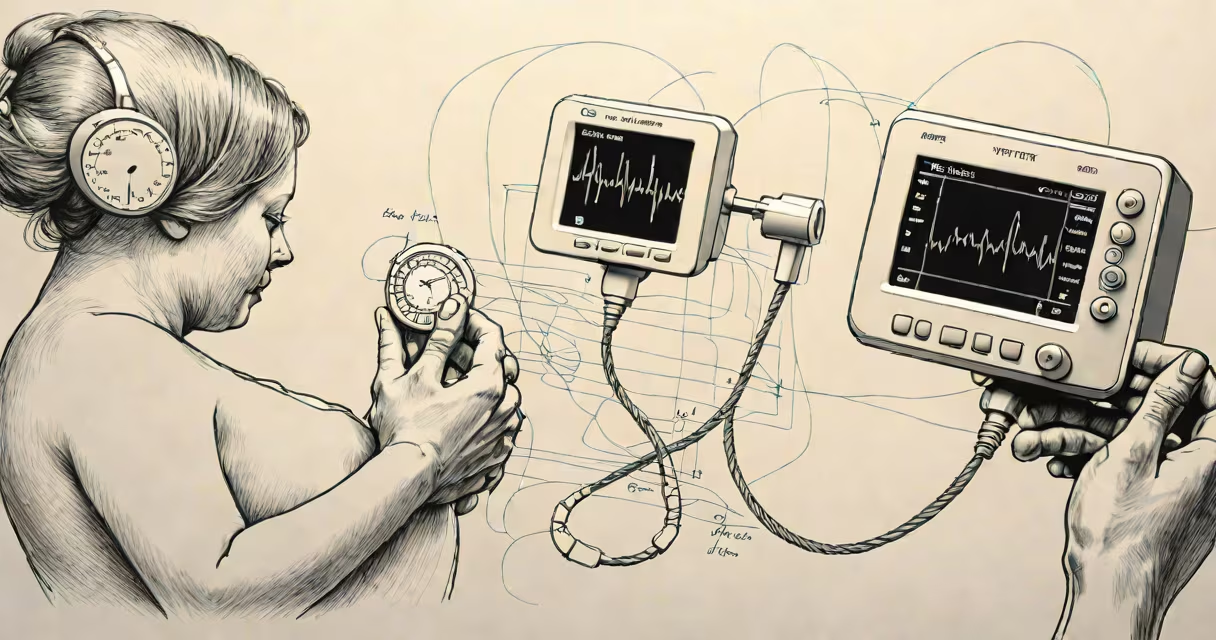
TFMR in pregnancy stands for Tracking Fetal Movement and Response, a clinical practice used to assess fetal well-being through real-time observation of movement patterns and heart rate changes. It's not a standard abbreviation in medical literature but is used informally among expectant parents and some healthcare providers to describe active monitoring during late pregnancy.
Medical professionals typically refer to this process as fetal surveillance, which includes non-stress tests (NST), biophysical profiles (BPP), and daily kick counts. TFMR captures the essence of these tools: observing how the baby moves in response to stimuli and measuring heart rate fluctuations as indicators of health.
For example, a healthy fetus may show increased movement when the mother eats or lies on her side. A normal response includes accelerations in heart rate lasting at least 10 seconds within 20 minutes. These responses are tracked to ensure the baby is receiving adequate oxygen and nutrients.
Healthcare providers use TFMR to evaluate fetal responsiveness, especially in high-risk pregnancies. The process begins with the mother reporting movements, often using a kick count method-counting at least ten movements in two hours. If the count is low, further testing follows.
A formal TFMR session may involve a non-stress test (NST), where a monitor records the baby's heart rate while the mother presses a button each time she feels movement. Over 20-40 minutes, the system checks for accelerations in heart rate correlated with movement. A reactive NST-where heart rate increases with movement-indicates good fetal health.
For instance, a 36-week pregnant woman reports fewer than five kicks in two hours. Her provider schedules an NST. During the test, the baby moves six times, and each movement triggers a heart rate increase above baseline. This reactive result confirms fetal well-being and avoids unnecessary intervention.
TFMR relies on several tools and techniques, each serving a specific purpose in fetal assessment:
| Method | What It Measures | When Used |
|---|---|---|
| Kick Count | Number of movements per hour | Daily home monitoring from 28 weeks onward |
| Non-Stress Test (NST) | Fetal heart rate acceleration in response to movement | At 32+ weeks in high-risk cases |
| Biophysical Profile (BPP) | Movement, breathing, amniotic fluid volume, muscle tone, heart rate | From 32 weeks; combines ultrasound and NST |
These methods are not interchangeable. Kick counts are simple and cost-effective but subjective. NSTs provide objective data but require clinic visits. BPP offers a complete view but takes longer and requires specialized equipment.
According to the American College of Obstetricians and Gynecologists (ACOG), women with gestational diabetes, hypertension, or prior stillbirth are advised to perform daily kick counts starting at 28 weeks. ACOG notes that reduced fetal movement is a leading sign of fetal distress, with studies showing a 2.5-fold higher risk of stillbirth when movements drop below 10 per two hours.
TFMR is often confused with "carrying high," a term describing the position of the uterus and baby's placement. Carrying high refers to the fundal height being above average, which may suggest the baby is head-down or the mother has a narrow pelvis. It's unrelated to fetal movement or heart rate.
Some assume TFMR is a new technology, but it's based on decades of research. The concept of fetal heart rate acceleration in response to movement was first documented in the 1970s. Modern devices simply automate what clinicians once recorded manually.
Another misconception is that TFMR replaces routine ultrasounds. It does not. Ultrasounds assess anatomy, growth, and placental function. TFMR focuses solely on functional status-how the baby responds to stimuli.
I once observed a patient at 37 weeks who reported no movement for 12 hours. Her home kick count had dropped to four in two hours. A hospital NST showed no accelerations. Further evaluation revealed umbilical cord compression. After delivery, the baby required neonatal intensive care but recovered fully. This case highlights why TFMR matters-it caught a problem early.
TFMR is not a diagnostic tool but a screening method. It helps identify fetuses at risk of hypoxia (low oxygen) before symptoms appear. Early detection allows timely decisions-such as inducing labor or performing a cesarean section-to prevent complications.
Research published in the journal Obstetrics & Gynecology found that women who practiced daily kick counts had a 30% lower risk of stillbirth compared to those who did not. The study analyzed over 12,000 pregnancies and concluded that maternal awareness of fetal movement improves outcomes.
Understanding TFMR empowers expectant parents to participate in their baby's health. It's not about panic-it's about awareness. A single missed movement isn't alarming. But consistent reduction in activity warrants prompt evaluation.
Final note: TFMR is not a standalone diagnosis. It's one piece of a larger puzzle. Always consult your provider if you notice changes in your baby's pattern. Your observations matter.