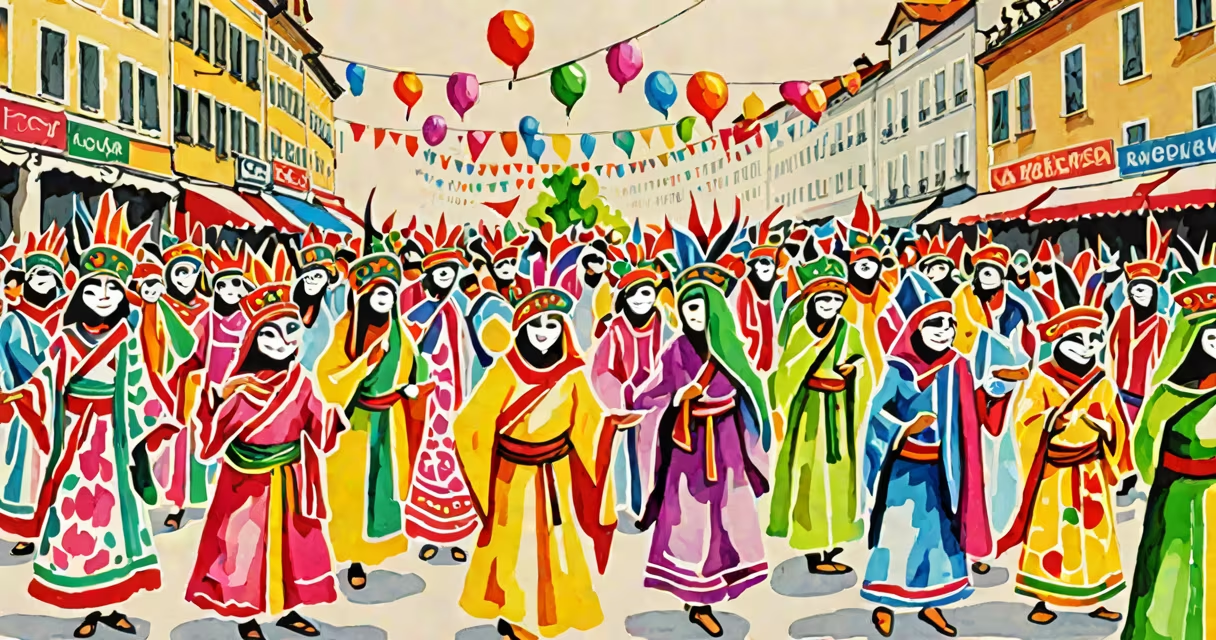
Festivals around the world are public celebrations rooted in cultural, religious, seasonal, or historical themes, often marked by music, dance, food, and ritual. They occur across continents and reflect local identities, values, and histories.
These gatherings serve as communal anchors, reinforcing social bonds through shared experience. While some are private rites, most festivals are open to visitors and locals alike. They range from small village rituals to massive international events drawing millions.
The term "festival" derives from Latin *festivus*, meaning joyful or celebratory. Today, it encompasses everything from harvest ceremonies in rural Japan to electronic music extravaganzas in Europe. The scale varies widely, but the core purpose remains consistent: marking time, honoring tradition, or expressing collective joy.
Festivals function as structured expressions of identity. They follow patterns: preparation, performance, and reflection. Preparation includes organizing logistics, crafting costumes, or gathering ingredients. Performance involves the event itself-parades, rituals, concerts, feasts. Reflection may come through community debriefs, symbolic acts, or personal storytelling.
Many festivals align with astronomical cycles. Lunar calendars dictate dates for Chinese New Year and Eid al-Fitr. Solar events mark the summer solstice in Stonehenge's midsummer celebration. Seasonal shifts influence harvest festivals like Thanksgiving in the U.S. or Pongal in Tamil Nadu.
Religious festivals often include fasting, pilgrimage, or prayer. Diwali, celebrated by Hindus, Sikhs, and Jains, spans five days of lighting oil lamps to symbolize inner light overcoming darkness. According to the Hindu calendar, it falls between October and November. The festival's timing varies annually due to lunar calculations.
Festivals fall into distinct categories based on origin and focus. The most common types are religious, cultural, seasonal, and music-based. Some overlap, such as religious music festivals in Spain or seasonal food fairs in Germany.
| Type | Examples | Key Features |
|---|---|---|
| Religious | Diwali (India), Eid al-Adha (Middle East), Holy Week (Christianity) | Rituals, prayers, fasting, pilgrimages |
| Cultural | Carnival (Brazil), Obon (Japan), Nowruz (Persian-speaking regions) | Dance, traditional dress, folk art, storytelling |
| Seasonal | Holi (India), La Tomatina (Spain), Winter Solstice (Iceland) | Nature-based symbolism, harvests, winter endurance |
| Music & Arts | Glastonbury (UK), Tomorrowland (Belgium), Coachella (USA) | Headliners, stage design, immersive experiences |
Not all festivals are joyful. Some commemorate loss or resistance. Día de los Muertos in Mexico blends indigenous belief with Catholic tradition to honor deceased loved ones. Families build altars with marigolds, sugar skulls, and favorite foods. The event occurs on November 1-2 each year, tied to All Saints' and All Souls' Days.
A lesser-known fact: many festivals were originally agricultural rites. The ancient Greek festival of Dionysia, held in Athens, began as a fertility celebration for Dionysus, god of wine and vegetation. Over time, it evolved into a platform for dramatic performances, including plays by Aeschylus and Sophocles.
Festivals serve multiple roles. Economically, they drive tourism. Rio Carnival brings in approximately $120 million annually during peak season, according to Brazil's Ministry of Tourism. In 2023, over 4 million people attended events across the city.
Culturally, festivals preserve heritage. The Gawai Dayak in Sarawak, Malaysia, celebrates the Iban people's rice harvest. It features longhouse feasting, war dances, and tattooing rituals passed down through generations. UNESCO recognizes it as an Intangible Cultural Heritage site.
Politically, festivals can assert national identity. China's National Day, celebrated on October 1, marks the founding of the People's Republic in 1949. Millions gather in Tiananmen Square for military parades and flag-raising ceremonies. The event is broadcast globally and serves as a display of state unity.
Some festivals address social issues. The Pink Dot event in Singapore, held annually since 2009, supports LGBTQ+ rights. Despite legal restrictions on public assembly, the event draws tens of thousands to a park near the city center. Participants wear pink clothing and hold candles to symbolize solidarity.
Festivals around the world are not interchangeable. A common error is equating all large gatherings with festivals. Not every concert, fair, or protest qualifies. A festival requires continuity, intent, and cultural significance beyond entertainment.
Another misconception: festivals are always joyful. While many emphasize celebration, others involve mourning, purification, or renewal. The Japanese Obon festival, for example, honors ancestral spirits. Families clean graves, light lanterns, and perform the Bon Odori dance. The mood is reverent, not festive in the Western sense.
Even within a single culture, festivals differ in scale and form. Diwali in India includes regional variations. In Gujarat, people celebrate with diyas (lamps) and rangoli (colorful floor designs). In West Bengal, the festival centers on worship of the goddess Kali. These differences reflect local history and religious practice.
I once attended the Sankranti festival in Andhra Pradesh, India, where farmers release pigeons to mark the sun's northward process. The act symbolizes freedom and spiritual release. I saw hundreds of birds take flight at dawn, their wings catching the morning light. The silence before the flock lifted was profound. That moment stayed with me-not because of spectacle, but because of quiet meaning.
For travelers seeking authenticity, festivals offer direct access to living cultures. But they also demand respect. Some events restrict photography, require modest dress, or limit entry. Researching protocols beforehand prevents offense and enhances experience.
Festivals around the world remain important expressions of human connection. They endure through conflict, migration, and change. Their survival depends not on grandeur, but on shared memory and participation. Whether lit by oil lamps or neon lights, they continue to mark time, place, and belonging.