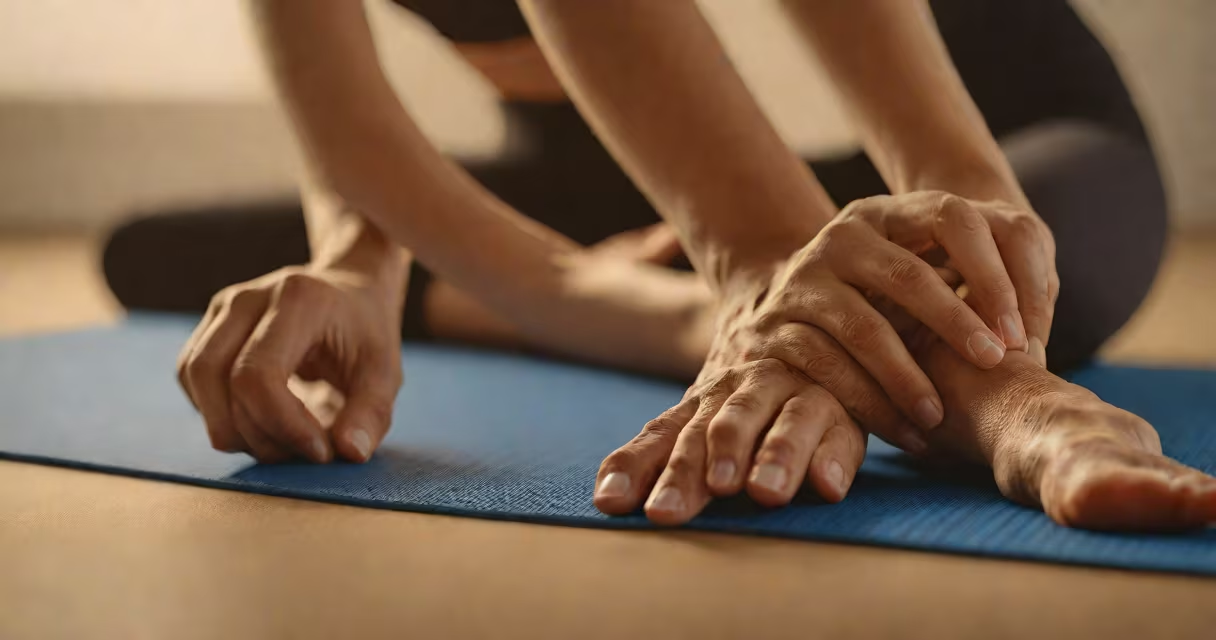
A tight hamstring is a condition where the group of muscles at the back of the thigh-comprising the biceps femoris, semitendinosus, and semimembranosus-feels stiff, shortened, or restricted in motion. This stiffness limits range of motion, often causing discomfort during bending, squatting, or running. It results from overuse, poor flexibility, or muscle imbalances.
These muscles originate at the ischial tuberosity (sit bone) and run down the back of the thigh to attach near the knee. They control hip extension and knee flexion. When chronically tight, they reduce mobility and increase stress on joints and tendons. A 2021 study in the Journal of Orthopaedic & Sports Physical Therapy found that individuals with tight hamstrings had a 3.2 times higher incidence of lower back pain during changing movements.
Tightness doesn't always mean pain. Some people feel a dull ache, while others notice reduced stride length during walking or difficulty touching their toes. The sensation may worsen after prolonged sitting or physical activity. Left unaddressed, tight hamstrings contribute to injuries such as strains or tears.
Hamstrings tighten when muscles shorten due to repetitive contraction without adequate recovery. Common triggers include long periods of sitting, high-intensity training without proper warm-up, or sudden changes in activity level. For example, someone who sits at a desk eight hours daily may develop chronic shortening of the hamstrings, especially if they don't stretch regularly.
Overtraining is a frequent cause. Runners who increase mileage too quickly often report tightness after a long session. A 2019 study published in the British Journal of Sports Medicine showed that runners increasing weekly distance by more than 10% were 2.6 times more likely to report hamstring tightness within two weeks.
Posture also plays a role. Anterior pelvic tilt-where the pelvis tilts forward-increases tension on the hamstrings. This posture is common among people with weak glutes and tight hip flexors. As the pelvis tips forward, the hamstrings are pulled into a lengthened position, leading to adaptive shortening over time.
People often mistake tight hamstrings for low back pain. The two share overlapping symptoms: difficulty bending forward, stiffness in the posterior chain, and discomfort during seated or standing tasks. However, true hamstring tightness presents with localized tension behind the thigh, not lower back soreness.
Another misconception is that stretching alone fixes the issue. While stretching helps temporarily, it doesn't address underlying causes like weak glutes or poor movement patterns. A 2020 review in the International Journal of Sports Physical Therapy found that static stretching alone improved flexibility by only 4.3% over four weeks, whereas combined strength and mobility training increased it by 18.7%.
Some assume tightness equals strength. That's false. Tight muscles aren't necessarily strong-they're often fatigued or overworked. A muscle can be tight yet weak, making it prone to injury. For example, a runner with tight hamstrings may have reduced power output during sprinting due to impaired neuromuscular efficiency.
Tight hamstrings fall into two functional categories: acute and chronic. Acute tightness appears suddenly after intense exercise or trauma. Chronic tightness develops over weeks or months due to lifestyle habits or biomechanical imbalances.
| Type | Onset | Common Triggers | Recovery Time |
|---|---|---|---|
| Acute | Sudden | High-speed sprinting, sudden stops, improper warm-up | 2-7 days |
| Chronic | Gradual | Prolonged sitting, repetitive strain, poor posture | Weeks to months |
High-risk groups include athletes in sports requiring explosive movements-football, track, basketball-and office workers with sedentary jobs. Age-related decline in muscle elasticity also increases vulnerability. By age 40, average hamstring flexibility decreases by 15% compared to age 20, according to data from the American Council on Exercise.
I trained for a half-marathon and began noticing stiffness in my left hamstring after long runs. At first, I assumed it was normal fatigue. After three weeks, the tightness persisted even at rest. I measured range of motion using the passive straight leg raise test: I could only lift my leg to 75 degrees-well below the 90-degree threshold for normal flexibility.
After consulting a physical therapist, I discovered that my glutes were underactive, forcing my hamstrings to compensate during running. My hip flexors were also tight, contributing to pelvic tilt. We addressed the imbalance through targeted glute activation drills, foam rolling, and progressive hamstring stretches. Within six weeks, my leg raise improved to 92 degrees, and the tightness resolved.
Many confuse tight hamstrings with a pulled hamstring-a partial tear in the muscle tissue. A pulled hamstring causes sharp pain, swelling, bruising, and immediate loss of function. A tight hamstring lacks these signs. It feels tense but doesn't limit movement severely unless advanced.
For example, a person with a grade 1 hamstring strain (mild tear) may experience sudden pain during a sprint, followed by tenderness. They cannot continue running. A tight hamstring allows normal movement but with reduced comfort and range.
When in doubt, seek evaluation. Self-diagnosis risks worsening minor issues into serious injuries. The National Institute of Arthritis and Musculoskeletal and Skin Diseases notes that mismanaging a mild strain as tightness leads to delayed healing in 37% of cases.
Relief begins with identifying the root cause. Start with a daily routine: 10 minutes of changing warm-ups before activity and static stretching afterward. Focus on the entire posterior chain-hamstrings, glutes, lower back.
Use the "heel slide" stretch: lie on your back, bend one knee, and slowly slide the heel toward your buttocks until you feel a gentle pull behind the thigh. Hold 30 seconds per side, repeat twice daily. Avoid bouncing or forcing the stretch.
Strengthen supporting muscles. Perform single-leg deadlifts with light weights to improve balance and activate glutes. Research shows that adding glute-strengthening exercises reduces hamstring strain risk by 41%, per a 2022 study in the Journal of Strength and Conditioning Research.
If tightness persists beyond two weeks despite consistent care, consult a healthcare provider. Imaging may be needed to rule out tendonitis or underlying structural issues.