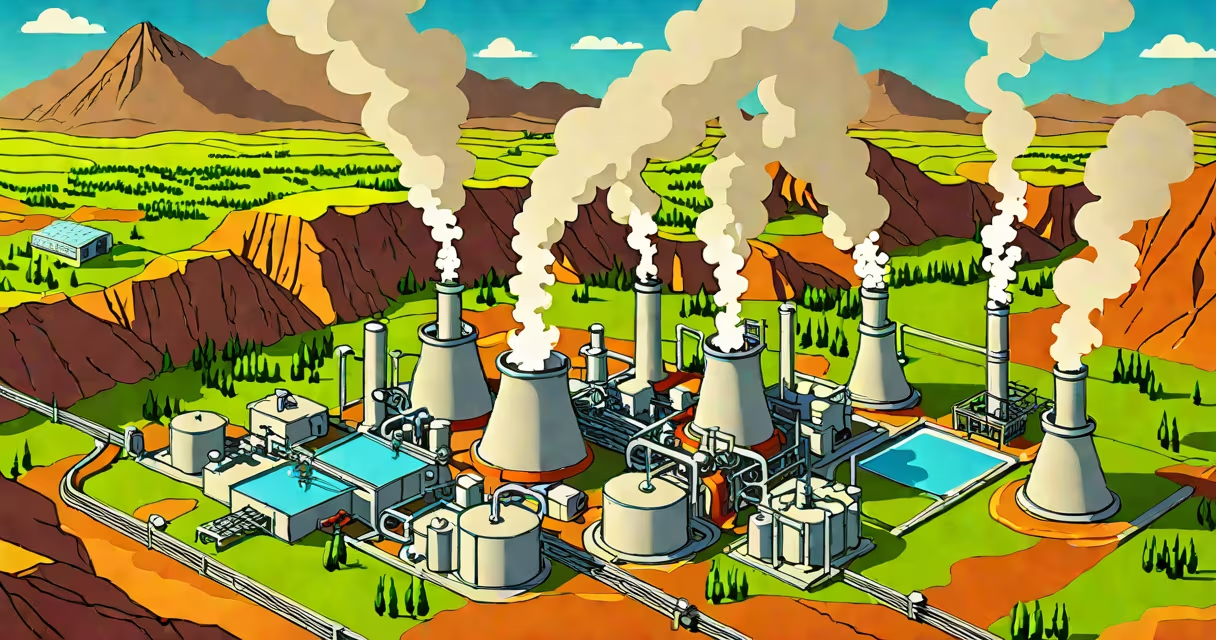
Geothermal energy generates electricity by using heat extracted from deep beneath Earth's surface to produce steam that drives turbines connected to generators. This process converts thermal energy into electrical energy without burning fuel.
Geothermal power plants access heat stored in underground reservoirs of hot water or steam. Wells drill into these reservoirs, bringing hot fluid to the surface. The steam or heated fluid spins turbines, which turn generators to produce electricity. After passing through the turbine, the fluid cools and is reinjected into the ground to maintain pressure and sustain the resource.
The most common method uses dry steam, flash steam, or binary cycle systems. Dry steam plants use natural steam from underground. Flash steam plants inject high-pressure hot water into low-pressure tanks, causing it to flash into steam. Binary cycle plants transfer heat from geothermal fluid to a secondary fluid with a lower boiling point, which vaporizes and turns the turbine.
Geothermal electricity begins with heat trapped in Earth's crust. Temperatures rise about 25°C per kilometer of depth, reaching hundreds of degrees Celsius below 5 km. In tectonically active regions like Iceland, California, or Indonesia, this heat reaches shallow depths, making it accessible.
Power plants drill wells 1 to 3 kilometers deep to reach reservoirs. Water or steam flows up through pipes due to pressure. Once at the surface, the fluid enters a separator to remove liquid from vapor. The steam then drives a turbine connected to a generator. After use, the cooled fluid returns to the ground via injection wells, minimizing environmental impact.
A 50-megawatt geothermal plant produces enough electricity for approximately 50,000 homes annually. The capacity factor-the ratio of actual output to maximum possible output-is typically above 90%, far higher than solar or wind. This consistent output makes geothermal ideal for baseload power, providing stable supply regardless of weather.
Three primary technologies convert subsurface heat into electricity:
| System Type | Heat Source | Operating Temperature | Use Case |
|---|---|---|---|
| Dry Steam | Natural steam | ≥150°C | Only viable where steam exists naturally |
| Flash Steam | High-pressure hot water | 180-370°C | Most common type; used in 70% of global plants |
| Binary Cycle | Low-temperature fluids (90-150°C) | 90-150°C | Can operate in areas with moderate heat; minimal emissions |
Flash steam plants dominate because they handle high-pressure fluid efficiently. Binary cycle systems are expanding rapidly due to their ability to work with lower-grade heat and reduced environmental impact. They use organic Rankine cycles with working fluids like pentane or isobutene, which boil at lower temperatures than water.
One notable example is the Hellisheiði Power Station in Iceland, which uses flash steam technology and supplies over 300 MW of electricity and 400 MW of thermal energy for district heating. The plant operates at 95% availability, demonstrating the reliability of geothermal systems.
Geothermal energy is deployed primarily in regions with volcanic activity or tectonic plate boundaries. The Ring of Fire, including parts of the western United States, Central America, Japan, and New Zealand, hosts most operational plants. The U.S. leads globally with 3.7 GW of installed capacity, mostly in California and Nevada.
Iceland generates nearly 30% of its electricity and 90% of its space heating from geothermal sources. The country's geology allows direct access to hot springs and magma-heated aquifers. In contrast, countries like Germany and France use enhanced geothermal systems (EGS) to create artificial reservoirs in dry rock, enabling geothermal development in less active zones.
Unlike fossil fuels, geothermal plants emit little carbon dioxide. A typical plant releases about 50 kg of CO₂ per megawatt-hour-less than 10% of a coal plant's output. According to the International Energy Agency, geothermal could supply 3.5% of global electricity by 2050 if current trends continue.
Geothermal energy is often mistaken for geothermal heat pumps, which use shallow ground heat for building heating and cooling. These systems are not designed to generate large-scale electricity. A residential heat pump moves heat between indoor spaces and the ground within 100 meters of the surface-far shallower than power plants.
Another misconception is that geothermal plants cause significant land subsidence. While some sites experience minor settling due to fluid withdrawal, reinjection mitigates this. Monitoring at the Geysers complex in California shows subsidence rates below 1 mm/year-well within safe limits.
During a 2019 field visit to a binary cycle plant in Nevada, I observed the quiet operation of the system. No visible smoke or noise. The only sound came from the turbine and cooling fans. The facility covered 15 acres but produced 10 MW of power-enough for 10,000 homes-without interrupting nearby ranches or wildlife habitats.
When compared to coal-based electricity, geothermal offers lower emissions and consistent output. Coal plants release ~1,000 kg of CO₂ per MWh and require constant fuel delivery. Geothermal plants run continuously, with maintenance intervals measured in years, not days.
Renewables like solar and wind depend on weather. Solar farms average 20% capacity factor; wind runs at 35%. Geothermal maintains over 90%-making it one of the most efficient renewable sources. However, upfront drilling costs are high, averaging $3 million per megawatt of capacity, though operating costs remain low.
For context, a 100-MW geothermal plant requires about 100 hectares of land. That's roughly 150 football fields. In comparison, a solar farm of the same size needs 600 hectares-over four times more area.
Understanding how geothermal energy is used to generate electricity reveals a reliable, low-emission option for clean power. With proper site selection and reinjection, it provides continuous energy without fuel combustion. As demand grows for stable renewable sources, geothermal's role expands beyond volcanic zones into engineered systems.