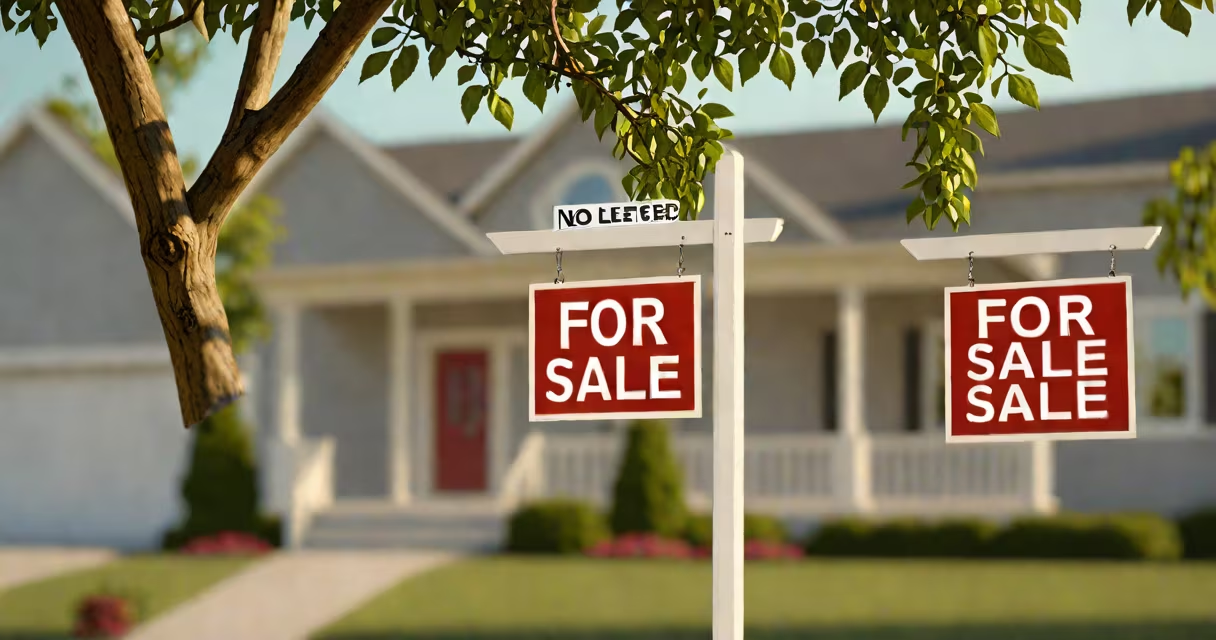
A house fails to sell when market conditions, property flaws, or financial hurdles prevent a buyer from completing the transaction. Common barriers include inaccurate pricing, hidden structural damage, poor condition, lack of financing proof, or legal encumbrances like liens or title disputes.
Real estate transactions require alignment between seller expectations, buyer readiness, and property compliance. When one element breaks, the chain collapses. A home listed at $600,000 in a neighborhood where comparable sales average $520,000 will sit unsold for months. Similarly, a house with a history of mold or foundation cracks may fail inspection, leaving buyers unwilling to proceed.
The National Association of Realtors reports that 38% of homes remain on the market longer than 90 days due to mispricing or inadequate disclosures. The U.S. Department of Housing and Urban Development notes that unaddressed repair issues cost sellers an average of $12,000 in lost equity when deals fall through.
Sales stall when a buyer's offer is rejected, delayed, or withdrawn. This often stems from a failed home inspection, appraisal shortfall, or inability to secure financing. For example, a buyer who qualifies for a $450,000 loan may find their home appraises at $420,000. If the seller won't reduce the price, the deal dies.
Inspection findings such as a leaking roof, outdated electrical wiring, or termite damage can trigger renegotiation. Sellers who refuse to cover repairs or lower the price risk losing offers. In 2023, 22% of pending sales fell through due to inspection-related disagreements, according to the Real Estate Transaction Data Report.
Financing issues are equally common. A buyer whose credit score drops during underwriting or whose income verification fails can lose approval. Even if the buyer has a pre-approval letter, lenders may deny funding if new debt appears or employment changes.
Five primary factors stop houses from selling. These include:
When a home has multiple red flags, even motivated buyers hesitate. A house in a school district with declining test scores may see fewer inquiries despite competitive pricing. A property with a known flood history in a high-risk zone may attract no offers unless priced below market value.
One overlooked factor is staging. Homes that appear cluttered or poorly maintained lose appeal. A 2022 study by the National Association of Realtors found that staged homes sold 77% faster and for 6% more than unstaged homes.
Many assume a house will sell quickly if priced below market value. But undervaluing a home can backfire. Buyers may suspect hidden issues or low-quality construction. A home priced at $400,000 in a $450,000 neighborhood may trigger suspicion, especially if similar homes have sold for higher prices.
Another myth is that "fixer-uppers" always attract investors. While some buyers seek renovations, most want move-in-ready homes. A house with peeling paint, broken windows, or missing flooring rarely draws serious offers unless priced at 30% below market.
Some sellers believe they can bypass inspections or skip disclosures. This is legally risky. In California, failing to disclose a known leak or pest infestation can result in lawsuits and rescission of contracts. The California Civil Code mandates full disclosure of material defects.
Finally, many think a high-interest rate environment automatically kills sales. While higher rates reduce affordability, homes in desirable areas still sell. In 2023, homes in top-rated school districts in Austin, Texas, sold at 98% of list price despite mortgage rates above 7%.
In March 2023, a two-bedroom condo in Denver listed for $485,000. The seller had renovated the kitchen and bathroom but left the basement unfinished and the HVAC system outdated. After 11 weeks with no offers, the agent suggested lowering the price to $450,000 and hiring a professional inspector.
After the inspection revealed a cracked foundation and a failing sump pump, the seller agreed to a $15,000 repair credit. The home was relisted at $440,000. Within 14 days, a buyer submitted an offer at $435,000 with a $5,000 earnest money deposit. The buyer's lender approved the loan, the inspection passed, and the sale closed in 45 days.
This case shows that addressing physical flaws and adjusting pricing based on market feedback prevents stagnation. The original listing failed because it ignored both condition and buyer psychology.
First, set a realistic price using recent comparables. Use tools like Zillow's "Zestimate" or Redfin's "Home Value Estimate," but verify with a local agent's comparative market analysis (CMA).
Second, conduct a pre-listing inspection. Identify issues early and either fix them or disclose them. Transparency builds trust and reduces last-minute deal collapse.
Third, ensure all documents are current. Confirm that the title is clear, HOA dues are paid, and utility transfers are arranged. A clean title is essential for closing.
Fourth, work with a licensed real estate agent experienced in your area. They understand local demand patterns and can advise on timing, marketing, and negotiation strategy.
When a house doesn't sell, the issue is rarely just one thing. It's usually a combination of mispricing, undisclosed flaws, or mismatched expectations. Addressing these proactively improves odds. A well-prepared home with accurate pricing and full transparency sells faster and for more than one left unattended.