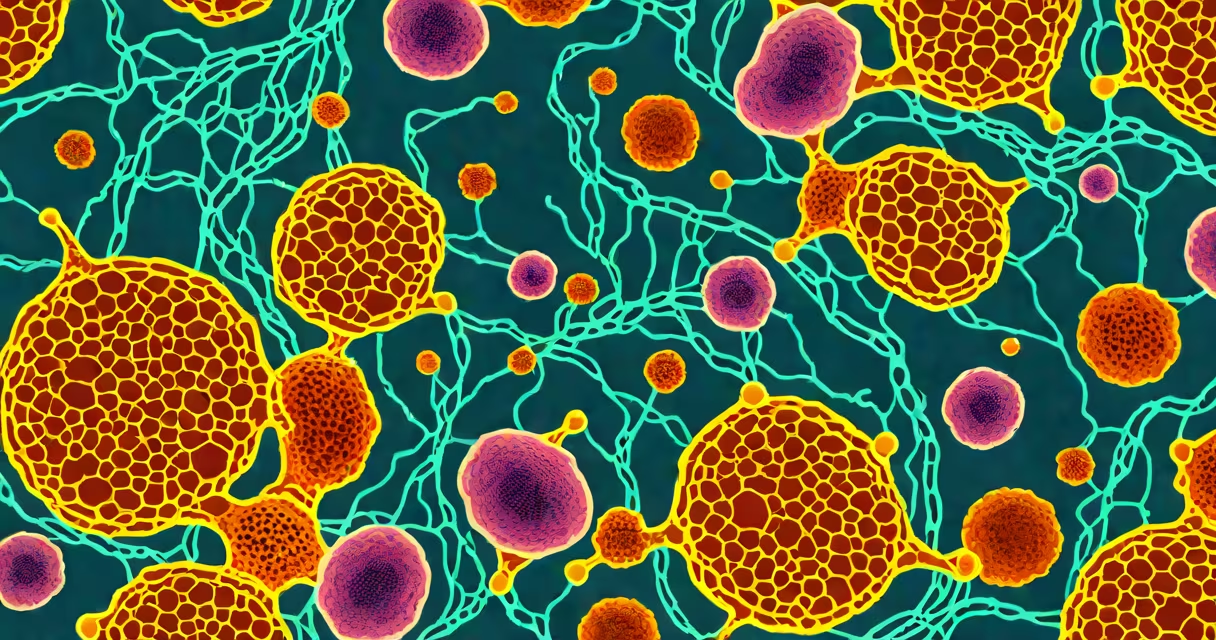
A cell biology major is an undergraduate academic program centered on the structure, function, and behavior of cells-the fundamental units of life. Students study cellular processes such as metabolism, signaling, division, and death using molecular, biochemical, and genetic tools. This discipline forms the foundation for understanding health, disease, and biological innovation.
Cell biology majors take courses in biochemistry, genetics, microbiology, and molecular biology. They learn to use lab equipment like centrifuges, spectrophotometers, and microscopes. Research projects often involve culturing cells, analyzing gene expression, or observing cellular responses to drugs. The field integrates theory with hands-on experimentation, preparing students for advanced study or careers in biomedical research, pharmaceuticals, or biotech.
According to the American Society for Cell Biology (ASCB), over 60% of undergraduates who pursue cell biology go on to graduate school in life sciences. The National Science Foundation reports that bachelor's degrees in biological sciences produced approximately 110,000 graduates annually between 2018 and 2022, with cell biology being one of the most common specializations.
Cell biology examines how cells maintain homeostasis, communicate, divide, and respond to environmental cues. Central to this study is the central dogma of molecular biology: DNA is transcribed into RNA, which is translated into proteins. These molecules regulate everything from enzyme activity to immune response.
Students analyze cellular components using techniques like fluorescence microscopy, Western blotting, and PCR. For example, a typical lab exercise involves staining live and fixed cells with fluorescent dyes targeting mitochondria or the nucleus. Results are quantified using image analysis software to measure changes in organelle distribution during apoptosis (programmed cell death).
One non-obvious distinction: cell biology is not synonymous with molecular biology. While both deal with biomolecules, molecular biology emphasizes genetic mechanisms at the DNA level, whereas cell biology focuses on how those mechanisms manifest within whole cells and tissues. A cell biologist might study how a mutation in a receptor protein alters signal transduction across a membrane, while a molecular biologist may focus on the sequence changes causing the mutation.
Most cell biology majors follow a structured curriculum requiring 120-130 credit hours. Core classes include:
Advanced electives may cover cancer biology, stem cell science, or synthetic biology. Many programs require a capstone project involving independent research, often conducted in a university lab or industry internship.
At the University of California, San Diego, students in the cell biology major complete a senior thesis based on original data collected during a year-long research sequence. One recent project demonstrated that a specific kinase inhibitor reduced proliferation in breast cancer cell lines by 70% after 72 hours of treatment-results later presented at a regional scientific conference.
Cell biology training prepares graduates for roles in pharmaceutical development, medical diagnostics, agricultural biotechnology, and academic research. Drug discovery relies heavily on cell-based assays to test compound efficacy and toxicity. For instance, companies like Genentech use human cell lines to screen potential cancer therapeutics before moving to animal models.
Biotech firms employ cell biologists to engineer cell lines for producing monoclonal antibodies. Modern vaccine platforms, including mRNA vaccines, depend on understanding how host cells process foreign genetic material. The CDC notes that cell culture systems were essential in developing and testing the Pfizer-BioNTech and Moderna COVID-19 vaccines.
Another application lies in regenerative medicine. Researchers use induced pluripotent stem cells (iPSCs)-reprogrammed adult cells-to model diseases and test treatments. A 2021 study published in *Nature Cell Biology* showed that iPSC-derived neurons could mimic Parkinson's disease progression in vitro, enabling early drug screening.
While cell biology shares foundational topics with other life science disciplines, its focus on cellular dynamics sets it apart. Here's how it compares:
| Field | Primary Focus | Typical Techniques | Common Careers |
|---|---|---|---|
| cell biology major | Cellular structure, function, and regulation | Live-cell imaging, flow cytometry, CRISPR editing | Pharmaceutical researcher, lab manager, grad student |
| forensic biology major | Biological evidence in criminal investigations | DNA profiling, serology, trace evidence analysis | Forensic scientist, crime scene analyst, lab technician |
| wildlife biology major | Animal populations, ecosystems, conservation | Field surveys, radio telemetry, habitat modeling | Wildlife biologist, park ranger, environmental consultant |
Although all three majors involve biology, their applications diverge sharply. A cell biology major might spend weeks analyzing how a virus enters a host cell, while a wildlife biology major spends days tracking a bear's movement through GPS collars. A forensic biology major uses similar lab tools as a cell biologist but applies them to legal cases, such as identifying suspects via blood samples.
One common misconception is that cell biology leads only to medical school. While many cell biology majors do pursue MD or PhD programs, others enter industry roles quickly. A 2022 report from the Bureau of Labor Statistics shows that 38% of biology bachelor's degree holders work in private sector labs within five years of graduation.
I spent a summer working in a cell biology laboratory studying how stress affects protein folding in yeast cells. We used a strain engineered to express green fluorescent protein (GFP) fused to a chaperone protein. Under heat stress, we observed GFP clusters forming in the cytoplasm-visible under a confocal microscope.
We quantified aggregation rates using ImageJ software and compared results across control and stressed groups. The experiment confirmed that misfolded proteins accumulate faster under elevated temperatures-a finding relevant to neurodegenerative disease research. That summer taught me how precise measurements and careful controls are essential in cell biology.
For students interested in hands-on training, visiting a cell biology laboratory is important. Many universities offer tours or summer internships to explore lab environments firsthand.
A cell biology major provides a rigorous foundation in the mechanisms of life at the microscopic level. It equips students with analytical skills, technical proficiency, and a deep understanding of how cells operate-essential for advancing science and improving human health.