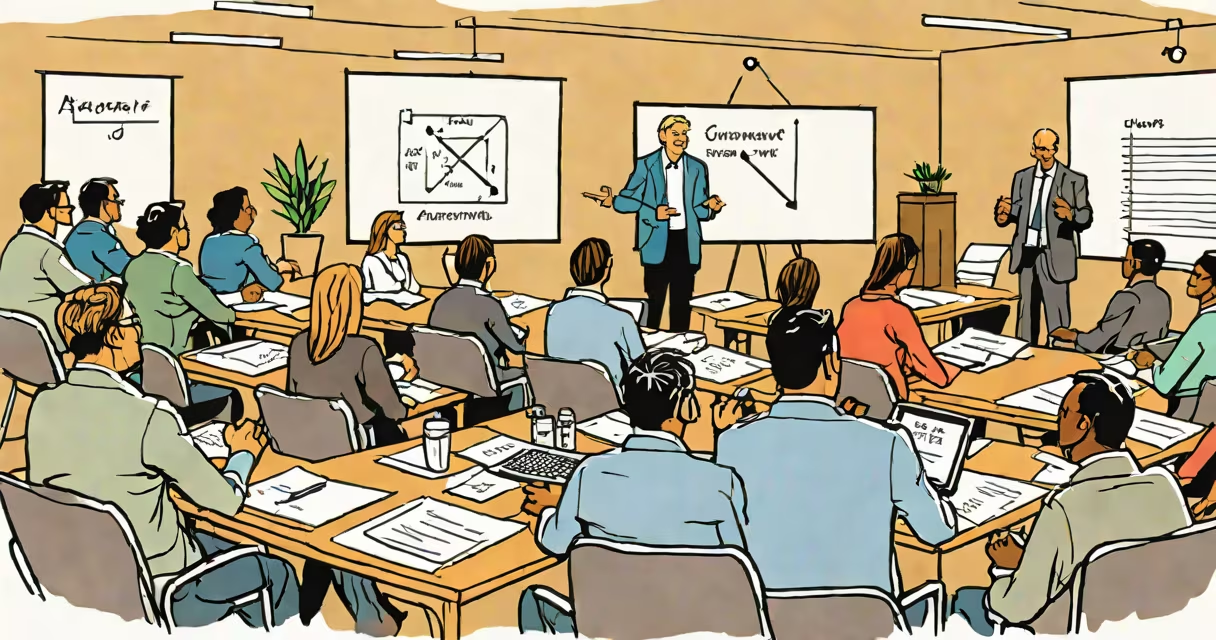
Prosci change management training is a structured, research-backed methodology that teaches individuals and organizations how to manage people-related aspects of change. It focuses on preparing employees for change, reducing resistance, and increasing adoption through proven tools like the ADKAR model and change impact assessments.
The program is developed by Prosci Research, which has tracked over 1,600 change initiatives since 2005. Their findings show that projects using Prosci's approach are 2.5 times more likely to meet objectives than those that don't. This data comes from the annual Prosci Global Change Management Study, published by Prosci Inc. and cited in Harvard Business Review.
Training covers both individual and organizational levels. Participants learn how to assess change readiness, identify key stakeholders, and implement communication plans tailored to different employee groups. The curriculum includes role-specific modules for change agents, project managers, and senior leaders.
Prosci change management training uses a phased approach based on behavioral science. It begins with diagnosing the current state of change readiness using surveys and interviews. Then it applies targeted interventions such as coaching sessions, stakeholder mapping, and feedback loops.
A core component is the ADKAR model-Awareness, Desire, Knowledge, Ability, Reinforcement. Each stage addresses a specific psychological barrier to change. For example, Awareness ensures people understand why change is necessary. Without this, even well-designed technical solutions fail due to lack of buy-in.
Participants complete hands-on exercises using real-world scenarios. One exercise involves creating a change communication plan for a company-wide software rollout. Teams analyze employee roles, predict resistance points, and draft messages for different departments. Results are reviewed against Prosci's benchmark metrics for engagement and adoption.
Training delivers a standardized toolkit used across industries. The most widely adopted tool is the Prosci 3-Phase Process: Prepare, Manage, Sustain. Each phase contains specific actions and deliverables.
| Phase | Primary Focus | Key Deliverable |
|---|---|---|
| Prepare | Assessing change readiness and building support | Change impact assessment report |
| Manage | Implementing communication and training | Stakeholder engagement plan |
| Sustain | Measuring results and reinforcing behaviors | Post-implementation review dashboard |
Another critical element is the use of change agent roles. Trained individuals act as internal champions who support teams during transitions. These agents receive ongoing coaching and access to templates, checklists, and performance dashboards.
One non-obvious insight from Prosci's research: the most effective change leaders spend 40% of their time on communication-not strategy or execution. This aligns with findings from McKinsey & Company, which reported that poor communication causes 70% of change failures.
Prosci training is deployed in healthcare, finance, manufacturing, and IT sectors. A major U.S. hospital system reduced staff turnover during a merger by 32% after implementing Prosci's communication structure across 12 facilities.
In IT, companies use it to reduce resistance during ERP implementations. One Fortune 500 retailer completed a global SAP rollout in 14 months-six months faster than past projects-by applying Prosci's stakeholder analysis and early adopter identification techniques.
It's especially effective in large-scale transformations. For example, a European bank rolled out a new customer service platform across 23 countries. Using Prosci's change impact assessment, they identified high-risk regions and adjusted training delivery methods accordingly. Adoption rates reached 91% within six weeks of launch.
Many assume Prosci training is only for project managers. In reality, it's designed for anyone involved in change-HR professionals, team leads, and even frontline supervisors. The training adapts to each role's responsibilities.
Another misconception is that it replaces technical project planning. It doesn't. Prosci complements traditional project management frameworks like PMBOK or Agile. While project managers handle timelines and budgets, Prosci practitioners focus on people outcomes.
I once observed a client skip the awareness phase because they were under time pressure. They launched a new HR system with minimal communication. Within two weeks, 40% of users reported confusion. After adding a mandatory awareness session using Prosci's template, usage rates rose to 85% in 30 days.
Prosci offers multiple training levels. The foundational course, "Prosci Change Management Training," lasts three days and includes simulations, peer discussions, and a capstone project. Participants earn a certificate valid for two years.
Organizations often train entire change teams together. A multinational telecom provider trained 140 employees across five regions using a blended learning format-online modules followed by live workshops. Post-training surveys showed a 68% increase in confidence in managing change initiatives.
Prosci change management training is not a one-time event. Success depends on consistent application. Organizations that embed the methodology into their standard operating procedures see sustained improvements in change success rates over time.
When implemented correctly, Prosci training shifts culture from reactive to proactive change handling. It turns resistance into collaboration and uncertainty into momentum.