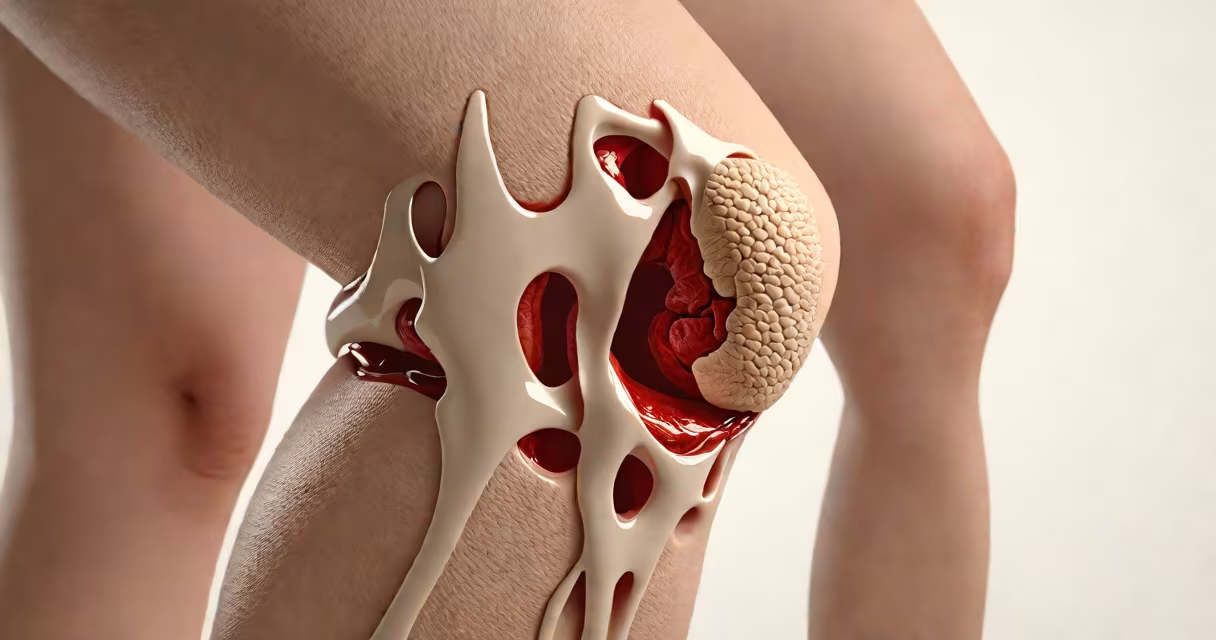
Knee swelling happens when excess fluid builds up in or around the knee joint, often due to trauma, inflammation, or underlying medical conditions. This fluid accumulation increases pressure, causing pain, stiffness, and reduced mobility.
The knee is a complex hinge joint formed by the femur, tibia, and patella, stabilized by ligaments and cushioned by synovial fluid. Normally, this fluid lubricates movement and absorbs shock. When injury or disease disrupts balance, the body produces extra fluid as part of the inflammatory response. This leads to visible puffiness, tightness, and discomfort.
Swelling may develop rapidly after a fall or twist, or gradually over days due to overuse or chronic conditions like osteoarthritis. Not all knee swelling is serious, but persistent or worsening swelling requires evaluation to rule out infection, meniscus tears, or autoimmune disorders.
Swelling results from increased vascular permeability and fluid leakage into surrounding tissues. When the knee is injured, damaged blood vessels release proteins and fluids into the joint space. Immune cells rush in to begin repair, releasing chemicals like histamine and prostaglandins that further increase fluid flow.
This process is normal in acute injuries. For example, a sudden twist during basketball can rupture small blood vessels in the knee capsule, leading to rapid swelling within hours. The body's inflammatory response aims to protect and heal-but excessive fluid can restrict motion and cause pain.
Chronic swelling stems from ongoing joint damage. In osteoarthritis, cartilage wears down over time, exposing bone and triggering continuous inflammation. Synovial tissue thickens and produces excess fluid, leading to persistent swelling. According to the Arthritis Foundation, nearly 60% of adults over 65 have some degree of knee osteoarthritis, with swelling being a common symptom.
Multiple factors can trigger knee swelling. The most frequent include:
A 2021 study published in Arthritis & Rheumatology found that patients with rheumatoid arthritis had higher synovial fluid volume in affected knees compared to healthy controls-measured via MRI-confirming immune-mediated fluid production.
Different types of fluid accumulation signal distinct issues. Understanding the nature of swelling helps distinguish between injury, infection, and degenerative disease.
| Type | Characteristics | Common Cause |
|---|---|---|
| Clear serous fluid | Thin, watery, colorless | Post-traumatic inflammation, early arthritis |
| Cloudy or yellowish fluid | Thick, opaque, sometimes pus-like | Infection (septic arthritis), advanced rheumatoid arthritis |
| Bloody fluid | Reddish, may clot | Recent injury, hemarthrosis (bleeding into joint) |
For example, a 32-year-old runner experienced sudden knee swelling after a misstep during a trail run. The fluid drained during arthroscopy was blood-tinged, indicating a partial ACL tear. After surgery and rehabilitation, swelling resolved in six weeks.
One non-obvious distinction: swelling from a torn meniscus often appears gradually over 24-48 hours, while ACL tears cause immediate swelling due to bleeding into the joint. This timing difference helps clinicians narrow diagnoses.
Not all knee swelling resolves on its own. Red flags include:
These signs suggest infection, significant ligament damage, or a displaced fracture. A 2020 review in Orthopaedic Journal of Sports Medicine reported that delayed treatment of ACL tears led to a 40% higher risk of secondary meniscus injury.
I once observed a patient with a swollen knee who ignored symptoms for five days. By the time he sought care, his knee was hot, swollen, and locked in extension. Joint aspiration revealed purulent fluid-diagnosed as septic arthritis. He required IV antibiotics and surgical drainage to prevent permanent joint destruction.
Initial management includes RICE: rest, ice, compression, and elevation. Apply ice for 15-20 minutes every 2-3 hours during the first 48 hours. Avoid heat, which increases blood flow and swelling.
If swelling doesn't improve in 3-5 days, or if pain is severe, see a healthcare provider. Diagnostic imaging such as ultrasound or MRI can identify internal damage. In some cases, joint aspiration-drawing fluid with a needle-is necessary to test for infection or crystals (as in gout).
For persistent swelling, treatment depends on the cause. Osteoarthritis may respond to NSAIDs, physical therapy, or corticosteroid injections. Autoimmune conditions require immunosuppressants. Surgery may be needed for torn ligaments or menisci.
Recognizing the root cause of knee swelling prevents complications and supports faster recovery. Early intervention improves outcomes, especially when swelling stems from trauma or systemic illness.