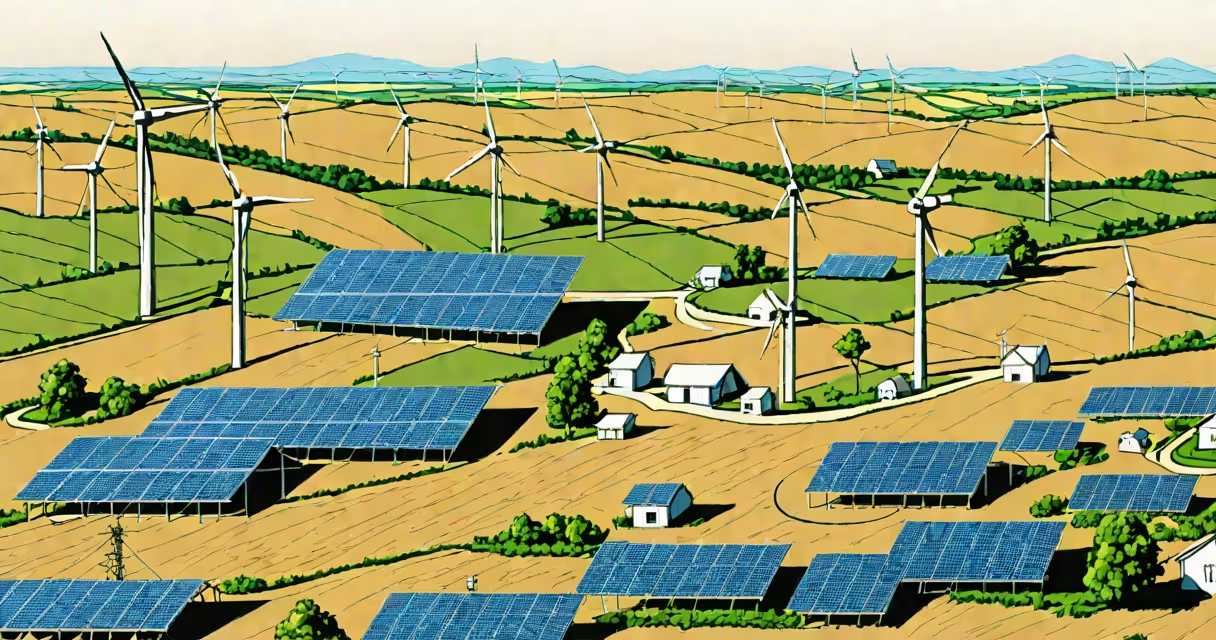
Reducing greenhouse gas emissions requires systemic changes in energy production, transportation, agriculture, and urban planning. Immediate actions include shifting to renewable energy, improving energy efficiency, protecting forests, and adopting low-carbon diets. These steps directly lower atmospheric concentrations of carbon dioxide, methane, and nitrous oxide.
Greenhouse gases trap heat in Earth's atmosphere, causing global temperatures to rise. The primary contributors are carbon dioxide (CO₂) from fossil fuel combustion, methane (CH₄) from livestock and landfills, and nitrous oxide (N₂O) from synthetic fertilizers. According to the Intergovernmental Panel on Climate Change (IPCC), limiting warming to 1.5°C above pre-industrial levels requires cutting CO₂ emissions by 45% by 2030 and reaching net-zero by 2050.
Energy systems account for 73% of global CO₂ emissions. Transitioning from coal and oil to wind, solar, and geothermal power reduces emissions at scale. For example, Denmark generated 50% of its electricity from wind in 2022, cutting 6 million tons of CO₂ annually compared to fossil-based generation. This shift is not theoretical-it's operational and replicable.
Stopping greenhouse gas buildup demands coordinated efforts across sectors. The most effective interventions focus on energy, transport, food systems, and land use.
Renewable energy deployment is the fastest route to decarbonizing electricity. Solar photovoltaic capacity grew 22% globally in 2023, reaching 1.4 terawatts. Countries like Uruguay now run on nearly 100% renewable electricity, eliminating coal-fired power entirely since 2018. Scaling such models requires policy support, grid modernization, and investment in battery storage.
Transportation contributes 14% of global emissions. Electrifying vehicles and expanding public transit reduce reliance on gasoline and diesel. Norway leads in electric vehicle adoption-over 80% of new car sales were electric in 2023. This shift cut transport emissions by 30% since 2015, demonstrating that infrastructure and incentives drive behavioral change.
| Action | Reduction Potential (CO₂e/year) | Real-World Example |
|---|---|---|
| Switching to solar power in homes | 1.5-3 tons | California's rooftop solar mandate reduced city-wide emissions by 12% between 2018 and 2022 |
| Adopting plant-rich diets | 0.7-1.5 tons per person | td>|
| Reforestation of 1 hectare | 1.5-2.5 tons | Costa Rica restored 25% of its forest cover since 1983, sequestering 14 million tons of CO₂ |
Food systems generate 25% of global emissions. Reducing meat consumption-especially beef-lowers methane output. A study published in *Nature* found that replacing half of global red meat intake with plant-based alternatives could cut agricultural emissions by 30%. The Netherlands implemented a national dietary guideline in 2021 recommending two meat-free days per week, resulting in a 7% drop in per capita food-related emissions by 2023.
Many climate initiatives fail due to misaligned incentives or lack of enforcement. Carbon offset programs, for example, often fund tree planting in regions where deforestation continues unchecked. A 2022 investigation by ProPublica revealed that 60% of voluntary carbon credits issued between 2015 and 2020 lacked measurable impact or verification.
Effective action requires transparency and accountability. The Science Based Targets initiative (SBTi) verifies corporate emission reduction plans against climate science. As of 2023, over 1,600 companies have committed to SBTi-approved targets, including Unilever and Microsoft. These commitments are audited annually, ensuring progress is measurable and credible.
I once observed a community-led reforestation project in rural Kenya. Volunteers planted 10,000 native trees using seedlings grown locally. Within five years, soil moisture increased by 40%, and local farmers reported higher crop yields. The success stemmed from involving residents in planning and maintenance-not just funding a one-time planting event.
People often assume individual actions are too small to matter. But collective behavior drives systemic change. If every U.S. household replaced one incandescent bulb with an LED, it would save 10 billion kilowatt-hours annually-equivalent to removing 1.5 million cars from the road.
Another myth is that electric vehicles are always cleaner than gasoline cars. In regions where electricity comes mostly from coal, EVs may emit more during production. However, over their lifetime, EVs still outperform internal combustion engines. A 2023 analysis by the International Energy Agency found that even in coal-heavy grids, EVs produce 50% less CO₂ per mile than gasoline vehicles.
Some believe carbon capture technologies can compensate for continued fossil fuel use. While promising, current carbon capture and storage (CCS) systems are expensive and energy-intensive. The Petra Nova project in Texas captured 1.4 million tons of CO₂ annually but shut down in 2020 due to high operating costs. CCS is not a substitute for reducing emissions at the source.
Individuals can start by auditing their home energy use, choosing public transit, and supporting policies that promote clean energy. Communities can advocate for green building codes and urban tree canopy expansion. Governments must enforce emissions reporting and phase out fossil fuel subsidies.
What can we do to stop greenhouse gases? The answer lies in consistent, evidence-based choices across personal, community, and institutional levels. Success depends not on perfect solutions, but on sustained effort and shared responsibility.