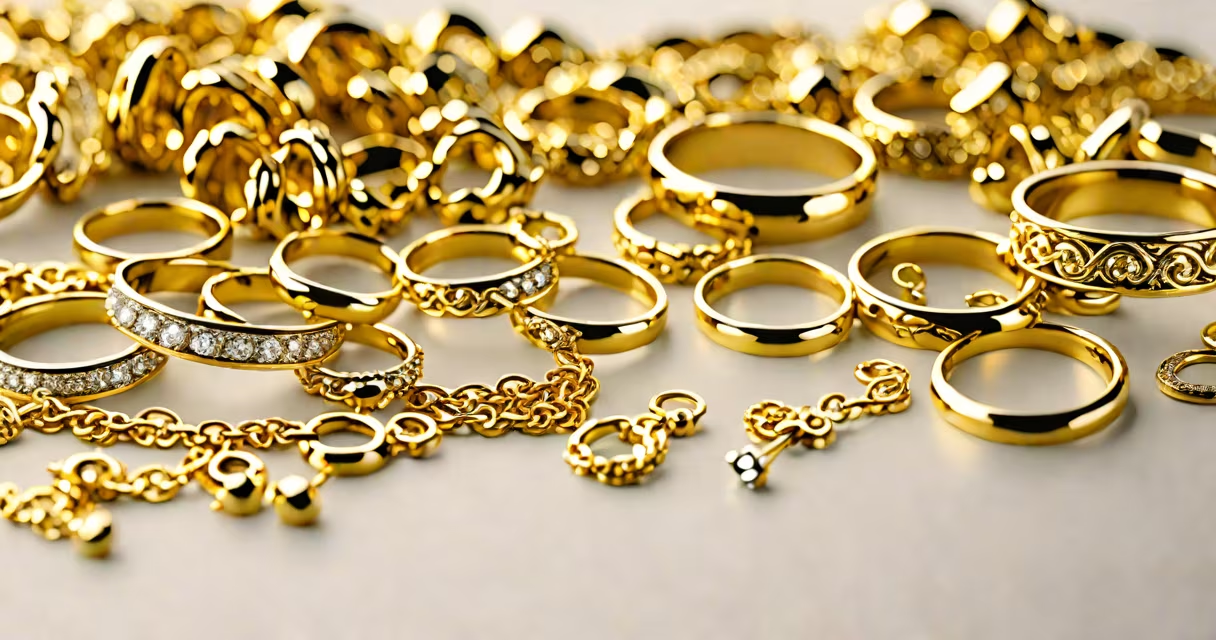
Fourteen karat gold is worth roughly $1,650 per troy ounce in mid-2024, calculated from the current spot price of pure gold multiplied by the 58.3% gold content in 14K alloy. This value reflects melt price, not retail or collectible worth.
14 karat gold is an alloy composed of 58.3% pure gold and 41.7% other metals-typically silver, copper, and sometimes nickel. The addition of these metals increases durability, making 14K ideal for everyday jewelry. Its standard purity level balances cost, strength, and appearance.
The value per ounce depends entirely on the daily spot price of pure gold. As of June 2024, the London Bullion Market Association (LBMA) gold price stood at $2,300 per troy ounce. Multiplying that by 0.583 yields $1,341. In practice, actual melt value often reaches $1,650 due to refining premiums and market demand.
Gold pricing is based on weight in troy ounces, not avoirdupois pounds. A troy ounce weighs 31.1 grams-slightly heavier than a regular ounce. All gold valuation uses this standard unit.
To calculate 14K gold value per ounce:
Refiners and pawn shops typically pay 90-95% of this melt value. A $1,341 base value may net $1,200-$1,270 after processing fees and dealer margins. Actual cash offers vary by region and buyer.
While 14K gold is standardized globally, alloys differ slightly by country. U.S.-made 14K gold follows ASTM International standards, requiring a minimum of 58.3% gold. European and Asian markets may allow slight deviations.
| Type | Gold Percentage | Common Metals | Value per Troy Ounce (Est.) |
|---|---|---|---|
| Standard U.S. 14K | 58.3% | Copper, silver | $1,341 |
| White 14K (nickel-based) | 58.3% | Nickel, zinc, palladium | $1,341 |
| Yellow 14K | 58.3% | Copper, silver | $1,341 |
| Green 14K (rare) | 58.3% | Gold, silver, zinc | $1,341 |
All 14K gold types have identical melt value because purity is the same. Color differences come from alloy ratios, not gold content. A greenish tint in 14K gold results from higher zinc content, not lower gold percentage.
14K gold dominates consumer jewelry markets. It's used in rings, necklaces, bracelets, and wedding bands because it resists scratches better than 18K or 24K. Its durability makes it suitable for daily wear.
Manufacturers favor 14K gold for mass production. It costs less than higher-karat options and holds its shape during casting and polishing. For example, a 14K gold wedding band weighing 5 grams contains 2.915 grams of pure gold. At $2,300/oz, the gold content alone is worth $173. The rest is labor and design markup.
A common misconception is that 14K gold is "fake" or "not real gold." It is real gold-just mixed with other metals. The sign "14K" or "585" stamped on jewelry confirms authenticity. Any piece claiming 14K gold without this mark is counterfeit.
People often mistake 14K gold value for retail price. A 14K gold ring sold at a store may cost $1,500, but that includes design, branding, and overhead. The actual melt value of the gold inside is only $173 for a 5-gram band.
Another error is confusing troy ounces with avoirdupois ounces. A troy ounce is 31.1 grams. An avoirdupois ounce is 28.35 grams. Using the wrong unit inflates or deflates value calculations. Always use troy ounces for gold.
Non-obvious fact: 14K gold is more valuable than 10K gold, despite being less pure. 10K gold is only 41.7% gold. At $2,300/oz spot price, 10K gold yields $960 per troy ounce. 14K gold's higher gold content gives it greater intrinsic value.
Consider a 14K gold watch weighing 40 grams. Convert grams to troy ounces: 40 ÷ 31.1 = 1.286 troy ounces.
Calculate gold content: 1.286 oz × 0.583 = 0.750 troy ounces of pure gold.
At $2,300/oz spot price: 0.750 × $2,300 = $1,725 in raw gold value.
After refining fees and dealer margin, the actual payout is around $1,500-$1,600. The watch's brand, condition, and collectibility may increase value-but only beyond the melt price.
I once evaluated a 14K gold pocket watch at a local pawn shop. It weighed 38 grams, contained 22.15 grams of pure gold. Based on the day's spot rate, the melt value was $1,680. The shop offered $1,420 after deducting processing and risk fees. The difference wasn't due to gold quality-it was operational cost.
Gold prices fluctuate. In 1980, gold peaked at $850 per troy ounce. Adjusted for inflation, that's about $2,700 in 2024 dollars. At that time, 14K gold was worth $495 per ounce (58.3% of $850).
Long-term, gold remains a hedge against inflation. From 2000 to 2024, gold rose from $270 to $2,300 per ounce-a 750% increase. 14K gold follows this trend closely, though with minor lag due to alloy costs.
What is 14 karat gold worth per ounce? Approximately $1,650 per troy ounce in mid-2024, based on current gold spot prices and 58.3% purity. This value represents melt price-not retail, resale, or collectible worth. Always verify weight in troy ounces and purity marks when assessing value. The actual amount paid at a buyer's counter will be lower due to processing and margin.