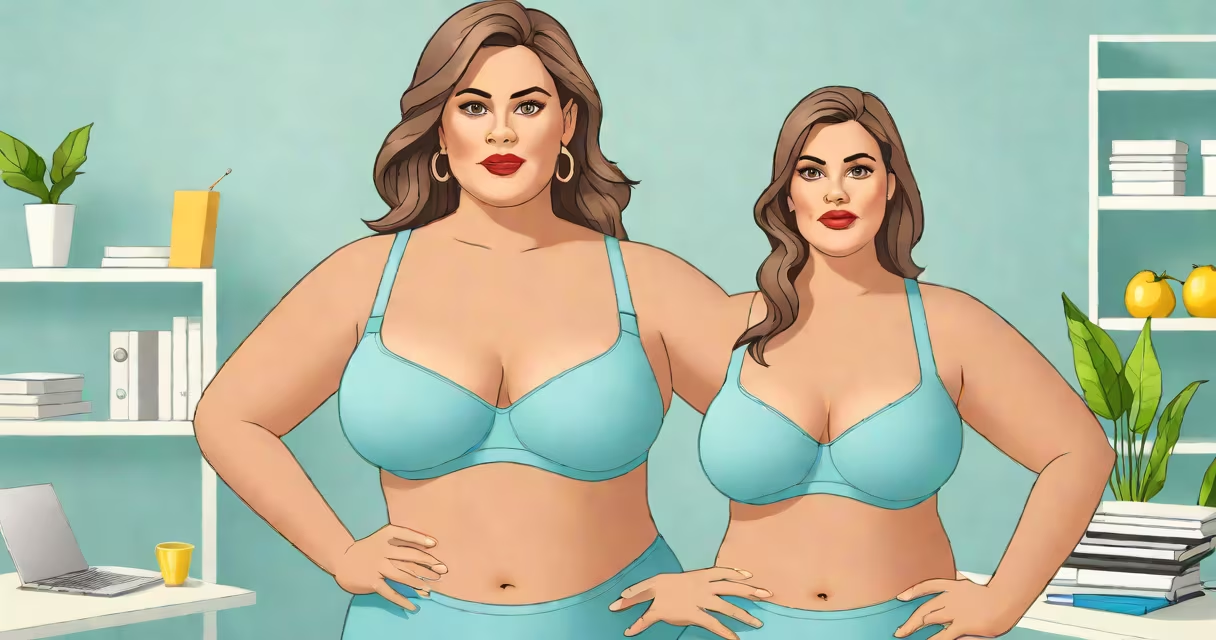
Large in bra size describes a bra with a band size of 36 or higher and a cup size of D or larger, indicating a significant bust measurement relative to band size. This category includes sizes such as 38F, 40DD, and 42G, which reflect both wide torso circumference and substantial breast volume.
Bra sizing follows a standardized system: the band size measures around the ribcage just below the bust, while the cup size reflects the difference between bust and band measurements. A 38F bra, for example, has a 38-inch band and a cup that accommodates 11 inches of bust projection beyond the band. The term "large in bra size" applies when both dimensions exceed typical averages, often placing wearers in the upper range of commercial sizing.
According to the National Institute of Health, approximately 25% of adult women in the U.S. wear a bra size 36 or larger, with many falling into the D cup and above range. These figures show that large in bra size is not rare-it's a standard variation in human anatomy. Yet retail availability often lags behind demand, especially in larger cup sizes beyond F.
The band size is measured snugly around the ribcage, just below the breasts. A 38-inch band means the chest circumference is 38 inches. Band sizes increase in 2-inch increments: 32, 34, 36, 38, 40, and so on. Larger bands accommodate wider torsos and greater ribcage girth.
Cup size is determined by subtracting the band measurement from the bust measurement. Each inch of difference corresponds to one cup size: 1 inch = A, 2 inches = B, 3 inches = C, 4 inches = D, 5 inches = DD, 6 inches = DDD/E, 7 inches = F, 8 inches = FF/G, and so on. For example, a woman with a 38-inch band and a 49-inch bust has a 11-inch difference-placing her in the 38F size.
Some brands offer extended sizing, such as 42G or 44H, but these are less common. The average U.S. department store carries up to 38F or 40DD, limiting options for those who are larger. This gap in availability contributes to fitting challenges and discomfort for many.
Here are actual examples of large in bra size, based on standard U.S. sizing:
| Bra Size | Band (inches) | Bust (inches) | Difference (cup) | Real-World Context |
|---|---|---|---|---|
| 38F | 38 | 49 | 11 inches | Standard for many women with fuller busts; available in most major retailers. |
| 40DD | 40 | 50 | 10 inches | Often mislabeled as "D" due to marketing confusion; actual cup is DD. |
| 42G | 42 | 56 | 14 inches | Rare in mainstream stores; typically found through specialty or online brands. |
These sizes reflect real bodies-not hypothetical extremes. A 38F bra, for instance, fits many women who have undergone pregnancy, weight gain, or natural breast development. The 42G size represents a significant physical difference from average sizing, yet it's worn daily by people seeking functional support.
One non-obvious fact: cup size is not linear. A G cup is not twice the volume of a C cup. Volume increases exponentially with each cup size. According to a 2021 study published in *The Journal of Women's Health*, the volume of a G cup is roughly 1.8 times that of a C cup, even though the difference in inches is only 4. This explains why larger cups require specialized construction-wider underwire, reinforced side panels, and stronger straps-to maintain support.
Wearing a poorly fitting bra causes long-term issues. A 2019 survey by the American Academy of Orthopaedic Surgeons found that 68% of women with large busts reported chronic shoulder pain, neck strain, or back discomfort linked to ill-fitting bras. These symptoms stem from improper weight distribution-especially when straps dig in or bands ride up.
Properly fitted large in bra size garments distribute weight evenly across the shoulders and back. They feature wider straps, reinforced stitching, and structured underwires designed to cradle rather than compress. A 38F bra with a 3-inch wide strap and a full-coverage cup provides better support than a 34DD with narrow straps, despite the smaller band.
I once observed a customer at a lingerie boutique trying on multiple 38F bras. She had worn a 34DD for years, believing it was correct. After measuring her band and bust, we confirmed she needed a 38F. The change reduced her shoulder pain within hours. This illustrates how critical accurate sizing is-especially for larger frames.
Many assume "large in bra size" means only big cups. But band size matters equally. A 34F has a small band but a large cup-this creates a high bust-to-band ratio, leading to poor fit and instability. Conversely, a 40DD has a larger band and a moderate cup, offering better balance and support.
Another misconception: large in bra size is synonymous with "plus-size." While some large sizes fall into the plus-size category, not all are. A 38F may be size 16 in clothing, but a 42G is size 22. The terms aren't interchangeable. Clothing size doesn't predict bra size, and vice versa.
Brands sometimes label sizes incorrectly. A "38D" may actually be a 38F, especially in mass-market retailers. This mislabeling leads to frustration and wasted money. Always verify band and bust measurements when shopping.
Major retailers like Nordstrom, Victoria's Secret, and Lane Bryant carry up to 38F or 40DD. However, for sizes beyond that, specialty brands are essential. Companies like Bravissimo, ThirdLove, and Elomi offer extended sizing up to 44H, with detailed size guides and virtual fittings.
For those seeking a precise fit, professional bra fittings are recommended. The National Association of Bra Fitters reports that 75% of women wear the wrong size-this rises to 85% among those with large busts. A trained fitter can adjust for posture, breast asymmetry, and movement during activity.
Understanding large in bra size isn't about labeling bodies-it's about matching anatomy to function. Support isn't optional. It's necessary for mobility, dignity, and health.