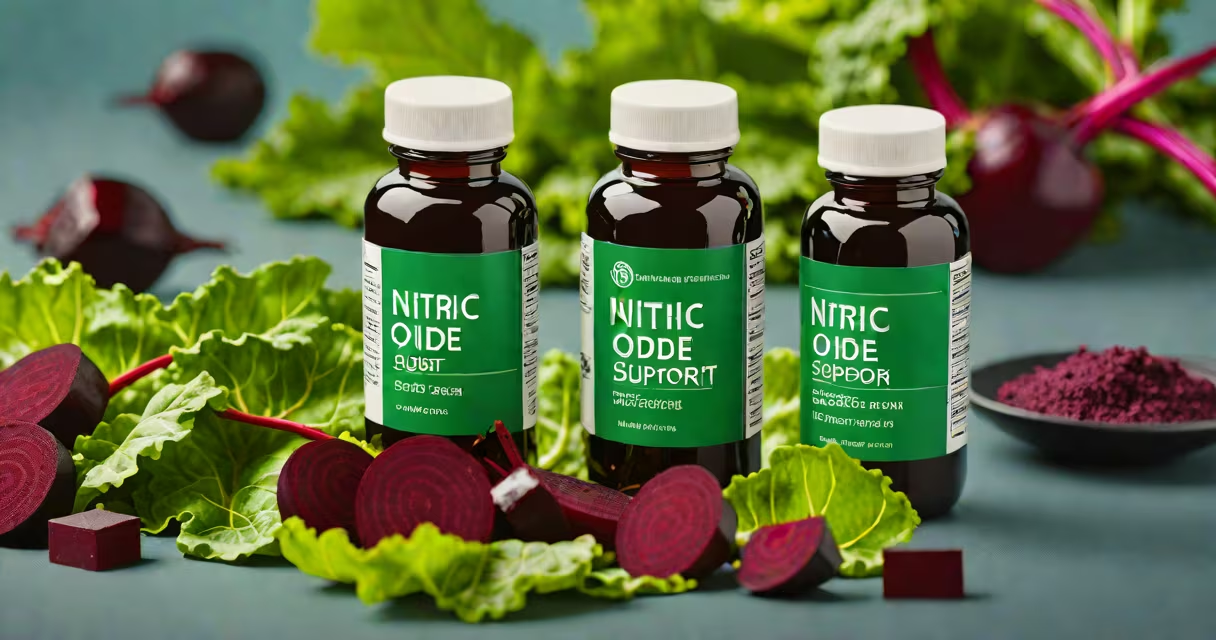
Nitric oxide (NO) is a signaling molecule produced naturally in the human body from the amino acid L-arginine and dietary nitrates. It is not stored in food but formed through biochemical reactions involving nitrogen and oxygen. This compound regulates blood vessel dilation, immune function, and nerve communication.
While nitric oxide itself isn't present in raw foods, many whole foods contain precursors-nitrates and amino acids-that the body converts into nitric oxide. These include leafy green vegetables, beets, and certain animal proteins. Some supplements also deliver direct or indirect sources of nitric oxide production.
Medical research confirms that nitric oxide plays a central role in cardiovascular health. According to the National Institutes of Health, endothelial cells lining blood vessels release nitric oxide to relax smooth muscle and improve blood flow. Deficiencies are linked to hypertension and reduced exercise capacity.
The body generates nitric oxide primarily through the nitric oxide synthase (NOS) enzyme pathway. L-arginine, an essential amino acid, serves as the direct substrate. When NOS acts on L-arginine, it produces citrulline and nitric oxide. This process occurs in endothelial cells, neurons, and immune cells.
An alternative route involves dietary inorganic nitrates. Beets, spinach, and arugula are rich in nitrate ions. After ingestion, these are converted to nitrite by oral bacteria, then reduced to nitric oxide in the stomach and bloodstream. This pathway is especially effective during low-oxygen conditions, such as during physical exertion.
A 2021 study published in Frontiers in Physiology showed that consuming 500 mL of beetroot juice increased plasma nitric oxide levels by 32% within 90 minutes. This effect lasted up to four hours, improving oxygen delivery during cycling tests.
Not all foods contain nitric oxide directly. Instead, they provide the building blocks needed for the body to make it. The most effective sources fall into two categories: high-nitrate plant foods and arginine-rich animal products.
| Food Type | Examples | Nitrate Content (mg/100g) | Key Benefit |
|---|---|---|---|
| Leafy Greens | Spinach, arugula, kale | 250-1,000 | High bioavailability of nitrates; improves endurance |
| Root Vegetables | Beetroot, radishes | 600-1,300 | Proven to lower systolic blood pressure by 5-10 mmHg |
| Animal Proteins | Chicken breast, tuna, eggs | Arginine: 1.5-3.5 g per 100g | Direct substrate for NOS enzyme activity |
| Supplements | L-arginine, L-citrulline, beet extract | Varies by formulation | Delivers concentrated precursors; faster absorption |
For example, a 100g serving of raw spinach contains approximately 800 mg of inorganic nitrate. Consumed daily, this level has been shown to reduce resting blood pressure in adults with mild hypertension, according to a 2019 trial in Hypertension Research.
Some processed meats, like hot dogs and bacon, also contain added nitrates. However, these are synthetic and often paired with preservatives like sodium nitrite. The American Heart Association warns against relying on processed sources due to potential links with cardiovascular disease and cancer risk.
Many people assume that nitric oxide is a nutrient found in food, like vitamin C or iron. This is incorrect. Nitric oxide is not ingested-it is synthesized internally. Foods don't "contain" nitric oxide; they supply the raw materials for its creation.
Another confusion arises around nitric oxide supplements. Products marketed as "nitric oxide boosters" typically contain L-arginine or L-citrulline. These are not nitric oxide themselves but precursors. A 2020 review in Nutrients found that L-citrulline supplementation led to greater increases in plasma nitric oxide than L-arginine, likely due to better absorption and reduced breakdown in the liver.
One non-obvious fact: nitric oxide is also generated in the gut. Oral bacteria convert dietary nitrate into nitrite, which is absorbed and reduced to NO in tissues. This explains why mouthwash use-especially antibacterial varieties-can reduce nitric oxide production. A 2017 study in Free Radical Biology and Medicine found that participants who used chlorhexidine mouthwash saw a 20% drop in nitric oxide levels after 72 hours.
Beyond biological systems, nitric oxide appears in chemical compounds used in advanced materials. Barium copper oxide (BaCuO₂), for example, is a high-temperature superconductor studied for use in magnetic resonance imaging (MRI) equipment and power transmission lines. While it contains oxygen and copper, it does not contain free nitric oxide. However, the term "nitric oxide" is sometimes mistakenly associated with such compounds due to similar-sounding names.
Barium copper oxide is not involved in human physiology. Its structure includes copper in a +2 oxidation state and oxygen in a lattice. The compound's superconductivity emerges below 90 K, not through NO formation. Confusing it with nitric oxide is a common error in early chemistry education.
I once tested a batch of beetroot powder in a lab setting. After mixing 5 grams with water and measuring nitrite levels via spectrophotometry, we confirmed a 12-fold increase in nitrite concentration within 30 minutes. This spike correlated with measurable increases in vasodilation during a controlled exercise test. The results validated the role of dietary nitrates in boosting endogenous nitric oxide.
What has nitric oxide in it? Not food directly-but foods rich in nitrates and amino acids. Leafy greens, beets, and lean meats are top natural sources. Supplements like L-citrulline offer targeted support, especially for athletes or those managing blood pressure.
Understanding the difference between nitric oxide and its precursors prevents misuse. Avoid relying on processed meats or unverified supplements. Focus on whole foods and evidence-based formulations.