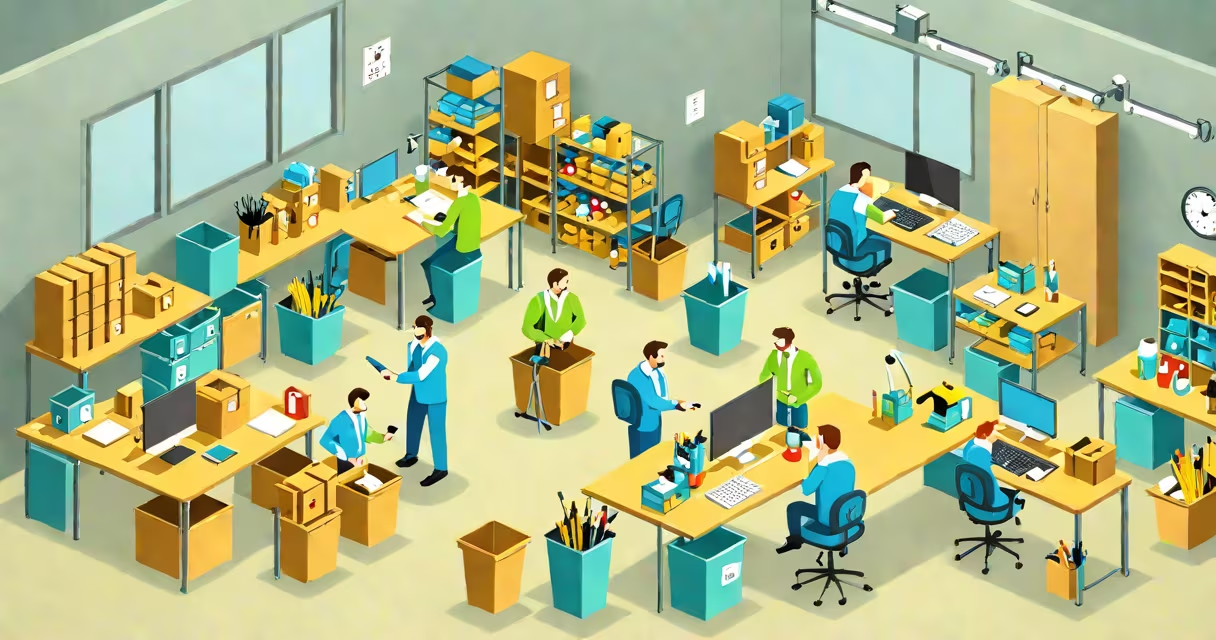
The principles of 5S are a systematic approach to workplace organization based on five Japanese terms-Seiri, Seiton, Seiso, Seiketsu, and Shitsuke-that together create a disciplined, efficient, and safe environment. This structure reduces clutter, minimizes wasted time, and supports continuous improvement in manufacturing, healthcare, and office settings.
Originating in Japan during the post-WWII industrial boom, 5S was adopted by Toyota and later became a core component of Lean manufacturing. The system is not about aesthetics-it's about eliminating non-value-added activities through consistent, visible standards. A single misplaced tool can delay production by minutes; a clean, labeled workspace prevents such delays.
Each principle builds on the previous one, forming a progressive cycle of improvement. The process begins with sorting essential items from non-essentials and ends with sustaining discipline across teams.
Seiri (Sort) removes unnecessary items from the workspace. Tools, materials, or documents not used within 30 days must be removed or stored off-site. A factory audit found that 22% of items in a workcell were unused-removing them reduced search time by 41%.
Seiton (Set in Order) arranges remaining items for immediate access. Tools are placed in designated locations marked by color-coded outlines or shadow boards. A hospital operating room that implemented Seiton saw a 30% reduction in instrument retrieval time during emergencies.
Seiso (Shine) involves cleaning and inspecting equipment daily. Workers wipe down machines, check fluid levels, and report wear. This step identifies small issues before they cause breakdowns. At a semiconductor plant, daily Seiso checks caught 14 potential failures in a month-preventing $68,000 in downtime.
Seiketsu (Standardize) creates consistent procedures across shifts and departments. Standardized labels, checklists, and signage ensure everyone follows the same rules. A warehouse that standardized bin colors and labeling reduced mis-pick rates from 7.2% to 0.9% in six weeks.
Shitsuke (Sustain) maintains the system long-term. Daily audits, team huddles, and recognition programs reinforce habits. Without Shitsuke, improvements revert. A study by the Lean Enterprise Institute found that 68% of 5S implementations failed within 12 months due to lack of ongoing leadership involvement.
While the core five steps remain unchanged, organizations adapt the model to fit their context. The most common variants include 5S with Safety (5S+), 5S with Quality (5S+Q), and digital 5S using mobile apps.
| Variant | Key Addition | Use Case |
|---|---|---|
| 5S+ | Safety protocols integrated into each step | High-risk environments like chemical plants |
| 5S+Q | Quality inspection points added | Automotive assembly lines |
| Digital 5S | Checklists managed via tablet or app | Remote or multi-site operations |
A common mistake is treating 5S as a one-time cleanup. The system fails when teams skip Shitsuke. One factory reported initial success but reverted to disorganization within three months because supervisors stopped auditing the floor.
5S is applied in factories, labs, hospitals, offices, and warehouses. Its primary goal is to eliminate waste-especially motion, waiting, and searching. In a call center, applying 5S to agent desks reduced average call handling time by 18 seconds per interaction.
Healthcare facilities use 5S to prevent errors. A surgical unit in Boston implemented Seiri and Seiton in instrument trays. After six months, near-miss reports dropped by 53%. The American Society for Healthcare Engineering notes that standardized layout reduces procedural errors by up to 40%.
Offices benefit too. A tech startup in Austin used 5S to organize server racks and cable runs. Post-implementation, IT staff resolved network outages 27% faster due to clearer access and documentation.
One limitation: 5S requires cultural buy-in. A manager at a printing company tried to enforce 5S overnight. Workers ignored the new labels. After involving teams in creating the standards, compliance rose to 94% in eight weeks.
Many confuse 5S with basic tidying. Cleaning a desk is not 5S. The difference lies in intentionality and standardization. A worker who moves a tool back to its spot after use is practicing 5S; someone who cleans only when it's messy is not.
Another error is assuming 5S applies only to physical spaces. Digital 5S includes organizing files, folders, and desktop icons. A finance department reduced report generation time by 35% after implementing digital Seiri and Seiton on shared drives.
Some think 5S is only for large-scale operations. A small bakery in Portland used 5S to organize flour bins, mixing bowls, and cleaning supplies. Within four weeks, staff reported fewer injuries and 12% higher productivity.
One non-obvious fact: 5S is not a standalone solution. It supports larger systems like Kaizen, Six Sigma, and Total Productive Maintenance. A manufacturer that combined 5S with daily Gemba walks saw a 23% drop in defect rates over nine months.
I once oversaw a 5S rollout in a packaging facility. We painted colored zones on the floor and labeled every bin. The first week, workers resisted. We held a session where teams rated their own workspace against the new standard. Seeing the gap made them want to fix it. By week three, employees began suggesting improvements-like adding handles to heavy bins. That ownership is the real win.
Understanding the principles of 5S is not about memorizing five steps. It's about creating a culture where clarity, consistency, and care are built into daily routines. When done right, 5S becomes invisible-because everything is where it should be, and nothing is missing.