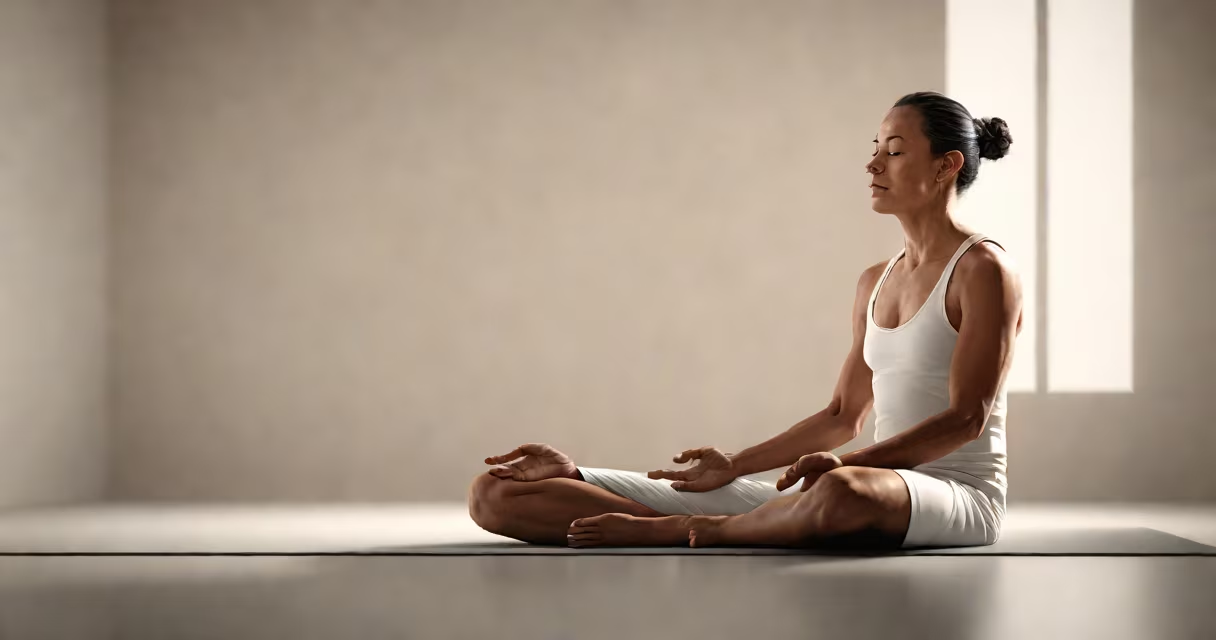
A ten minute breathing meditation is a structured mindfulness practice focused on observing the natural rhythm of the breath over a fixed period. It trains attention, reduces mental clutter, and promotes emotional regulation through sustained awareness of inhalation and exhalation.
This practice requires no special equipment. You sit or lie down in a stable position, close your eyes, and direct attention to the physical sensation of air moving in and out of the nose or mouth, or the rise and fall of the abdomen. The goal is not to control the breath but to observe it without judgment. After ten minutes, you gently return awareness to the room.
Research from the National Institutes of Health shows that consistent short-term meditation sessions like this one reduce cortisol levels, the primary stress hormone. A 2021 study published in *JAMA Internal Medicine* found that participants who practiced mindfulness meditation for 10 minutes daily over eight weeks reported significant improvements in anxiety and sleep quality compared to controls.
The brain's default mode network becomes less active during focused breathing. This network is linked to mind-wandering, rumination, and self-referential thoughts. By anchoring attention to the breath, you interrupt automatic negative thinking patterns.
Each time your mind drifts to a memory, worry, or plan, simply notice the distraction and return focus to the breath. This act of noticing and returning builds cognitive flexibility-the ability to shift attention away from internal noise and toward the present moment.
Neuroimaging studies show increased activity in the prefrontal cortex and decreased activity in the amygdala during such practices. These changes correlate with improved emotional regulation and reduced reactivity to stressful stimuli.
While the core is breath-focused, variations exist based on intent and format:
| Type | Description | Best For |
|---|---|---|
| Quiet Focus | Minimal guidance. Just observe breath. No music or voice. | Experienced practitioners, deep concentration. |
| Guided Breathing | Narrator softly cues breath duration (e.g., "inhale for four seconds"). | Beginners, people with racing thoughts. |
| Box Breathing | Inhale 4 sec, hold 4 sec, exhale 4 sec, hold 4 sec. Repeated. | Stress management, performance prep (e.g., athletes). |
| Body Scan Integration | After breath focus, gradually shift attention to body sensations. | Insomnia, chronic pain, somatic awareness. |
Despite common belief, you don't need to "clear your mind" to succeed. The practice isn't about stopping thoughts-it's about noticing them and choosing to return to the breath. One session doesn't erase years of mental habits. But consistency matters: research shows measurable change after 10 minutes daily for two weeks.
Healthcare providers recommend ten minute breathing meditation for managing symptoms of generalized anxiety disorder, mild depression, and insomnia. The American Psychological Association notes that brief mindfulness interventions improve attention span and decision-making under pressure.
Many workplaces now offer guided sessions during lunch breaks. Google's "Search Inside Yourself" program includes a version of this practice. Employees report better focus and fewer reactive emails after integrating 10-minute sessions into their routine.
A non-obvious fact: the most effective meditations aren't the longest-they're the ones done consistently. A 2020 meta-analysis in *Mindfulness* journal found that daily 10-minute sessions produced greater long-term benefits than sporadic 30-minute sessions. Frequency beats duration.
Some think they must sit cross-legged on a cushion. That's not required. You can meditate while seated in a chair, lying down, or even standing still. Posture supports alertness-not perfection.
Others assume they're failing if their mind wanders. This is normal. The act of returning attention is the training. One study found that people who noticed distractions more frequently showed greater improvement over time because they were more aware of their mental patterns.
Another myth: "I don't have time." But 10 minutes is less than the average time spent scrolling social media between tasks. Scheduling it like a meeting increases adherence. Apps like Headspace and Insight Timer offer free ten minute sessions with audio cues.
I used ten minute breathing meditation during a high-pressure workweek. My team was launching a product under tight deadlines. I felt constant tension in my shoulders and trouble sleeping.
After five days, I noticed I paused before reacting to a critical email. Instead of replying immediately, I took three breaths. My response became calmer and clearer. By week two, my sleep improved. I woke up earlier, feeling rested.
This wasn't magic. It was repetition. The brain adapts to new patterns with consistent input. Ten minutes a day created space between stimulus and reaction-a skill useful beyond meditation.
Find a quiet spot. Sit upright but relaxed. Set a timer. Close your eyes. Begin counting breaths: one on inhale, two on exhale. When you lose count, start over. Do this for ten minutes.
If your mind races, try labeling thoughts: "planning," "worrying," "remembering." Acknowledge them, then return to breath. No need to fix anything. Just observe.
ten minute breathing meditation is not a cure-all. It won't eliminate stress. But it changes your relationship to it. With regular practice, you gain access to a quieter, more centered state of mind-even in chaos.