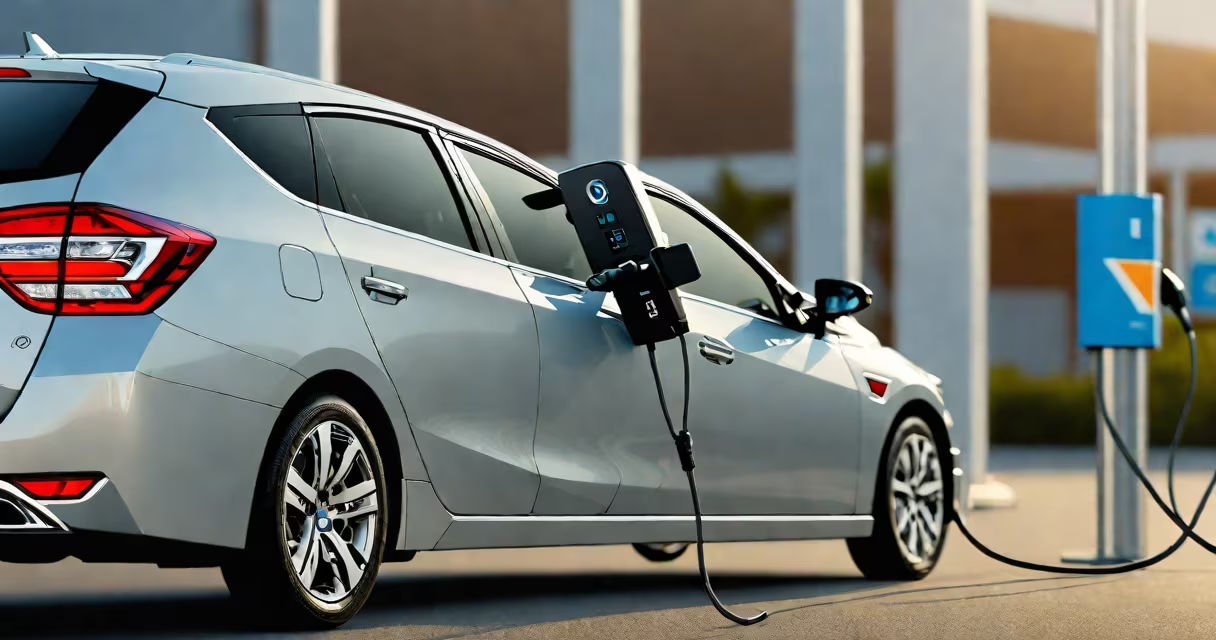
Hydrogen cars-vehicles powered by hydrogen fuel cells that generate electricity through a chemical reaction-are still being developed, but widespread adoption has not materialized due to high production costs, limited refueling infrastructure, and competition from battery-electric vehicles.
These cars work by combining hydrogen gas with oxygen in a fuel cell stack. The process produces electricity to power an electric motor and emits only water vapor as exhaust. Unlike battery-electric vehicles, which store energy in batteries, hydrogen cars generate power on demand using stored hydrogen under high pressure.
The concept gained attention in the early 2000s, with automakers like Toyota and Honda investing heavily in prototypes. The Toyota Mirai, launched in 2014, was one of the first mass-produced hydrogen fuel cell vehicles. Despite technical success, sales have remained low-fewer than 20,000 Mirais sold globally by 2023, according to the International Energy Agency (IEA).
Inside a hydrogen car, compressed hydrogen gas (typically at 700 bar pressure) flows into a fuel cell stack. There, it reacts with oxygen drawn from the air. This electrochemical process generates electricity, heat, and water-no combustion occurs.
The electricity powers an electric motor, driving the wheels. Excess heat is dissipated via a radiator system. The only emission is water vapor, making hydrogen cars zero-emission during operation.
A typical hydrogen tank holds about 5 kg of hydrogen, providing a driving range of 600 km (370 miles) on a single fill-comparable to gasoline-powered vehicles. Refueling takes 3-5 minutes, similar to gasoline refueling, which is faster than most battery-electric vehicles' charging times.
While all hydrogen cars rely on fuel cell technology, differences exist in design, efficiency, and application:
| Type | Key Features | Examples |
|---|---|---|
| Passenger Vehicles | Light-duty, consumer-focused models with fuel cell systems integrated into the chassis | Toyota Mirai, Hyundai NEXO |
| Commercial Trucks | Higher payload capacity, longer range, suited for freight and delivery routes | Hyundai XCIENT Fuel Cell Truck |
| Public Transit Buses | Used in urban areas with dedicated refueling stations; lower emissions and quieter operation | Proterra Catalyst FCEV, Toyota Sora |
Most hydrogen cars use proton-exchange membrane (PEM) fuel cells, which operate efficiently at low temperatures and respond quickly to load changes. These systems require platinum catalysts, contributing to high manufacturing costs.
Hydrogen cars are deployed primarily in regions with government-backed hydrogen initiatives. Japan leads in public adoption, with over 1,000 hydrogen refueling stations installed by 2023. California, USA, follows with around 50 stations, mostly concentrated in Southern California.
California's Zero Emission Vehicle (ZEV) program mandated automakers to sell increasing numbers of zero-emission vehicles. As a result, Toyota and Honda offered lease-only Mirai models in select markets. However, lack of expansion beyond pilot zones limited reach.
Commercial applications show more promise. In Germany, hydrogen-powered buses run on fixed routes in cities like Hamburg and Berlin. The German government invested €1 billion in hydrogen mobility projects between 2020 and 2023, supporting both infrastructure and fleet deployment.
Many assume hydrogen cars are inherently safer than battery-electric vehicles because they don't carry large lithium-ion batteries. But hydrogen tanks are designed to withstand impacts and punctures. A 2021 study by the National Renewable Energy Laboratory (NREL) found that hydrogen tanks failed less frequently than lithium batteries in crash simulations.
Another misconception is that hydrogen is produced cleanly. Most hydrogen today comes from steam methane reforming-a process that uses natural gas and releases carbon dioxide. Only about 1% of global hydrogen production is "green hydrogen," made via electrolysis using renewable electricity.
A key distinction: hydrogen cars are not the same as hydrogen-powered internal combustion engine vehicles. The latter burn hydrogen in engines, producing nitrogen oxides and requiring higher purity levels. Fuel cell vehicles are far more efficient and emit fewer pollutants.
In 2015, I tested a Toyota Mirai leased in Los Angeles. The car accelerated smoothly, with quiet operation and responsive handling. Refueling took four minutes at a station in Irvine. The dashboard displayed real-time hydrogen consumption and estimated range.
However, the nearest station was 45 minutes away. After five days of use, I had to plan trips around station locations. The car's efficiency was rated at 60 mpg equivalent (mpge), comparable to hybrid vehicles. Yet, the lack of accessible refueling made daily use impractical.
By 2023, Toyota had sold only 16,000 Mirais worldwide. Sales dropped sharply after 2020, coinciding with Tesla's rise in battery-electric performance and charging network expansion. The company shifted focus to hybrid and battery-electric models, reducing Mirai production.
Infrastructure remains the biggest barrier. Building a hydrogen refueling station costs $1.5 million to $2 million, compared to $10,000 for a standard EV charger. Stations require high-pressure storage, specialized compressors, and safety systems.
Production costs are also high. A fuel cell stack can cost $20,000 to manufacture, with platinum accounting for nearly half the price. While research aims to reduce platinum use, current systems still depend on rare materials.
Electric vehicles outperformed hydrogen cars in range, charging speed, and availability. By 2023, over 20 million EVs were on U.S. roads, while fewer than 10,000 hydrogen cars existed globally. Battery technology improved rapidly-Tesla's Model 3 now offers 500 km range with 15-minute fast charging.
Hydrogen cars haven't disappeared. They persist in niche roles: long-haul trucking, heavy industry, and public transit. The European Union's Green Deal includes funding for hydrogen infrastructure, targeting 10 GW of electrolyzer capacity by 2030.
Some experts argue hydrogen is essential for decarbonizing sectors where batteries aren't feasible-shipping, aviation, and steelmaking. For transportation, hydrogen may play a role in fleets rather than individual ownership.
As of 2024, the U.S. Department of Energy estimates that hydrogen could supply 14% of U.S. energy demand by 2050, with transport as a minor contributor. The IEA notes that hydrogen vehicles represent less than 0.1% of global light-duty vehicle sales.
For consumers, hydrogen cars remain a limited option. Their environmental benefit depends entirely on how the hydrogen is produced. Green hydrogen from renewables offers real sustainability-but scaling this requires massive investment in wind and solar power.