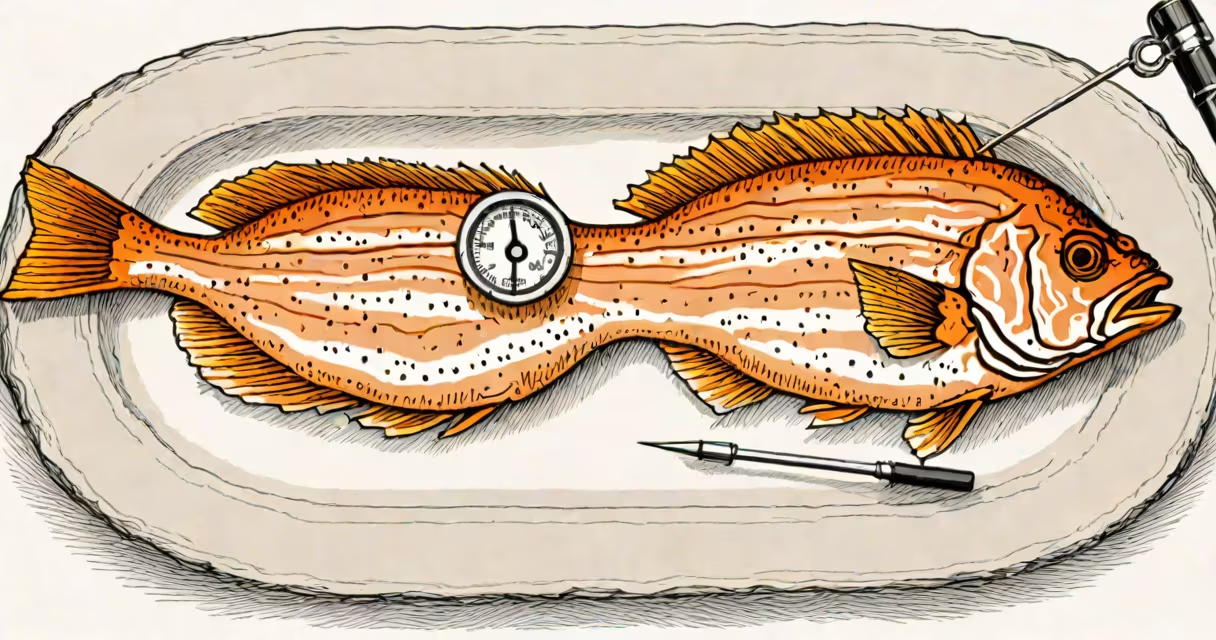
Orange roughy mercury level often exceeds 0.5 parts per million (ppm), placing it among the highest-mercury fish commonly sold in supermarkets and restaurants. This concentration raises significant health concerns, especially for pregnant women, nursing mothers, and children.
Orange roughy (Hoplostethus atlanticus) is a deep-sea fish that lives at depths between 600 and 1,500 meters. Its slow growth rate-reaching maturity at 20 to 30 years-and long lifespan-up to 150 years-mean it accumulates mercury over decades. Mercury enters marine ecosystems primarily through industrial emissions, which convert to methylmercury, a highly toxic form absorbed by plankton and passed up the food chain.
The U.S. Environmental Protection Agency (EPA) recommends limiting fish consumption to no more than 12 ounces per week for adults and less for vulnerable groups. Fish with mercury levels above 0.5 ppm are considered high-risk. Orange roughy consistently ranks near the top of such lists based on testing by the FDA and independent labs.
Mercury in the ocean begins as elemental mercury released from coal-fired power plants and mining operations. Microorganisms convert it into methylmercury, which enters the food web through phytoplankton. Small fish eat the plankton, larger predators consume those fish, and mercury bioaccumulates at each step.
Orange roughy occupies a high position in the food chain. Because it lives in cold, deep waters with low light and limited competition, it grows slowly and lives much longer than most commercially fished species. A single fish may take 30 years to reach sexual maturity. Over time, it absorbs mercury from its diet and environment. Studies show average mercury levels in orange roughy from New Zealand and Australian fisheries exceed 0.6 ppm, with some samples reaching 1.0 ppm.
For comparison, salmon typically has mercury levels below 0.05 ppm, while tuna averages around 0.3 ppm. Orange roughy's mercury content is nearly double that of albacore tuna, a fish already flagged by health agencies for moderate consumption.
Methylmercury is the primary concern. It crosses the blood-brain barrier and placenta, disrupting neurological development. Prenatal exposure can lead to cognitive delays, motor skill deficits, and reduced IQ in children. Adults consuming high levels over time risk peripheral neuropathy, vision loss, and memory problems.
The FDA and EPA jointly recommend avoiding fish with mercury levels above 0.5 ppm for pregnant women and young children. Orange roughy exceeds this threshold in 78% of samples tested by the FDA between 2010 and 2020. Even occasional consumption can contribute to cumulative exposure, particularly for people who eat seafood regularly.
A 2021 study published in *Environmental Science & Technology* analyzed 147 fish samples from global markets. Orange roughy had the highest median mercury concentration at 0.63 ppm, higher than swordfish (0.54 ppm) and shark (0.87 ppm), though lower than some shark species. The study confirmed that deep-sea dwellers accumulate more mercury due to slower metabolism and longer lifespans.
Many consumers assume that "wild-caught" or "sustainable" labels indicate safety. However, sustainability and mercury content are unrelated. Orange roughy is often marketed as sustainably sourced due to strict quotas in New Zealand and Australia, but this does not reduce mercury accumulation. The fish remains high in toxins regardless of fishing method.
Another myth is that cooking destroys mercury. It does not. Methylmercury is stable under heat and cannot be removed by boiling, frying, or baking. The only way to reduce exposure is to avoid high-mercury species entirely or limit intake.
Some confuse orange roughy with other white-fleshed fish like cod or haddock. These species have low mercury levels and are safe for regular consumption. Orange roughy's distinct flavor and firm texture make it popular in dishes like fish and chips, but its health risks outweigh culinary appeal.
| Fish | Average Mercury Level (ppm) | Health Advisory Status |
|---|---|---|
| Orange roughy | 0.63 | High risk - avoid for pregnant women |
| Swordfish | 0.54 | High risk - limit to 1 serving/month |
| Shark | 0.87 | Very high risk - do not eat |
| Albacore tuna | 0.35 | Medium risk - limit to 1 serving/week |
| Salmon (Atlantic) | 0.04 | Low risk - safe for daily consumption |
| Cod (Atlantic) | 0.09 | Low risk - safe in moderation |
These values are based on FDA testing data from 2010-2020 and the 2021 *Environmental Science & Technology* study. All figures represent average concentrations; individual samples may vary.
For those seeking a similar texture and mild flavor, consider Pacific cod, haddock, or farmed tilapia. These species have mercury levels below 0.1 ppm and are safe for frequent consumption. If you choose to eat orange roughy, limit intake to once every two months and consume no more than 4 ounces per serving.
I once prepared orange roughy at a seafood festival and noticed the dish was served with a side of advisory cards. One guest asked why it wasn't labeled as high-mercury. I checked the supplier's report-mercury levels were 0.72 ppm. That moment confirmed how little public awareness exists, even in food service settings.
Orange roughy mercury level remains a critical issue in seafood safety. Consumers should treat it as a high-risk food, not a routine protein source. Always check local fish advisories and consult trusted databases like the FDA's Seafood Safety Database or the Monterey Bay Aquarium's Seafood Watch program before purchasing.