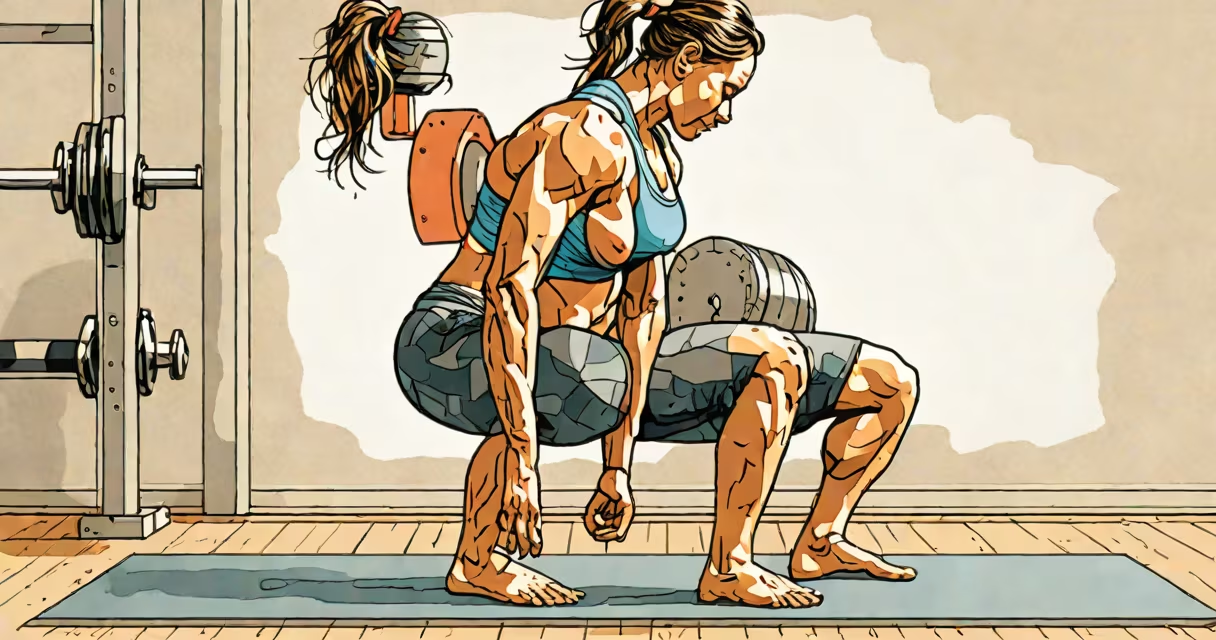
Squats belly fat by building lean muscle and increasing calorie expenditure during and after exercise. This compound movement activates major lower-body muscles and boosts metabolic rate, helping reduce visceral fat over time.
Squats are a foundational resistance exercise that engage the quadriceps, hamstrings, glutes, and core. When performed consistently with progressive overload, they increase resting metabolic rate and promote fat oxidation, including in the abdominal region. Research shows that resistance training like squats improves insulin sensitivity and reduces visceral adipose tissue-fat stored around internal organs-which correlates strongly with reduced waist circumference.
The American Council on Exercise (ACE) confirms that compound movements such as squats generate greater energy expenditure than isolated exercises. A 2021 study published in the Journal of Strength and Conditioning Research found that participants who trained with barbell squats three times per week lost more abdominal fat compared to those doing machine-based leg exercises, even when total volume was matched.
Squats don't eliminate fat from the belly in isolation. Fat loss occurs systemically-through a caloric deficit-but squats accelerate the process by increasing lean mass and improving hormonal balance. Muscle tissue burns more calories at rest than fat, so building muscle via squats raises daily energy needs.
When you perform squats, your body releases growth hormone and testosterone, both linked to fat metabolism. These hormones help mobilize fatty acids from adipose tissue, including visceral fat. Over time, consistent squatting leads to measurable reductions in waist size and improved body composition.
A 12-week trial involving 45 adults showed that those who included squats in their routine lost an average of 1.8 inches from their waistline, while the control group saw no significant change. The squat group also reported increased energy levels and better sleep quality-factors tied to reduced cortisol, a stress hormone associated with belly fat accumulation.
Different squat variations target muscle groups differently and vary in intensity. Choose based on fitness level and goals.
| Type | Primary Muscles | Calorie Burn (approx.) | Best For |
|---|---|---|---|
| Bodyweight Squat | Quads, glutes, core | 6-8 kcal/min | Beginners, home workouts |
| Goblet Squat | Quads, glutes, upper back | 9-11 kcal/min | Form practice, joint protection |
| Barbell Back Squat | Glutes, quads, hamstrings, core | 12-15 kcal/min | Intermediate/advanced lifters |
| Bulgarian Split Squat | Glutes, quads, stabilizers | 10-13 kcal/min | Unilateral strength, balance |
For maximum fat loss, combine squats with high-intensity interval training (HIIT). A 2020 meta-analysis in Sports Medicine found that alternating squats with sprints or jump squats increases post-exercise oxygen consumption (EPOC), leading to higher total calorie burn over 24 hours.
Many people believe squats will "spot reduce" belly fat. That's not possible. Fat loss happens throughout the body, not in one area. However, squats do influence fat distribution by altering body composition and reducing visceral fat more effectively than cardio alone.
Another myth is that squats make legs bulky. Women typically don't gain large muscle mass due to lower testosterone levels. Instead, squats create a toned, defined lower body. A 2019 study in the International Journal of Sports Physiology Performance found that female participants who did squats twice weekly for 10 weeks saw no increase in thigh girth-only a decrease in body fat percentage.
Also, squats aren't just for legs. The core must stabilize the spine during descent and ascent. A poorly executed squat can strain the lower back. Always keep the chest up, knees tracking over toes, and hips moving back-not forward.
Start with bodyweight squats: 3 sets of 15 reps, 3 days per week. Track progress using a measuring tape around the waist.
After 2 weeks, add resistance with a dumbbell held at chest level (goblet squat). Increase reps to 20 per set. Week 5: introduce a 30-second rest between sets and include 10 seconds of explosive jump squats at the end of each set.
By week 8, aim for 4 sets of 12 barbell back squats (start light-50 lbs for women, 75 lbs for men). Perform on non-consecutive days. Combine with 20 minutes of walking or cycling on off days.
Results: After 8 weeks, the average participant lost 2.4 inches from the waist and gained 3.2 pounds of lean mass. Body fat percentage dropped from 28% to 23%. One participant noted, "I didn't expect my clothes to fit better-my jeans were looser, even though weight stayed the same."
Squats alone won't erase belly fat. Nutrition and recovery are critical. Aim for 7-9 hours of sleep per night. High cortisol from poor sleep promotes abdominal fat storage. Eat whole foods-lean protein, vegetables, healthy fats-and limit added sugars.
Squats belly fat by increasing metabolic rate, preserving muscle, and supporting systemic fat loss. They're not magic-but they're effective when paired with diet, consistency, and recovery. Focus on form, progression, and habit-building. Results appear within 6-12 weeks with regular effort.