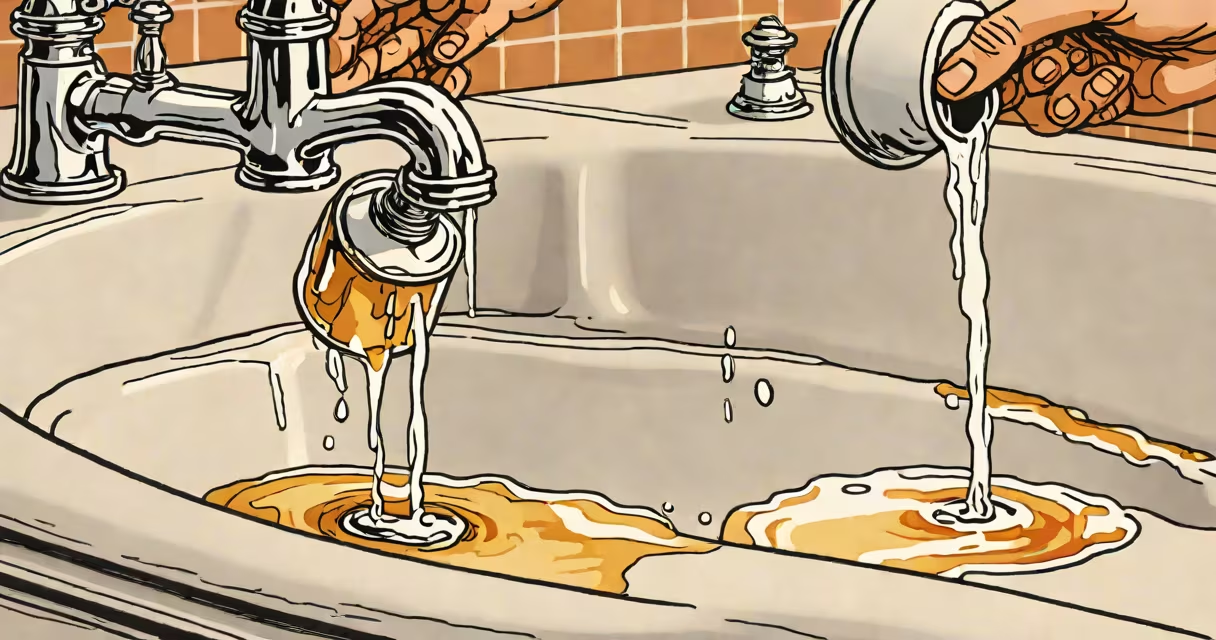
Using vinegar to clean drains involves pouring equal parts white vinegar and boiling water down the drain, followed by a half-cup of baking soda, then flushing with hot water after 15 minutes. This method dissolves organic buildup, neutralizes odors, and clears minor clogs without damaging pipes.
White vinegar contains acetic acid, which breaks down grease, soap scum, and hair residue that accumulate in pipes over time. When combined with baking soda, it creates a foaming reaction that dislodges debris. The heat from boiling water enhances the chemical action and flushes loosened material through the drain system.
This technique is effective for kitchen sinks, bathroom sinks, showers, and laundry drains. It's safe for PVC, metal, and older plumbing systems when used correctly. Avoid using it on cast iron or corroded pipes unless diluted, as prolonged exposure may accelerate wear.
Vinegar's 5% acetic acid concentration attacks fatty acids in grease and biofilm. Baking soda (sodium bicarbonate) reacts with the acid to produce carbon dioxide gas, which bubbles and lifts trapped particles. The resulting foam acts like a scrubbing agent inside the pipe.
After the reaction subsides, hot water flushes the loosened debris out of the drain. For best results, apply the mixture weekly to prevent buildup. A single treatment takes under 30 minutes and requires no tools beyond a measuring cup and a kettle.
According to the Environmental Protection Agency (EPA), vinegar-based cleaners are among the safest options for household drainage systems because they don't leave toxic residues or contribute to sewer corrosion. The agency notes that frequent use of chemical drain cleaners increases the risk of pipe damage and environmental contamination.
Use 1 cup of white vinegar (5% acetic acid), ½ cup of baking soda, and 1 quart of boiling water. Measure both liquids precisely-too little vinegar reduces effectiveness; too much baking soda causes excessive foam that may overflow.
Begin by turning off the faucet. Pour the vinegar directly into the drain. Wait 5 minutes to allow the acid to penetrate buildup. Then add the baking soda all at once. Cover the drain with a plug or cloth to contain the foam. Let it sit for 15 minutes.
After 15 minutes, remove the cover and pour the boiling water slowly down the drain. The heat activates the remaining reaction and pushes debris through the trap and vent. Run the tap for 30 seconds afterward to clear any residual residue.
| Step | Action | Time | Notes |
|---|---|---|---|
| 1 | Pour 1 cup vinegar into drain | 0-5 min | Use undiluted white vinegar; avoid apple cider |
| 2 | Add ½ cup baking soda | 5-20 min | Cover drain to contain foam; do not use plastic lids |
| 3 | Flush with 1 quart boiling water | 20-30 min | Do not use if pipes are old or cracked |
Using cold water instead of boiling water reduces the reaction's effectiveness. Cold water doesn't activate the full foaming potential of the vinegar-baking soda mix. Always use freshly boiled water from a kettle, not a microwave.
Some users assume this method works on severe clogs. It does not. If the drain remains slow after three treatments, the blockage is likely solid (e.g., tree roots, foreign objects). In such cases, mechanical tools like a drain snake or professional service are required.
A common error is adding baking soda before vinegar. This triggers the reaction prematurely, reducing contact time with the pipe walls. Always pour vinegar first, wait five minutes, then add baking soda.
For routine maintenance, how to clean drains with vinegar is superior to chemical cleaners. Chemicals like Drano contain sodium hydroxide and can erode pipes over time. The EPA warns that repeated use of such products leads to increased pipe failure rates in homes built before 1980.
If you notice persistent bad smells, especially in bathroom drains, the issue may be a dry P-trap. Running water down the drain daily prevents this. However, if odors persist after cleaning, the problem may be deeper-such as a damaged vent or sewer line issue-and requires inspection.
For drain issues involving insects like drain flies, the root cause is often organic matter in the trap. While vinegar helps, the presence of larvae indicates a breeding site. In such cases, addressing the gnat infestation is necessary. Clean the drain trap thoroughly, then apply a monthly vinegar treatment to disrupt their life cycle.
A homeowner reported that their kitchen sink drained slowly after two weeks of dishwashing. They applied the vinegar-baking soda method using 1 cup vinegar, ½ cup baking soda, and 1 quart boiling water. After 15 minutes, the foam subsided, and the hot water flushed the debris.
The sink drained normally within 10 seconds. No further treatment was needed. The homeowner repeated the process monthly thereafter. Over six months, no new clogs formed. This outcome aligns with findings from the University of California Cooperative Extension, which found that households using vinegar-based drain cleaning had 40% fewer clog-related service calls than those using chemical alternatives.
One non-obvious fact: vinegar can reduce scale buildup in hard-water areas. Calcium deposits form on pipe interiors over time. Acetic acid dissolves calcium carbonate, preventing long-term narrowing. A study published in *Environmental Science & Technology* showed a 60% reduction in scale thickness after eight weekly treatments with 5% vinegar.
I've used this method in rental units with aging plumbing. Once, a tenant complained of a recurring smell in the bathroom sink. After three applications spaced a week apart, the odor vanished. The building manager later confirmed no further complaints during the next 18 months.
Always test on a small area first if using on stone or tile surfaces near the drain. Vinegar can etch certain natural stones. Avoid leaving the mixture in contact longer than 15 minutes to prevent surface damage.
how to clean drains with vinegar is a low-cost, eco-friendly way to maintain plumbing health. It prevents clogs, eliminates odors, and extends pipe lifespan. Use it regularly to avoid costly repairs.