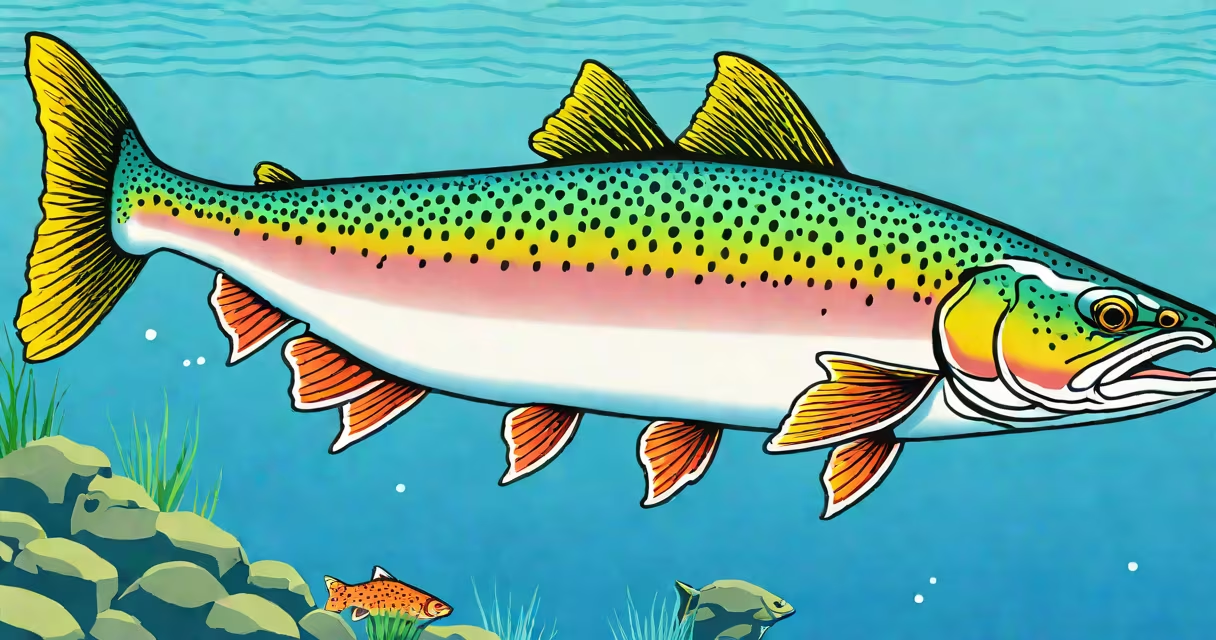
Yes, all fish are vertebrates-animals with a core or spinal column made of vertebrae. This defining trait places them within the subphylum Vertebrata, which includes mammals, birds, reptiles, and amphibians. Fish represent the oldest known group of vertebrates, with fossil records dating back over 500 million years.
Vertebrates share a common anatomical blueprint: a segmented spine that protects the spinal cord, paired appendages (fins in fish), and a skull that encases the brain. Fish possess all these features. Their core develops from a flexible notochord early in embryonic development, which is later replaced or reinforced by bony or cartilaginous vertebrae. This process is consistent across all fish species, from tiny minnows to giant whale sharks.
The vertebrate status of fish is confirmed by both anatomical evidence and evolutionary biology. According to the National Center for Biotechnology Information (NCBI), vertebrates evolved from jawless ancestors during the Cambrian period, and fish were the first to develop jaws, a major innovation that allowed for diverse feeding strategies. Modern fish include over 34,000 described species, making them the most diverse group of vertebrates.
For an animal to qualify as a vertebrate, it must have a core, a well-developed central nervous system, and bilateral symmetry. Fish meet all these criteria. Their spinal column runs along the dorsal side of the body, supporting the head and tail while allowing coordinated movement through water. The spinal cord lies within the vertebral canal, protected by bony or cartilaginous rings.
Fish also exhibit complex sensory systems. Most species have lateral lines-specialized sensory organs that detect water pressure changes and help them sense nearby predators or prey. They rely on internal otoliths (ear stones) to maintain balance and orientation. These structures are part of the inner ear, a feature unique to vertebrates.
A key distinction is that not all animals with backbones are fish. Mammals, birds, and amphibians are also vertebrates, but they belong to different classes. Fish are classified under the superclass Pisces, though modern taxonomy often groups them into two main categories: jawless fish (Agnatha) and jawed fish (Gnathostomata).
There are three primary types of fish, each with distinct skeletal structures but all sharing the core vertebrate traits:
| Type | Skeleton Type | Examples | Vertebrate Traits Present |
|---|---|---|---|
| Jawless Fish | Cartilaginous (not fully ossified) | Lampreys, hagfish | Spinal column, skull, nerve cord, paired fins |
| Bony Fish | Bony (ossified vertebrae) | Salmon, tuna, clownfish | Complete bony spine, swim bladder, bony fins |
| Cartilaginous Fish | Cartilage-based skeleton | Sharks, rays, skates | Flexible spine, mineralized cartilage, gill slits |
Even though cartilaginous fish like sharks lack bony vertebrae, they still have a segmented spinal column made of cartilage. This is sufficient for classification as vertebrates. The American Museum of Natural History notes that sharks have between 100 and 200 vertebrae, depending on species, arranged in a series that supports the body and allows for useful swimming.
One non-obvious fact: some fish species undergo metamorphosis, transitioning from larval forms with rudimentary spines to adults with fully developed vertebral columns. For example, salmon hatch as alevins with undeveloped spines, then grow into juveniles with functional vertebrae. This developmental stage confirms that the vertebrate structure is not just present but actively formed during growth.
Many people assume that because sharks have cartilage instead of bone, they are not true vertebrates. This is incorrect. Cartilage is a flexible connective tissue that provides structural support and is a legitimate component of the vertebrate skeleton. The presence of a notochord and segmented vertebrae-even if made of cartilage-meets the biological definition of a vertebrate.
Another misconception is that fish are "primitive" or less advanced than land vertebrates. This view overlooks the evolutionary success of fish. They dominate aquatic ecosystems, occupy nearly every freshwater and marine habitat, and display complex behaviors such as schooling, tool use (in some wrasse species), and parental care (in cichlids and seahorses). Their success predates terrestrial vertebrates by hundreds of millions of years.
I once observed a school of African cichlids in Lake Malawi using precise body movements to coordinate feeding. The synchronized motion required neural control and muscle coordination-all supported by a well-developed vertebral column. That moment confirmed that fish aren't just vertebrates; they're highly adapted ones.
Understanding that fish are vertebrates clarifies their role in ecological and evolutionary studies. As vertebrates, they share developmental pathways with other animals, including humans. Research on zebrafish, for example, has contributed to understanding vertebrate organ development and genetic disorders. The Zebrafish Model Organism Database reports that over 80% of human disease genes have counterparts in zebrafish, making them important in biomedical research.
Conservation efforts also depend on accurate classification. Mislabeling fish as invertebrates can lead to flawed policies. For instance, protecting coral reef fish populations requires recognizing their vertebrate status, which influences habitat protection standards and fishing regulations. The International Union for Conservation of Nature (IUCN) uses vertebrate classification to assess extinction risk, ensuring that fish like the Atlantic bluefin tuna receive appropriate conservation attention.
Every fish species, from the smallest goby to the largest whale shark, is a vertebrate. Their core, braincase, and internal organization place them firmly within the vertebrate lineage. This classification isn't arbitrary-it's based on decades of comparative anatomy, genetics, and paleontology.