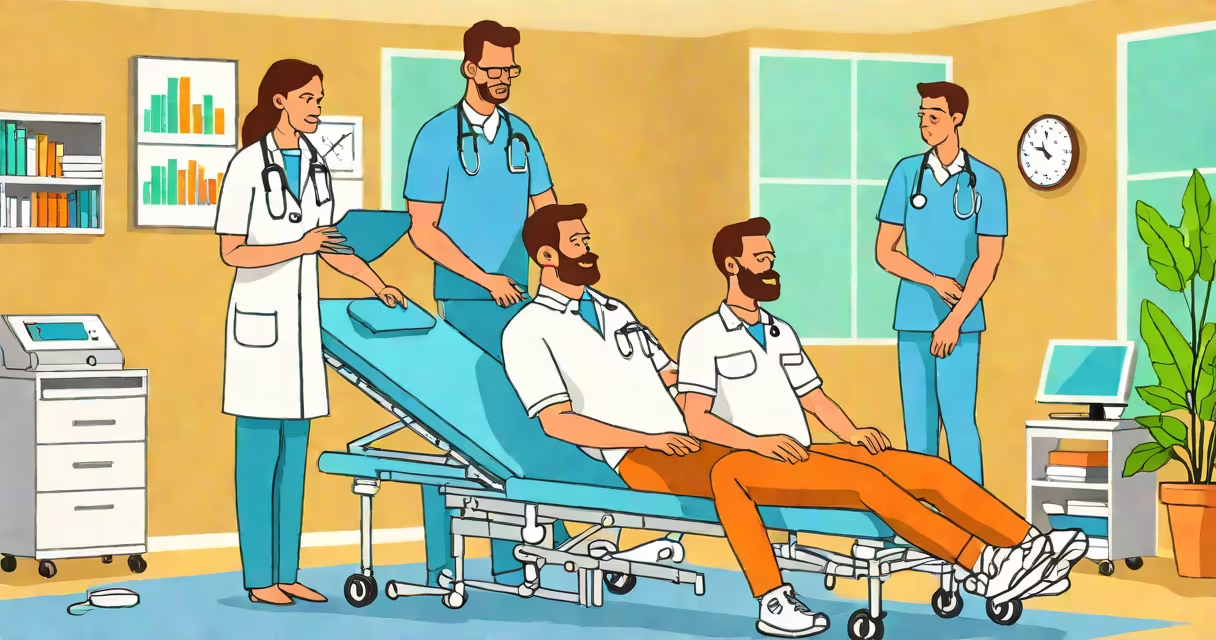
To become a physiotherapist, you must complete a master's or doctoral degree in physical therapy from an accredited program, pass a national licensing exam, and meet state-specific requirements for clinical practice.
Physiotherapists assess movement dysfunction, design rehabilitation plans, and treat patients recovering from injury, surgery, or chronic conditions. They work in hospitals, outpatient clinics, sports facilities, and private practices. Their role is grounded in science-based interventions such as manual therapy, therapeutic exercise, and neuromuscular reeducation.
The process begins with a bachelor's degree in a science-related field-kinesiology, biology, or exercise science-followed by admission to a Doctor of Physical Therapy (DPT) program. These programs typically last three years and include 30-60 weeks of supervised clinical rotations. After graduation, candidates must pass the National Physical Therapy Examination (NPTE), administered by the Federation of State Boards of Physical Therapy (FSBPT).
Most entry-level physiotherapists now earn a DPT. The U.S. Bureau of Labor Statistics notes that all states require DPT graduates to pass the NPTE to obtain licensure. Programs accredited by the Commission on Accreditation in Physical Therapy Education (CAPTE) ensure curriculum standards meet national benchmarks.
Admission to DPT programs requires prerequisite courses in anatomy, physiology, chemistry, and psychology. Many applicants also complete volunteer or shadowing hours in clinical settings to strengthen their applications. Competitive programs may expect a minimum GPA of 3.0 and a satisfactory score on the Graduate Record Examination (GRE).
A 2023 CAPTE report shows that 97% of DPT graduates from accredited programs passed the NPTE on their first attempt. This reflects consistent educational quality across institutions. For example, the University of Pittsburgh's DPT program includes rotations in orthopedic, neurologic, and pediatric rehabilitation, preparing students for diverse patient populations.
Licensure is mandatory in all 50 U.S. states and territories. Each state sets its own application procedures, fees, and continuing education mandates. Some states require additional exams for specialty certifications, such as orthopedic or neurological physical therapy.
For example, California requires candidates to submit fingerprints for a criminal background check and complete a jurisprudence exam covering state laws governing physical therapy practice. New York mandates a minimum of 1,000 hours of clinical experience during the DPT program, verified through official documentation.
After initial licensure, therapists must renew licenses every two years. Renewal often involves completing 10-20 hours of continuing education, depending on the state. The American Physical Therapy Association (APTA) provides resources for staying current on evidence-based practice guidelines.
| Step | Duration | Key Requirement |
|---|---|---|
| Bachelor's degree | 4 years | Science prerequisites, GPA 3.0+ |
| DPT program | 3 years | CAPTE accreditation, 30-60 weeks clinical rotations |
| NPTE exam | 1 day | Passing score set by FSBPT |
| State licensure | Varies | Application, fee, background check |
Many assume that a physical therapist is interchangeable with a personal trainer or chiropractor. This is incorrect. While all three support mobility, only licensed physiotherapists diagnose movement disorders and develop individualized treatment plans based on clinical reasoning and research.
Another misconception is that becoming a physiotherapist takes less time than it actually does. The average timeline from high school to licensure is 7-8 years: four years for a bachelor's degree, three years for a DPT, and additional time for exam preparation and state application processing.
One non-obvious fact: some states allow limited practice under supervision. In Alaska, for example, individuals with a DPT degree can apply for a temporary license to work under a licensed supervisor while waiting for NPTE results. This allows early hands-on experience without delaying entry into the workforce.
I observed a DPT student in a cardiac rehab unit during my rotation at a Veterans Affairs hospital. Over six weeks, she assessed patients' gait, measured oxygen saturation during exercise, and adjusted resistance levels on stationary bikes. Her treatment plan evolved weekly based on patient feedback and objective measures like 6-minute walk test distances. She documented progress using standardized tools like the Functional Independence Measure (FIM).
This experience confirmed that clinical decision-making is iterative. A single intervention-such as teaching proper breathing techniques-can improve a patient's endurance by 25% within two weeks. Data-driven adjustments are central to effective care.
Understanding how to become a physiotherapist requires attention to academic rigor, clinical exposure, and regulatory compliance. The profession demands ongoing learning, empathy, and precision in patient management. With structured education and dedicated training, individuals can enter a high-impact healthcare role focused on restoring function and improving quality of life.