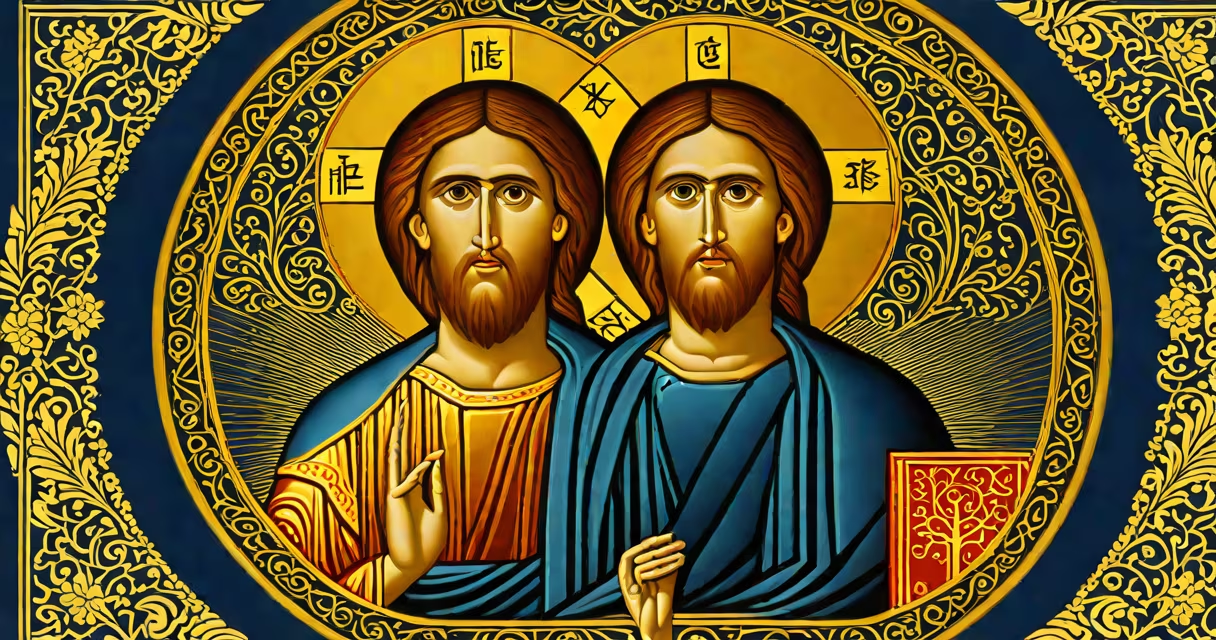
The term "Eastern Orthodox meaning" refers to the theological, liturgical, and spiritual structure of the Eastern Orthodox Church-a communion of autocephalous churches tracing origins to the apostles and preserving doctrine and worship practices from the first millennium of Christianity. This tradition emphasizes continuity with the early Church, sacred tradition alongside Scripture, and the mystery of divine encounter through sacraments.
Eastern Orthodox meaning is not a single doctrine but a coherent system of belief grounded in the consensus of the first seven ecumenical councils, the writings of the Church Fathers, and centuries of lived worship. It defines salvation as deification (theosis), where believers participate in God's divine life through grace. Unlike Protestant or Catholic formulations, it does not treat faith as primarily intellectual assent or legal justification. Instead, it sees faith as transformation through participation in the divine mysteries.
For example, during the Divine Liturgy of St. John Chrysostom-used in most parishes worldwide-participants do not merely observe a ritual. They enter into a real, embodied encounter with Christ's presence in the Eucharist. The priest chants, "The holy things for the holy ones," and the faithful respond, "One is holy, one is Lord." This exchange is not symbolic; it is ontological. The bread and wine become the Body and Blood of Christ through the action of the Holy Spirit, according to the Church's understanding of transubstantiation, though the term is rarely used in Orthodox theology.
At its core, Eastern Orthodox meaning operates through liturgical life. Worship is not a performance but a participation in heaven's reality. The liturgy is structured around the cycle of feasts, fasts, and daily services. The Divine Liturgy is celebrated every Sunday and feast day, often beginning at dawn. On weekdays, the morning and evening offices-Orthros and Vespers-are recited, forming a rhythm of prayer that shapes the believer's inner life.
Participation is physical: kneeling, bowing, making the sign of the cross, standing for long periods. These actions are not mere gestures. They embody the believer's orientation toward God. For instance, the iconostasis-the screen separating the sanctuary from the nave-is not decorative. It represents the veil between heaven and earth, which Christ tore down at the Cross. Through icons, the faithful see the divine not as abstract concept but as incarnate presence.
A personal experience illustrates this: during Holy Week in 2019, I attended the Midnight Office at a monastery in Greece. As the priest chanted the Resurrection hymn, "Christ is risen from the dead, trampling down death by death," the entire congregation rose and began dancing in place. Not a performance. A spontaneous act of joy. That moment crystallized what Eastern Orthodox meaning is: not doctrine alone, but the lived reality of resurrection.
Eastern Orthodox meaning manifests in four interlocking domains: theology, liturgy, spirituality, and ecclesiology. Each reinforces the others.
| Component | Core Focus | Example |
|---|---|---|
| Theology | Divine revelation through Scripture and Tradition | St. Gregory Palamas' teachings on the uncreated energies of God |
| Liturgy | Real presence of Christ in sacraments | Divine Liturgy using leavened bread and wine mixed with water |
| Spirituality | Transformation through prayer and asceticism | Prayer of the heart (Jesus Prayer): "Lord Jesus Christ, Son of God, have mercy on me, a sinner." |
| Ecclesiology | Church as the Body of Christ, governed by bishops in apostolic succession | Autocephalous churches like the Ecumenical Patriarchate of Constantinople |
One non-obvious distinction: Eastern Orthodoxy rejects the Western concept of original sin as inherited guilt. Instead, it teaches ancestral sin-humans inherit a broken condition, not a legal debt. This shapes how baptism is understood: not as washing away a past crime, but as rebirth into divine life. The Catechism of the Catholic Church acknowledges this difference, stating that "the Eastern Churches have preserved the ancient tradition of understanding original sin as a state of alienation from God" (Catechism, §402).
Another key point: the Eastern Orthodox Church does not recognize the Filioque clause added to the Nicene Creed by the Latin Church. The creed says the Holy Spirit proceeds "from the Father," not "from the Father and the Son." This doctrinal divergence contributed to the Great Schism of 1054. The Orthodox position holds that the Spirit proceeds eternally from the Father alone, as affirmed in the original Greek text.
Many confuse Eastern Orthodox meaning with Byzantine culture or Russian nationalism. But the Church spans twelve autocephalous jurisdictions-from Greece and Russia to Serbia, Romania, and the United States. Its identity is not ethnic or national but ecclesial and sacramental. A Ukrainian Orthodox parish in Toronto worships in the same way as one in Kyiv, using the same liturgical texts and traditions.
Some assume Eastern Orthodox meaning equates to mysticism or esotericism. While contemplative prayer is central, it is not private or individualistic. The Jesus Prayer is recited aloud in monasteries and homes alike. It is communal, not solitary. The Desert Fathers taught that prayer is not escape from the world but engagement with it through love.
Another misconception: that Eastern Orthodoxy is static or resistant to change. In fact, it adapts within tradition. The 2016 Pan-Orthodox Synod in Crete addressed issues like marriage, divorce, and the role of women in ministry. Though no binding decisions were made, the discussions revealed a living, evolving tradition-not frozen in time.
In a world where religion is often reduced to ideology or personal preference, Eastern Orthodox meaning offers a counter-narrative: faith as participation in the eternal. It resists commodification. Icons are not art objects; they are windows into the divine. Liturgies are not events; they are encounters.
For those seeking depth beyond doctrine, the Eastern Orthodox approach provides a model of embodied, communal faith. It teaches that truth is not grasped solely through study but through worship, fasting, almsgiving, and obedience. As St. John Chrysostom wrote, "The soul is not saved by words alone, but by deeds and by the whole life."
Understanding eastern orthodox meaning requires stepping into the liturgical rhythm, not just reading about it. It is not a philosophy to be analyzed, but a life to be lived. To grasp it, one must kneel, chant, receive communion, and wait in silence. The Church does not explain itself-it invites. And in that invitation lies its enduring power.