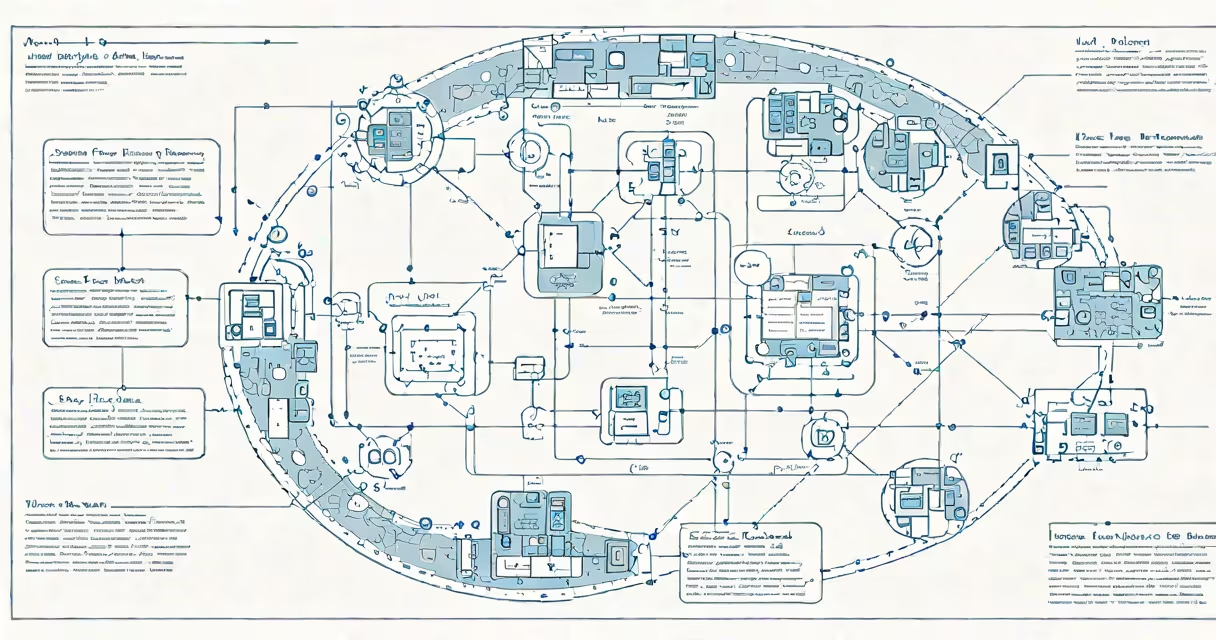
An Azure landing zone is a pre-configured, secure, and compliant environment in Microsoft Azure designed to support consistent, governed deployment of cloud resources across multiple subscriptions and regions. It establishes a standardized foundation for enterprise-scale cloud operations.
Organizations use Azure landing zones to enforce security policies, manage access, and align infrastructure with regulatory standards from day one. This setup prevents sprawl, reduces configuration drift, and helps every new workload adheres to organizational requirements.
The concept emerged from Microsoft's own internal cloud practices and was formalized in the Azure Well-Architected Structure. According to Microsoft, a landing zone "provides a secure, repeatable foundation for deploying applications and services in Azure" (Microsoft Learn). It is not a single service but a set of architectural patterns and tooling integrated across Azure services.
An Azure landing zone operates through a layered control model. At its core, it uses Azure Policy, Azure Blueprints, and Azure Management Groups to define and enforce organizational standards. These tools apply rules across subscriptions, such as requiring encryption at rest, mandating specific network configurations, or restricting public IP assignments.
For example, a company might require all virtual machines in production to use managed disks and have disk encryption enabled. The landing zone enforces this via Azure Policy, automatically blocking deployments that violate the rule. This enforcement happens before resources are created, preventing misconfigurations.
Identity and access management are tightly integrated. Azure Active Directory (Azure AD) governs who can create or modify resources. Role-based access control (RBAC) restricts actions based on job function. A developer might have permission to deploy test environments but not production systems. This separation minimizes accidental or malicious changes.
A typical Azure landing zone includes several interconnected elements:
| Component | Purpose | Key Services |
|---|---|---|
| Management Groups | Top-level container for organizing subscriptions and applying policies | Azure Management Groups, Azure Policy |
| Subscriptions | Logical containers for resources, often grouped by environment (dev, prod) | Azure Subscriptions, Azure Resource Manager |
| Networking | Isolates workloads using virtual networks, firewalls, and private endpoints | Azure Virtual Network, Azure Firewall, Private Link |
| Security & Compliance | Enforces encryption, logging, and audit trails | Azure Security Center, Azure Monitor, Azure Policy |
| Identity | Manages user and service account access | Azure AD, Conditional Access, RBAC |
There are two common deployment models: centralized and distributed. Centralized landing zones use a single management group hierarchy to control all subscriptions. This model suits organizations with strict governance needs, such as financial institutions or government agencies.
Distributed models allow regional or business-unit-specific landing zones while still enforcing global policies. For example, a multinational corporation might deploy landing zones in North America, Europe, and Asia, each with local compliance rules but sharing core security standards. This balance supports agility without sacrificing control.
Enterprises adopt Azure landing zones to reduce risk during cloud migration. Without one, teams often deploy resources independently, leading to inconsistent configurations, unsecured access, and difficulty auditing. A 2022 report by Gartner noted that 60% of cloud security failures stem from misconfiguration, many of which could be prevented with proper landing zone design (Gartner Research).
Financial services firms frequently implement landing zones to meet PCI DSS and SOX compliance. Healthcare providers use them to satisfy HIPAA regulations. In both cases, the landing zone helps data storage, access logs, and encryption settings meet legal thresholds from the start.
I once helped a retail chain migrate 120+ applications to Azure. Without a landing zone, they had 14 different network configurations across departments. After implementing a centralized landing zone with Azure Blueprints, they reduced configuration errors by 87% and cut onboarding time for new teams from 3 weeks to under 48 hours.
Many assume a landing zone is a single template or a downloadable package. It is not. It's a living system built from reusable components, often deployed via Infrastructure-as-Code (IaC) tools like Terraform or Bicep. The setup requires ongoing maintenance and policy updates.
Another misconception is that landing zones are only for large enterprises. While they're most impactful at scale, small teams can benefit too. A startup with five engineers can use a minimal landing zone to prevent accidental exposure of customer data-such as a database left publicly accessible.
Some confuse landing zones with Azure Quickstart Templates. Those are individual resource sets for specific tasks (e.g., "deploy a web app"). A landing zone is broader-it defines the entire operational environment, including governance, networking, and monitoring.
A national retailer planned to move its e-commerce platform to Azure. They needed to ensure that all new environments met GDPR, PCI DSS, and internal security standards.
They implemented a landing zone with:
prod, staging, and devWhen a developer tried to deploy a database with public access, the deployment failed. The error message cited a violation of the "No public IPs on databases" policy. The team corrected the configuration and redeployed successfully.
This setup reduced audit findings by 92% over six months and enabled automated compliance reporting. The organization later expanded the same landing zone structure to their international subsidiaries.
An Azure landing zone is not a one-time setup. It's a foundational layer that evolves with business needs, security requirements, and regulatory changes. Its value lies in consistency, control, and risk reduction-making it essential for any organization serious about secure, scalable cloud operations.