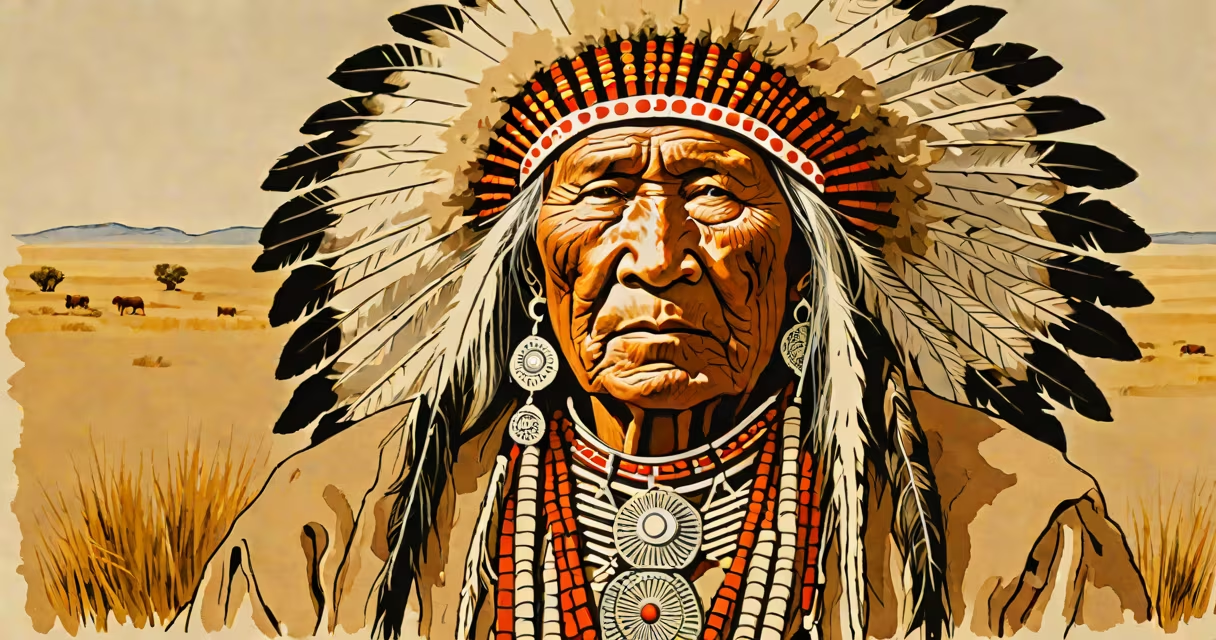
Great plains tribes are Indigenous nations whose ancestral homelands spanned the grasslands of central North America, from present-day Montana and Saskatchewan south through the Dakotas, Nebraska, Kansas, Oklahoma, and into northern Texas. These groups developed complex societies centered around bison hunting, seasonal mobility, and spiritual traditions tied to the land and sky.
Before European contact, great plains tribes included the Lakota, Dakota, Nakota (collectively known as the Sioux), Comanche, Cheyenne, Arapaho, Kiowa, Crow, and Blackfeet. They adapted to the vast, treeless prairie through advanced tracking, communal hunting strategies, and portable dwellings like the tipi. Their economies were based on bison-used for food, clothing, tools, and shelter-and trade networks extended across hundreds of miles.
Historical records from the U.S. National Archives and the Smithsonian Institution confirm that by the 18th century, many great plains tribes had adopted the horse, acquired through Spanish colonization in the Southwest. This transformed their mobility, warfare, and hunting efficiency. For example, the Comanche became dominant in the Southern Plains by the 1750s, controlling territory from western Texas to eastern Colorado.
Bison were central to daily life. A single hunt could yield enough meat and hides to sustain a band for months. The Lakota practiced the Sun Dance annually, a ritual involving fasting, prayer, and symbolic sacrifice to honor Wakan Tanka-the sacred force. This ceremony was not merely religious; it reinforced group cohesion and leadership roles.
Social organization varied. The Lakota were divided into seven councils (Oglala, Miniconjou, Hunkpapa, etc.), each with autonomous leaders. Decision-making relied on consensus among elders and war chiefs. The Cheyenne used a dual chief system-one military leader and one spiritual leader-ensuring balance between authority and tradition.
Archaeological evidence from sites like the Folsom site in New Mexico shows that humans have inhabited the Great Plains for at least 12,000 years. Clovis points, dating to 13,000 BCE, indicate early big-game hunting. Later, the development of the atlatl (spear-thrower) and later the bow and arrow marked technological shifts that increased hunting success.
Different great plains tribes evolved distinct cultural expressions based on geography, climate, and interaction with neighboring nations. The following table outlines key differences:
| Tribal Group | Primary Region | Language Family | Distinct Practices |
|---|---|---|---|
| Lakota | South Dakota, Wyoming | Siouan | Use of the sacred pipe; Sun Dance ceremonies; matrilineal descent |
| Comanche | West Texas, Oklahoma | Caddoan | Highly mobile; controlled major trade routes; resisted U.S. expansion |
| Kiowa | Oklahoma, Kansas | Kiowa-Tanoan | Warrior societies; painted medicine bundles; origin story tied to mountain |
| Crow | Montana, Wyoming | Siouan | Skilled horse breeders; maintained large winter camps; oral histories of migrations |
One lesser-known fact: the Kiowa traditionally used a "sun dance" variant called the *K'i-yu* ceremony, which involved dancing under extreme heat and fasting for four days. This practice was not a public spectacle but a private rite for individuals seeking spiritual insight or healing.
By the 1800s, U.S. government policies disrupted great plains tribes' way of life. The Indian Removal Act of 1830 and subsequent treaties led to the forced relocation of thousands. The 1868 Treaty of Fort Laramie guaranteed the Black Hills to the Lakota-but the U.S. government seized them after gold was discovered in 1874.
The Battle of Little Bighorn in 1876, where Lakota and Cheyenne warriors defeated General Custer's 7th Cavalry, exemplifies resistance. Yet within two years, the U.S. Army had broken the power of the free bands. By 1890, the last major resistance ended with the Wounded Knee Massacre, where over 250 Lakota men, women, and children were killed by U.S. troops.
Forced assimilation followed. The Dawes Act of 1887 divided tribal lands into individual allotments, aiming to dissolve tribal governance. Over 90 million acres of Native land were lost this way. Today, federally recognized great plains tribes include the Oglala Sioux Tribe, the Comanche Nation, and the Kiowa Tribe of Oklahoma.
Many assume all great plains tribes were nomadic and warlike. But while mobility was common, so was agriculture. The Mandan, Hidatsa, and Arikara-though often grouped with the Great Plains due to location-lived in permanent earth lodges and farmed corn, beans, and squash. They were part of the Missouri River culture and traded extensively with Plains groups.
Another misconception: that great plains tribes were culturally uniform. In reality, languages differ widely-Lakota belongs to the Siouan family, Comanche to Caddoan, and Kiowa to Kiowa-Tanoan. These linguistic differences reflect millennia of separation and adaptation.
When visiting the National Museum of the American Indian in Washington, D.C., look for the 1870s ledger art of the Kiowa artist Silver Horn. His drawings depict battles, ceremonies, and daily life with astonishing detail-proof that great plains tribes preserved their stories long before written records.
Today, great plains tribes maintain sovereignty through federal recognition. The Oglala Sioux Tribe operates the Pine Ridge Reservation in South Dakota, where tribal courts handle civil and criminal matters. The Comanche Nation hosts an annual powwow in Lawton, Oklahoma, drawing thousands from across the U.S. and Canada.
I once attended a summer gathering at the Standing Rock Sioux Reservation in 2019. A youth group performed a traditional drum circle using handmade hides and cedar sticks. The rhythm echoed across the river valley-same beat, same intent, as it had for generations.
These communities continue to teach languages, revive traditional crafts, and advocate for treaty rights. The Standing Rock Sioux Tribe's legal challenge to the Dakota Access Pipeline in 2016 drew global attention to environmental justice and tribal sovereignty.
Understanding great plains tribes requires moving beyond stereotypes. They are not relics of the past. They are living nations with documented histories, legal rights, and ongoing cultural expression. Their resilience stems not from endurance alone, but from deliberate preservation of identity, language, and governance.