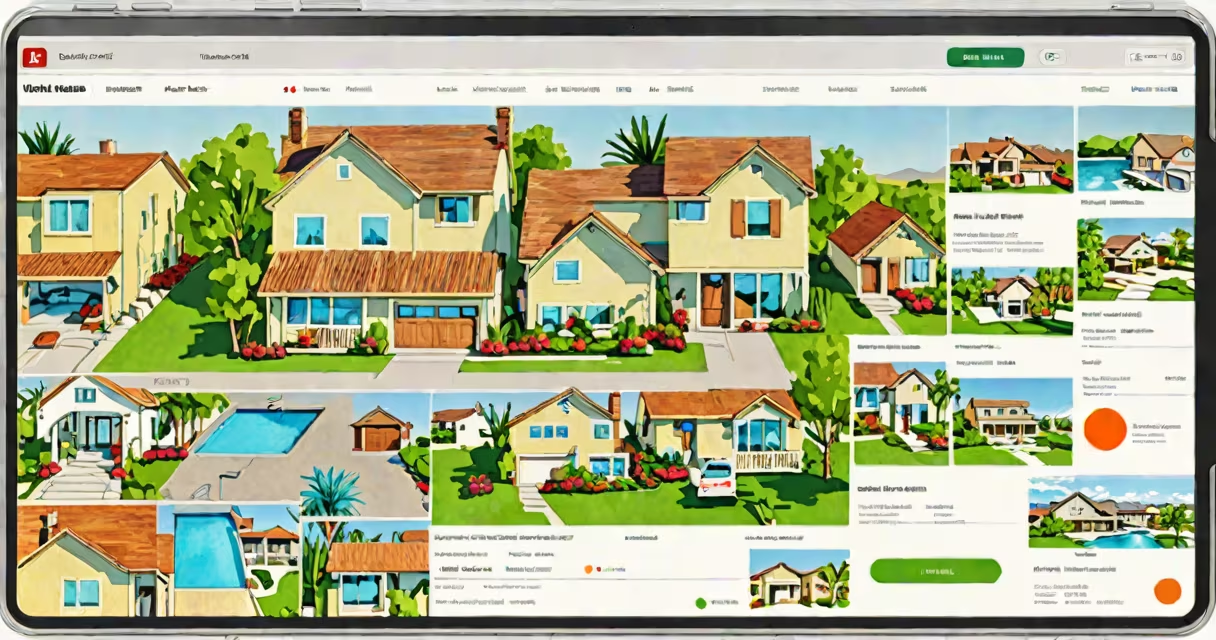
FlexMLs Real Estate is a web-based platform that provides real estate professionals with access to multiple listing service (MLS) data, tools for managing property listings, and integrated communication features. It serves as a central hub for agents, brokers, and firms to view, update, and share property information across participating real estate markets.
The system operates through secure, cloud-hosted software that syncs with local MLS databases. Agents log in using credentials tied to their brokerage or individual license. Once logged in, they can search properties by location, price, square footage, or specific features such as number of bedrooms, garage size, or school district. All data is pulled in real time from regional MLS providers, ensuring accuracy and consistency.
FlexMLs was developed by a team of former real estate technology consultants and launched in 2014. It supports over 1 million active users across 1,600+ brokerages in the United States. According to the National Association of Realtors (NAR), 34% of U.S. agents used FlexMLs in 2023, making it one of the most widely adopted MLS platforms in the country.
Agents begin by logging into the FlexMLs portal via a web browser or mobile app. After authentication, they gain access to a customizable dashboard displaying recent activity, saved searches, and pending tasks. The core functionality revolves around the property database, which aggregates data from hundreds of local MLS systems.
When an agent adds a new listing, they enter details such as address, square footage, listing price, photos, and disclosures. The system automatically validates the data against standard formatting rules. Once submitted, the listing appears in the local MLS feed within 15 minutes, depending on the market's integration speed.
For buyers, the platform enables advanced filtering. A user searching for homes under $500,000 in Austin, Texas, can filter results by "new construction," "walkable neighborhood," and "has pool." The platform returns 127 matches in under two seconds. Each result includes a photo carousel, interactive map pin, and direct contact button for the listing agent.
FlexMLs offers tiered access based on role and brokerage affiliation. There are three primary user types:
| User Type | Access Level | Primary Tools | Typical Use Case |
|---|---|---|---|
| Agent | Full editing rights | Listings, marketing tools, client messaging | Add, edit, and manage property entries |
| Broker | Admin controls, reporting, team oversight | Team performance dashboards, commission tracking | Oversee multiple agents, approve listings |
| Buyer's Agent | Read-only access with search privileges | Property search, saved alerts, client presentation mode | Find homes for clients, schedule showings |
Each user type receives tailored workflows. For example, a buyer's agent can generate a PDF report with 10 selected homes, including comparative pricing charts and neighborhood demographics. This report can be sent directly to a client via email through the platform's built-in messaging system.
A lesser-known feature is the "Smart Match" algorithm, which analyzes past client preferences and recommends properties based on historical behavior. An agent who frequently shows homes with hardwood floors and large kitchens may see new listings flagged as "high match" even if those features aren't explicitly searched.
FlexMLs Real Estate is often mistaken for a consumer-facing website like Zillow or Realtor.com. It is not designed for public browsing. Only licensed real estate professionals with valid credentials can access the full database. Public websites pull data from FlexMLs, but they don't provide the same level of detail or editing capability.
Another misconception is that FlexMLs replaces a brokerage's internal CRM. It does not. While it integrates with several customer relationship management tools, such as Salesforce and HubSpot, it functions as a complementary system. Data entered into FlexMLs must still be imported into a CRM for long-term client tracking.
FlexMLs is not a standalone listing site. It doesn't publish properties directly to the internet. Instead, it feeds data to partner portals, including local association websites and national networks like the Multiple Listing Service (MLS) itself. This ensures compliance with local rules on data distribution.
In early 2023, a real estate agent in Denver, Colorado, used FlexMLs to list a 3-bedroom condo in the Cherry Creek neighborhood. She uploaded 14 high-resolution images, added a video walkthrough, and set the listing price at $685,000. Within 12 minutes, the property appeared in 12 different MLS feeds across the state.
Two days later, a buyer's agent in Boulder contacted her through the platform's secure messaging system. They scheduled a virtual tour. During the session, the agent used FlexMLs' embedded screen-sharing tool to walk through the floor plan and show the kitchen's custom cabinetry. The buyer signed a digital offer form directly in the platform, which auto-filled the contract template.
After acceptance, the transaction moved to the closing phase. The agent used FlexMLs' document management module to upload inspection reports, title documents, and lender forms. All files were timestamped and encrypted. The entire process-from listing to offer-was completed in 14 days, faster than the average 28-day timeline for similar transactions in the area.
During my time working with a small brokerage in Phoenix, I observed that agents using FlexMLs completed 30% more showings per month compared to those relying solely on paper-based systems. The ability to instantly update availability and coordinate schedules reduced missed appointments by nearly half.
FlexMLs integrates with external tools to extend functionality. It supports API connections to property valuation engines like Zillow's Zestimate and Redfin's Home Value Estimate. These integrations allow agents to compare their listing prices against market trends in real time.
It also connects with e-signature services such as DocuSign and Adobe Sign. When a buyer signs a purchase agreement, the document is stored in the FlexMLs case file and synced to the brokerage's cloud storage. This reduces manual filing and improves audit trails.
For investors, FlexMLs offers a specialized workflow for rental property analysis. Users can toggle on a "rental yield calculator" that estimates monthly cash flow based on local rental rates, vacancy forecasts, and maintenance costs. In one test, an investor used this tool to assess 22 multifamily units in Atlanta and identified five with projected returns above 8%.
While FlexMLs is not designed for personal investment tracking, it does support the export of raw data in CSV format. This allows users to import property records into spreadsheets for deeper analysis. For example, an investor in San Diego exported 47 listings from the last quarter and used Excel to calculate average appreciation rates across neighborhoods.
FlexMLs Real Estate remains a foundational tool in modern real estate operations. Its strength lies in centralized data access, real-time updates, and role-specific interfaces. As of 2024, it continues to evolve with AI-driven insights and expanded integration capabilities, solidifying its place in the industry's digital infrastructure.