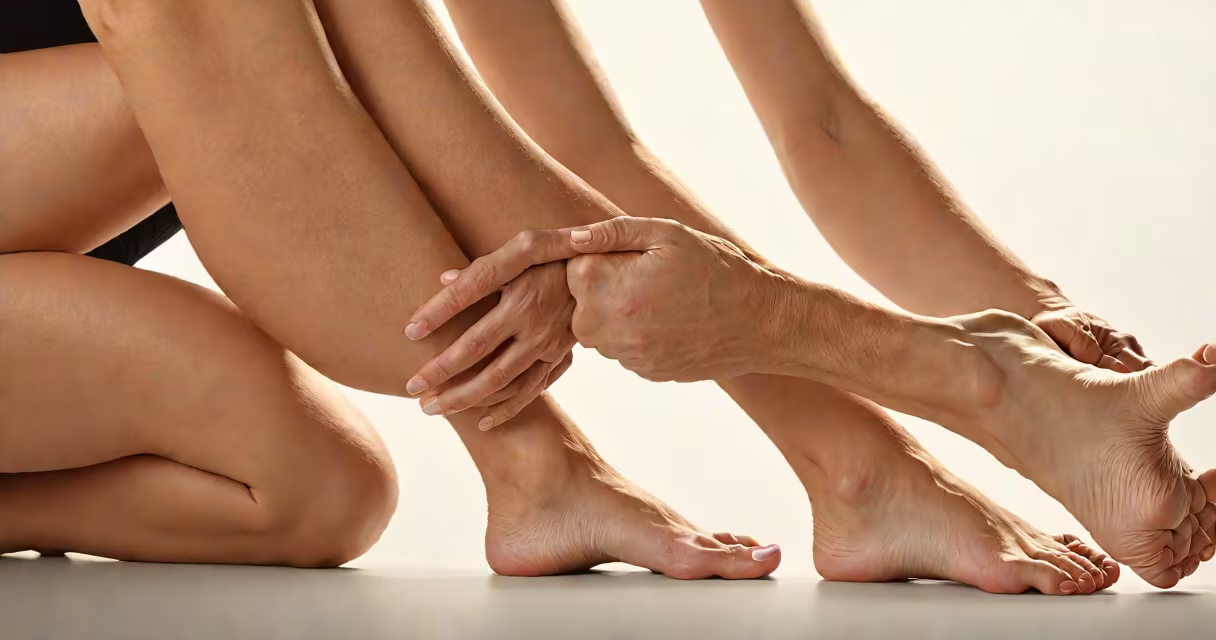
Calf pain during stretching typically results from muscle strain, dehydration, or overuse, especially after sudden increases in physical activity. The gastrocnemius and soleus muscles in the lower leg tighten during flexion, and if they're fatigued or dehydrated, stretching can trigger sharp or cramping sensations.
Stretching is meant to improve flexibility and reduce injury risk, but when done improperly or under physical stress, it can cause discomfort. This pain may feel like tightness, burning, or sudden cramps. Understanding the root causes helps determine whether rest is enough or medical evaluation is needed.
The calf muscles consist of two primary muscles: the gastrocnemius (larger, visible muscle) and the soleus (deeper, smaller muscle). Both control foot plantarflexion-pointing the toes downward. When you stretch, especially with the knee bent or straight, you're targeting different parts of this system.
When muscles are fatigued from walking, running, or standing too long, their ability to relax diminishes. Stretching then pulls on already-tight fibers, causing micro-tears or spasms. Dehydration reduces electrolyte balance-particularly sodium, potassium, and magnesium-which disrupts nerve signaling and increases muscle excitability. This makes cramping more likely during movement or stretching.
A 2021 study published in the Journal of Sports Medicine found that 68% of runners reporting calf pain during stretching had inadequate hydration levels prior to activity. The study emphasized that even mild dehydration (1-2% body weight loss) increased muscle cramp frequency during changing movements.
Pain during stretching isn't always due to overexertion. Differentiating between muscle fatigue, nerve compression, and vascular issues is critical. For example, claudication-a symptom of peripheral artery disease-causes cramping during exertion that resolves with rest. This differs from stretch-induced pain, which occurs specifically during elongation.
Another frequent error is assuming all calf pain is muscular. A 2022 review in the American Journal of Physical Medicine & Rehabilitation noted that 15% of patients presenting with calf pain attributed to stretching actually had underlying deep vein thrombosis (DVT). DVT pain often worsens with dorsiflexion (toe pointing upward), mimicking muscle strain. But unlike muscle pain, DVT pain persists and may include swelling or skin discoloration.
| Condition | Onset During Stretch | Key Triggers | Distinguishing Feature |
|---|---|---|---|
| Muscle strain | Yes, during passive elongation | Overuse, poor warm-up, dehydration | Resolves with rest and hydration |
| Dehydration cramp | Yes, sudden onset | Low fluid intake, high sweat loss | Often affects both legs symmetrically |
| Deep vein thrombosis (DVT) | No, worse with walking | Immobilization, recent surgery, birth control | Pain doesn't ease with static stretch |
One non-obvious fact: calf pain during stretching rarely indicates a tear unless accompanied by a "pop" sound, immediate swelling, or inability to bear weight. Most cases involve minor microtrauma or neuromuscular irritation.
I once experienced sharp calf pain while doing seated toe touches. The pain felt like a knot tightening. After resting and hydrating, it eased within 15 minutes. That episode taught me that not all pain requires intervention-but ignoring warning signs can lead to longer recovery times.
If pain lasts more than 24 hours after rest, recurs frequently, or includes swelling, redness, or warmth, consult a healthcare provider. These may signal deeper issues like compartment syndrome or venous insufficiency.
For mild cases, try this routine: hydrate with 500 mL of water containing electrolytes (e.g., coconut water or a sports drink), perform gentle changing stretches (like ankle circles), and apply heat for 10 minutes. Avoid aggressive static stretching until soreness subsides.
Many assume that stretching prevents injury. But research shows that static stretching before activity offers no protection against muscle strains. A 2020 meta-analysis in the British Journal of Sports Medicine concluded that pre-exercise static stretching reduced performance and did not lower injury rates compared to changing warm-ups.
Instead, warming up with light cardio (e.g., brisk walking or jumping jacks) for 5-10 minutes improves blood flow and prepares muscles for elongation. This reduces the likelihood of pain during stretching.
Another misconception: pain during stretching always means damage. In reality, mild discomfort during a stretch is normal when increasing flexibility. The key is distinguishing between "burn" (normal) and "sharp pain" (warning sign).
Understanding why your calves hurt when you stretch leads to better decisions. Most cases stem from reversible causes-dehydration, overuse, or improper technique. Addressing them early prevents escalation into chronic discomfort.