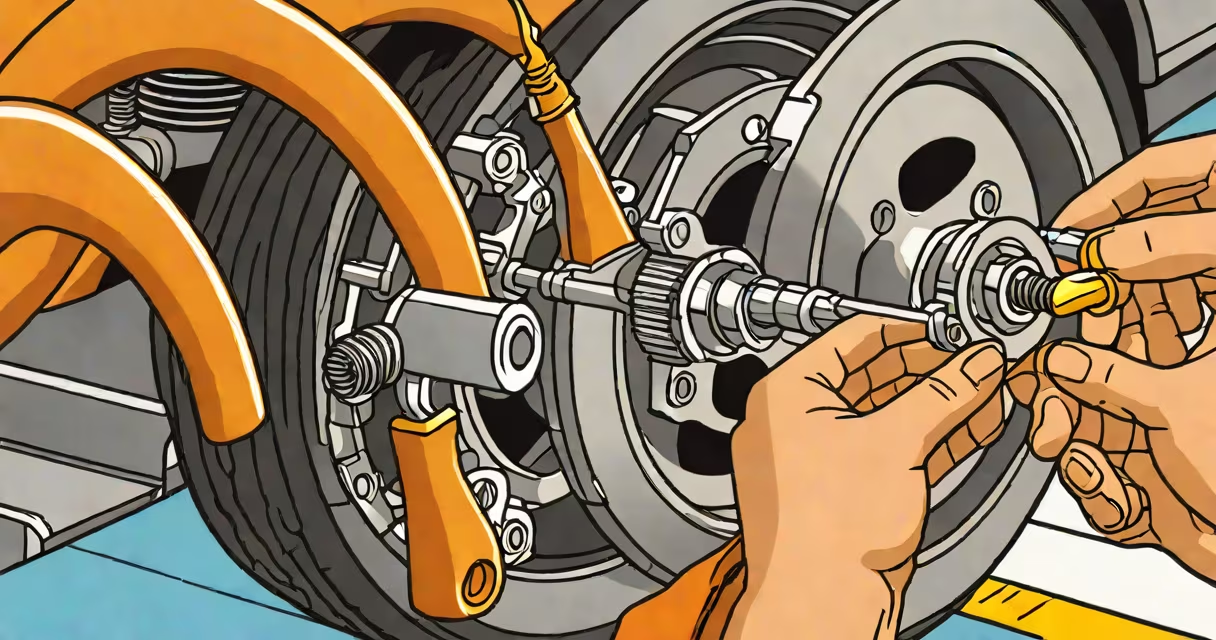
Use high-temperature, synthetic brake-specific grease on caliper pins to prevent seizing, reduce friction, and ensure consistent brake pad movement. Avoid regular greases-they degrade under heat and can contaminate brake pads.
Caliper pins connect the brake caliper to the mounting bracket. They allow the caliper to move freely during braking and release. Without proper lubrication, these pins can seize due to corrosion or heat buildup, leading to uneven pad wear, dragging brakes, or complete failure.
Brake caliper pin grease must withstand temperatures above 500°F (260°C) and resist water, oil, and dust. Standard household greases fail quickly under these conditions. Using the wrong product risks contamination of brake linings, which reduces stopping power and increases wear.
When a vehicle brakes, the caliper piston pushes the brake pads against the rotor. After release, the caliper must retract smoothly. This requires the caliper to slide back on its mounting pins. Lubrication reduces friction between the pin and bushing or sleeve.
Without grease, metal-on-metal contact causes galling and corrosion. Over time, this leads to binding. A stuck caliper doesn't retract properly, causing constant drag on the rotor. Drag increases fuel consumption, overheats rotors, and wears pads prematurely.
Properly applied grease forms a durable film that resists degradation. It maintains low friction across temperature cycles-from cold start to highway braking. This ensures the caliper returns to its resting position after each stop.
Brake caliper pin grease is typically a lithium or polyurea-based thickener with synthetic base oils. These formulations remain stable under extreme heat and resist breakdown from moisture and road debris.
Two types dominate automotive use:
| Type | Temperature Range | Best For | Common Brands |
|---|---|---|---|
| Synthetic lithium complex | Up to 350°C (662°F) | High-performance and track use | Mobil 1, Permatex Ultra Black |
| Polyurea-based | Up to 260°C (500°F) | Standard passenger vehicles | Permatex Brake Caliper Grease, CRC Brake & Caliper Grease |
Do not use chassis grease, wheel bearing grease, or silicone sprays. Chassis grease contains additives that can damage rubber seals. Wheel bearing grease is too soft and flows out under pressure. Silicone sprays leave residue that attracts dust and dirt.
A non-obvious fact: Some manufacturers recommend applying grease only to the pin surface, not the bushing bore. Excess grease can squeeze into the caliper piston seal area, causing fluid leakage or seal swelling. Always follow the service manual for your vehicle model.
Use caliper pin grease during brake service, especially when replacing pads or rotors. It's critical during caliper rebuilds or when installing new mounting hardware.
For example, when servicing a 2018 Toyota Camry with rear drum brakes, the caliper mounts are prone to rust. Applying Permatex Brake Caliper Grease to the pin surfaces prevents binding. After cleaning and reassembly, the caliper moves freely through its full travel.
Using the wrong grease leads to real-world failures. In a 2019 Ford F-150, a technician used standard white lithium grease on caliper pins. Within 12 months, the pins seized. The driver reported pulling to one side and excessive brake pedal travel. Diagnosis revealed a frozen caliper due to degraded grease and corrosion.
According to the National Highway Traffic Safety Administration (NHTSA), improper brake maintenance contributes to 12% of brake-related crashes annually. Misapplication of lubricants is a known factor in caliper binding incidents.
Many assume any "high-temp" grease works. That's false. Engine oil, gear lube, or even "brake grease" sold at auto parts stores may lack the correct formulation. Always verify the product label for "brake-specific," "non-migrating," or "compatible with rubber seals."
Another mistake: using grease on the caliper piston itself. Piston boots are sealed. Grease on the piston can migrate into the caliper cylinder, contaminating brake fluid. This leads to reduced braking performance and potential fluid boiling under heavy use.
I once replaced calipers on a 2015 Subaru Outback. The previous mechanic had used a generic marine-grade grease on the pins. After cleaning and re-lubricating with Permatex Brake Caliper Grease, the caliper moved smoothly. The customer reported immediate improvement in pedal feel and no more squealing.
Some think grease is optional. It isn't. The Society of Automotive Engineers (SAE) J2002 standard specifies that caliper pin joints must be lubricated with a non-corrosive, high-temperature grease during assembly. Skipping this step voids manufacturer warranties on certain models.
Use a small applicator or syringe for precision. A pea-sized amount is sufficient. Excess grease can attract grit and accelerate wear.
Always use the right grease for brake caliper pins. It's not a detail-it's a safety requirement. Choose a product labeled for brake systems, apply sparingly, and avoid contamination. Proper lubrication ensures reliable, responsive braking.