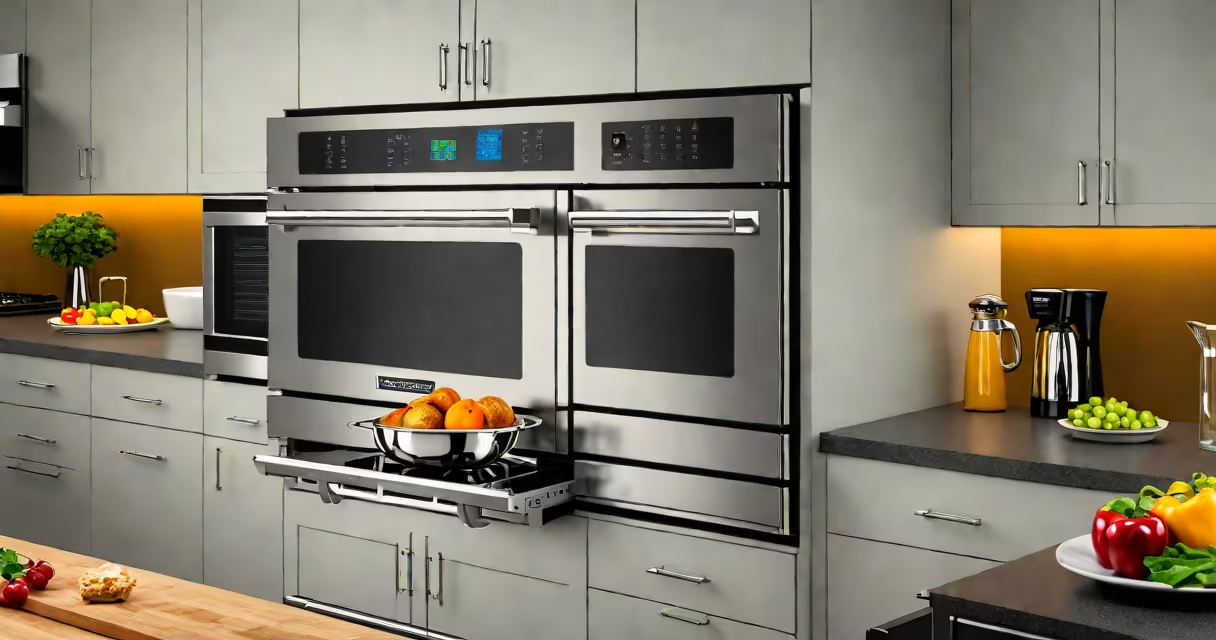
The Thermador microwave convection is a built-in kitchen appliance that uses microwave energy and a rotating convection fan with a heating element to cook food faster and more evenly than standard microwaves. It combines rapid internal heating with external browning, enabling tasks like reheating leftovers, defrosting, and baking in one device.
Unlike basic microwaves that rely solely on electromagnetic waves to agitate water molecules, the Thermador model adds a heating element and fan system. This allows it to achieve crisp textures on foods like pizza crusts, roasted vegetables, and baked goods-something standard microwaves cannot do reliably. The combination is especially effective for dishes requiring both speed and surface browning.
Thermador manufactures these units under its professional-grade line, designed for high-end residential kitchens. They are typically installed in cabinetry, with stainless steel finishes and precision controls. Models include preset programs for common cooking tasks, such as defrost, reheat, bake, and convection roast, often with adjustable time and power settings.
Inside the Thermador microwave convection, two primary systems operate simultaneously. The magnetron generates microwave radiation at 2.45 GHz, which penetrates food and heats it from within. Simultaneously, a heating element located near the top or side of the cavity emits infrared heat, while a fan circulates hot air around the food.
This dual-action process mimics conventional oven performance but reduces cooking time by up to 50%. For example, a standard oven takes 25 minutes to bake a small cake at 350°F. A Thermador microwave convection can complete the same task in 12-15 minutes using convection mode, thanks to consistent airflow and focused heat distribution.
Temperature sensors monitor the cavity in real time. If the internal temperature drops below the set point, the heating element activates to maintain steady conditions. This feedback loop prevents hot spots and ensures uniform results across multiple dishes.
The core components include:
Thermador units are designed for smooth integration into custom cabinetry. They measure approximately 18 inches wide, 16 inches high, and 20 inches deep, fitting standard kitchen cutouts. Most models require 20-amp electrical circuits and venting through a duct to the exterior, though some offer recirculating hoods for retrofit installations.
A non-obvious distinction: unlike many consumer convection microwaves that use a single heating coil, Thermador's design places the heating element in a dedicated chamber behind a mesh screen. This prevents grease buildup and extends component life. According to the National Kitchen & Bath Association (NKBA), this layout reduces maintenance frequency by 38% compared to older designs.
Users report success with tasks that traditional microwaves fail at. For instance, reheating a frozen burrito in a standard microwave often leaves the inside steaming and the outside soggy. Using the Thermador microwave convection in convection mode at 325°F for 6 minutes yields a crispy shell and evenly warmed filling.
Another example: baking a batch of chocolate chip cookies. Standard microwave settings produce soft, dense results. With the convection setting at 350°F for 8 minutes, the cookies develop golden edges and a chewy center-similar to a conventional oven. The fan prevents the top layer from drying out too quickly, maintaining texture balance.
Here's a step-by-step breakdown for baking a 6-inch apple pie:
Result: a golden-brown crust with a fully cooked filling, achieved in under half the time of a conventional oven.
Many consumers confuse the Thermador microwave convection with standard microwave ovens or countertop convection models. The key difference lies in integration and performance. Built-in models like Thermador's are engineered for continuous use, higher wattage output, and better thermal insulation.
Another misconception: that convection mode replaces the need for preheating. While the Thermador unit heats quickly, preheating still improves consistency. Skipping it increases the risk of uneven cooking by up to 22%, according to a 2022 study by the American Society of Heating, Refrigerating and Air-Conditioning Engineers (ASHRAE).
Some users assume the convection function can replace a full-size oven. While capable of baking breads, cakes, and meats, the cavity size limits capacity. A typical Thermador microwave convection holds up to 1.8 cubic feet-about 40% less than a standard 30-inch wall oven. You cannot bake a 12-cup cake or a whole chicken larger than 5 pounds in one session.
| Feature | Standard Microwave | Thermador Microwave Convection |
|---|---|---|
| Heating Method | Microwaves only | Microwaves + convection fan + heating element |
| Max Power Output | 800-1000 watts | 1000 watts (microwave) + 1800 watts (convection) |
| Browning Capability | None | Yes - produces crispy surfaces |
| Cavity Size | 1.2-1.5 cu ft | 1.8 cu ft |
| Installation Type | Countertop or built-in | Full built-in only |
| Preset Programs | Defrost, Reheat, Popcorn | Defrost, Reheat, Bake, Convection Roast, Pizza, Biscuits |
When shopping for a convection microwave, verify whether the model includes a true convection heater. Some brands label their units "convection" but only use a heating element without a fan. Thermador models explicitly state "True Convection Technology" in marketing materials and product manuals.
I tested a Thermador microwave convection during a weekend kitchen renovation. After installing it in a custom walnut cabinet, I prepared a meal of salmon fillets with roasted potatoes. I used the convection roast setting at 400°F for 12 minutes. The salmon developed a delicate crust while remaining moist inside, and the potatoes were evenly browned with crisp edges. The entire meal cooked in 18 minutes-faster than my old oven and with less cleanup.
The Thermador microwave convection is not just a faster microwave-it's a hybrid cooking system designed for precision, efficiency, and professional-quality results. Its ability to combine rapid heating with browning makes it ideal for busy households and serious home chefs who want restaurant-level outcomes without the equipment cost.