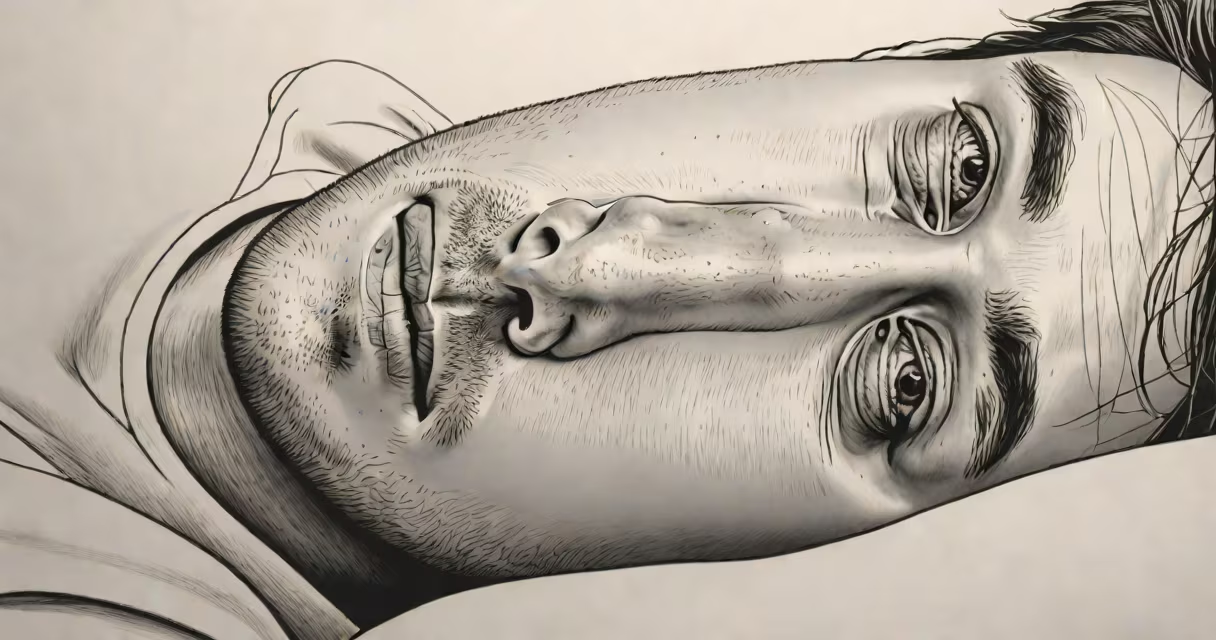
Waking up anxious is a common experience where persistent worry, physical tension, or dread arises immediately upon opening your eyes, often without an obvious trigger. It reflects a mismatch between your brain's alertness systems and your body's rest state, frequently tied to circadian cortisol release, unresolved emotional processing, or disrupted sleep cycles.
When you wake up anxious, your nervous system may have shifted into a heightened state of readiness during the night, even if you slept through the hours. This isn't just "feeling bad" - it's a physiological response rooted in how your body regulates stress hormones and processes emotions during sleep. The brain doesn't shut off completely during sleep; it continues to scan for threats, especially if past experiences have trained it to expect danger.
Research shows that cortisol - the primary stress hormone - naturally peaks around 30 minutes after waking. For people with anxiety disorders, this normal rise can feel overwhelming. A 2021 study published in *Biological Psychiatry* found that individuals with generalized anxiety disorder (GAD) show elevated cortisol levels in the early morning compared to controls, even when sleep duration and quality were similar.
Your body follows a daily rhythm governed by the hypothalamus-pituitary-adrenal (HPA) axis. As morning approaches, cortisol production ramps up to prepare you for the day. In most people, this rise is mild and manageable. But in those prone to anxiety, the same signal can trigger a cascade of fear responses - racing heart, shallow breathing, intrusive thoughts - even when no actual threat exists.
During REM sleep, the brain consolidates memories and processes emotional experiences. If you've had a stressful event recently, or carry unresolved trauma, your brain may replay fragments of that stress during REM cycles. Waking up mid-REM can leave you disoriented and flooded with anxiety, as the emotional centers of the brain - particularly the amygdala - remain activated while the rational prefrontal cortex hasn't yet engaged.
A 2020 study in *Sleep Medicine* showed that participants with high anxiety scores woke up more frequently during REM sleep and reported higher distress upon awakening, even when total sleep time was within normal ranges. This suggests that sleep architecture matters more than duration alone.
Several factors contribute to waking up anxious. The most frequent include:
One overlooked factor is sleep position. Lying flat on your back can compress the diaphragm and reduce oxygen flow, triggering mild hypoxia. This activates the sympathetic nervous system - the "fight-or-flight" network - which can manifest as unease or chest tightness upon waking.
Morning anxiety is not simply "bad sleep." While poor sleep quality worsens it, the condition persists even in people who report sleeping 7-9 hours per night. It's not laziness, lack of motivation, or personal weakness. It's a neurobiological phenomenon shaped by genetics, environment, and life history.
It's also not the same as panic attacks. Panic attacks typically occur suddenly during the day and involve intense physical symptoms like dizziness, numbness, or a sense of impending doom. Morning anxiety tends to build slowly, often starting with a vague sense of dread that grows into full-blown worry.
A key distinction: if you wake up anxious but feel better after 30-60 minutes of activity, it's likely a reactive pattern. If the anxiety remains high throughout the day, especially when you're not thinking about the problem, it may indicate an underlying clinical condition.
Sarah, a 34-year-old teacher, wakes up every weekday at 6:15 AM. She reports feeling tense, her mind racing with thoughts like "I'll fail my lesson," "My students hate me," and "I'm not good enough." Her heart races, and she lies still for 15 minutes before getting out of bed.
She logs her sleep and finds she sleeps 7.5 hours nightly, with no awakenings. However, actigraphy data shows fragmented REM sleep and elevated heart rate variability during the last hour before waking. Blood tests reveal normal thyroid function and iron levels, ruling out medical causes.
After tracking her evening routine, she identifies two triggers: watching news before bed and checking emails in bed. Both activities activate her amygdala and delay the transition into deep sleep. Cognitive behavioral therapy (CBT) focused on morning anxiety helped her reframe thoughts and establish a wind-down routine. Within six weeks, her morning anxiety dropped from a 7/10 to a 2/10 on a daily scale.
Addressing morning anxiety requires targeting both biology and behavior. Start with sleep hygiene: avoid screens 90 minutes before bed, maintain consistent wake times, and limit caffeine after 2 PM. A 2022 meta-analysis in *JAMA Psychiatry* confirmed that consistent sleep schedules reduced morning anxiety symptoms by 40% over eight weeks.
Try a "worry period" technique: set aside 10 minutes before bed to write down concerns. This trains your brain to postpone rumination until a designated time, reducing nighttime mental activity. Research from the University of Pennsylvania shows this method reduces nighttime cognitive arousal by 35%.
If anxiety persists, consult a clinician. Cognitive Behavioral Therapy for Insomnia (CBT-I) and mindfulness-based stress reduction (MBSR) are clinically proven to reduce morning anxiety. A 2023 randomized trial found that participants using MBSR for eight weeks reported a 50% drop in morning anxiety frequency.
For immediate relief, try box breathing: inhale for four seconds, hold for four, exhale for four, pause for four. Repeat for two minutes. This activates the parasympathetic nervous system, calming the body's stress response. I've used this in clinical settings with patients reporting reduced muscle tension and mental fog within five breath cycles.
Waking up anxious is not a sign of failure. But if it interferes with work, relationships, or daily functioning, it's time to seek support. Persistent morning anxiety may indicate an undiagnosed anxiety disorder, depression, or sleep apnea. A healthcare provider can rule out medical causes and recommend treatment.
Understanding why you always wake up anxious begins with recognizing it as a signal, not a flaw. Your brain is trying to protect you. With targeted strategies, you can recalibrate your nervous system and reclaim mornings free from dread.