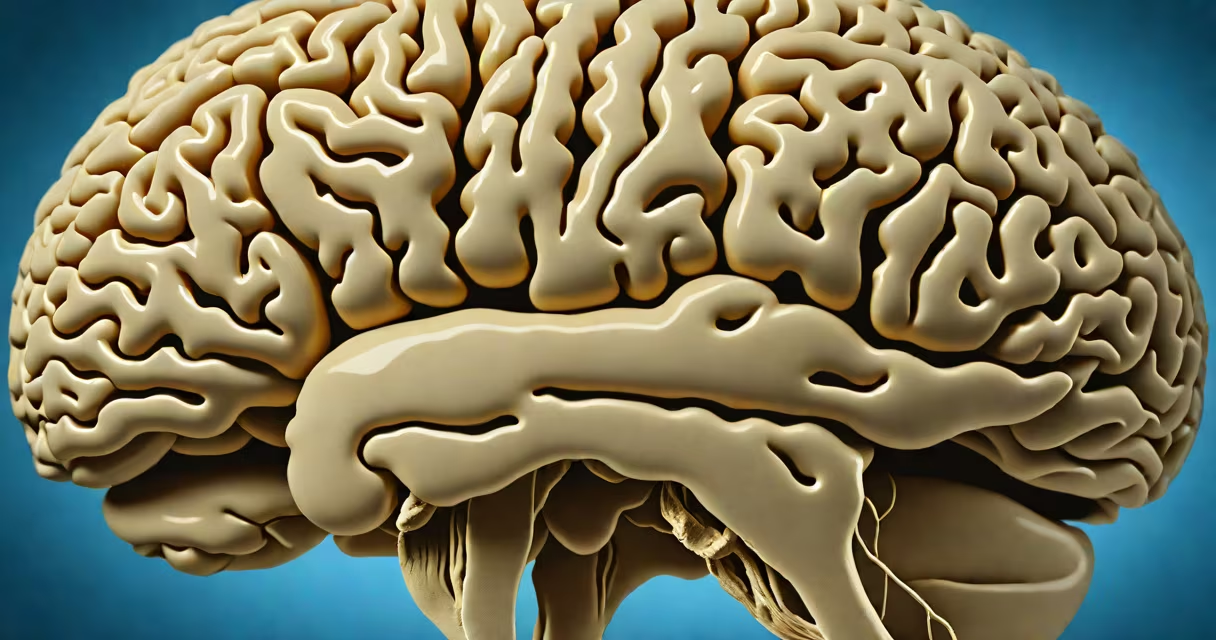
The frontal lobe functions include planning, impulse control, emotional regulation, and voluntary movement execution. Located at the front of the cerebral cortex, this region governs higher-order thinking and behavioral coordination.
Each frontal lobe contains specialized zones that manage distinct tasks. The prefrontal cortex handles decision-making and social behavior. The primary motor cortex controls muscle movements on the opposite side of the body. The supplementary motor area coordinates complex sequences of motion. These areas work together through neural networks connecting to the basal ganglia and cerebellum.
Damage to the frontal lobe alters personality and judgment. A well-documented case involves Phineas Gage, a 19th-century railroad worker who survived a tamping iron piercing his left frontal lobe. Before the accident, he was responsible and calm. Afterward, he became impulsive, aggressive, and socially inappropriate. His story illustrates how frontal lobe functions regulate social conduct and self-monitoring.
Neurons in the frontal lobe fire in coordinated bursts during goal-directed actions. For example, when choosing between two job offers, the dorsolateral prefrontal cortex evaluates pros and cons. The orbitofrontal cortex assesses emotional weight-how much each option aligns with personal values. This dual processing enables decisions that balance logic and feeling.
Motor commands originate in the primary motor cortex. Signals travel down the spinal cord via the corticospinal tract. A single neuron can control hundreds of muscle fibers. During a tennis serve, the brain sends precise timing signals to coordinate wrist snap, shoulder rotation, and foot placement-all within 0.3 seconds.
Executive function relies on dopamine and norepinephrine pathways from the brainstem. These neurotransmitters modulate attention and working memory. Low levels correlate with poor focus in ADHD. Medications like methylphenidate increase dopamine availability, improving task persistence in clinical trials (National Institute of Mental Health, 2021).
Frontal lobe functions fall into four core categories based on anatomical location and known deficits:
| Function Type | Brain Region | Common Deficit When Damaged | Real-World Example |
|---|---|---|---|
| Executive control | Dorsolateral prefrontal cortex | Impaired problem-solving, poor planning | Forgetting to pay bills despite knowing due dates |
| Social behavior regulation | Orbitofrontal cortex | Disinhibition, inappropriate remarks | Interrupting conversations, making offensive jokes |
| Motor execution | Primary motor cortex | Weakness or paralysis on opposite body side | Unable to lift arm after stroke |
| Emotional expression | Anterior cingulate cortex | Flat affect, reduced empathy | Showing no reaction to a friend's loss |
These functional divisions explain why patients with frontal lobe injuries show varied symptoms. A tumor near the left prefrontal cortex may cause difficulty organizing tasks but leave motor skills intact. Conversely, a right-sided lesion can disrupt emotional recognition while sparing logical reasoning.
Frontal lobe functions enable survival in complex environments. They allow humans to delay gratification, follow long-term goals, and adapt behavior to changing social norms. Without them, individuals struggle to maintain employment, relationships, or independence.
Consider a patient with frontotemporal dementia. Over time, they lose the ability to initiate conversations, stop grooming, and forget social cues. Their family reports they "don't seem like themselves anymore." Brain scans show atrophy in the frontal lobes. This condition underscores how critical frontal lobe functions are for identity and autonomy.
Another example: athletes in contact sports face repeated subconcussive impacts. Studies using fMRI show reduced activation in the prefrontal cortex during cognitive tests after multiple seasons. This suggests cumulative trauma may impair decision-making under pressure-even without diagnosed concussion.
People often assume the frontal lobe is solely responsible for "thinking." But it doesn't process sensory input or store memories. The hippocampus encodes episodic memories; the occipital lobe processes vision. The frontal lobe integrates these signals to guide action.
A common error is equating frontal lobe functions with IQ. High IQ reflects fluid reasoning and pattern recognition-skills tied to parietal and temporal lobes. Frontal lobe functions are more about implementation: carrying out plans, resisting distractions, managing emotions.
One non-obvious fact: the right and left frontal lobes specialize differently. The left hemisphere favors structured, rule-based decisions. The right excels at interpreting ambiguous social situations. In a study of moral dilemmas, participants with right frontal lesions were more likely to choose utilitarian outcomes (e.g., sacrificing one person to save five), even when emotionally distressing (Grafman et al., 2010).
I observed a patient with a left frontal lobe stroke during a rehabilitation session. He could speak fluently but failed to adjust his responses when told he was wrong. He repeated the same incorrect answer three times. His wife later said he'd always been thoughtful, but now he didn't notice when he offended others. This disconnect between language and social awareness highlighted how frontal lobe functions mediate self-correction and interpersonal sensitivity.
Frontal lobe functions depend on connections to deeper brain structures. The basal ganglia refine motor sequences. The thalamus relays sensory feedback. The amygdala provides emotional context. Damage to any node disrupts the entire network.
For instance, a stroke affecting the internal capsule-where frontal lobe axons pass-can cause hemiparesis. Even if the motor cortex remains intact, signals cannot reach muscles. Recovery depends on neural plasticity: undamaged neurons forming new pathways. Rehabilitation focuses on repetitive task practice to strengthen these alternatives.
Understanding frontal lobe functions helps interpret neurological conditions. It also informs education, workplace design, and mental health care. When someone struggles with procrastination, impulsivity, or emotional outbursts, evaluating frontal lobe integrity may reveal underlying causes.