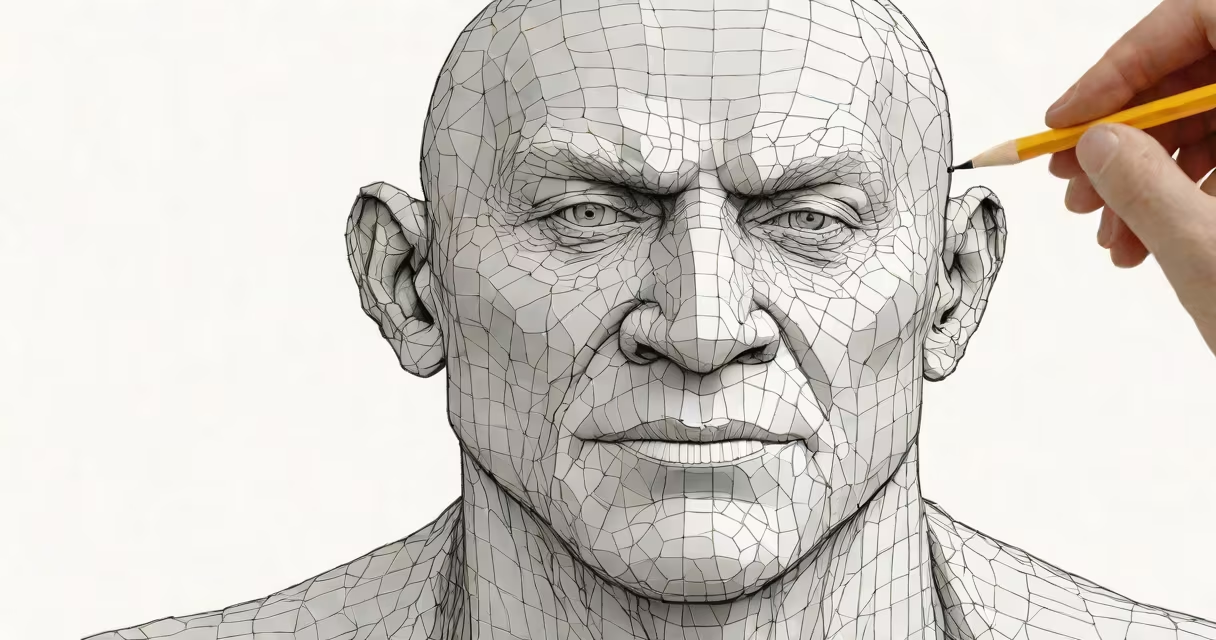
3D CG animation is the process of creating moving images using three-dimensional digital models and computer software. These models are rigged with virtual skeletons, textured with surface details, and animated frame-by-frame or through motion capture to simulate realistic movement.
Unlike traditional hand-drawn animation, 3D CG animation builds characters and environments in a virtual space with depth, lighting, and physics-based interactions. It powers films, video games, commercials, and simulations where realism and complex motion are required.
The foundation of 3D CG animation lies in digital modeling, rigging, animation, lighting, rendering, and compositing. Each step uses specialized software such as Maya, Blender, or Cinema 4D. The final output is a sequence of frames that, when played rapidly, create the illusion of motion.
Animation begins with a 3D model-a wireframe representation of a character or object built from polygons. Artists sculpt the form using control points, then apply textures to define color, material, and surface detail. A model may have hundreds of thousands of polygons to achieve fine detail.
Next, the model is rigged-a digital skeleton is attached so animators can move limbs, facial features, and body parts. Rigging includes inverse kinematics, which allows natural joint movement, and blend shapes for facial expressions. Without proper rigging, animation becomes stiff or unnatural.
Animators then manipulate the rig frame by frame. They set keyframes-specific poses at specific times-and the software interpolates the motion between them. Motion capture systems record real human performance using sensors, then map that data onto a digital character, preserving subtle muscle movements and timing.
Major software platforms include Autodesk Maya, Blender (open-source), and SideFX Houdini. Maya dominates film and game studios due to its integration with pipelines and support for large-scale projects. Blender offers useful tools at no cost, making it popular among independent creators.
Rendering transforms the 3D scene into a 2D image sequence. This process calculates light interaction, shadows, reflections, and depth. Render farms-networks of computers-handle the heavy workload. A single frame in a feature film can take 10-30 minutes to render depending on complexity.
Compositing combines rendered elements with live-action footage or additional effects. Software like Nuke or After Effects layers multiple passes-shadows, reflections, depth-to produce the final image. Color grading and visual effects are applied at this stage.
Film and television rely heavily on 3D CG animation. Pixar's *Toy Story* (1995) was the first full-length feature film made entirely in 3D CG. Since then, studios like DreamWorks, Blue Sky, and Industrial Light & Magic have used it for everything from character-driven stories to epic space battles.
Video games use 3D CG animation for player avatars, enemies, and environmental dynamics. Games like *The Last of Us Part II* feature over 100 hours of motion-captured animation, with facial expressions derived from real actors' performances.
Architecture and product design use 3D CG animation to visualize buildings before construction or showcase products in marketing videos. A car manufacturer might animate a new model rotating under studio lights to show design features.
Not all 3D animation is the same. Here's how different approaches differ:
| Type | Method | Use Case | Example |
|---|---|---|---|
| Traditional keyframe | Manual pose setting per frame | Character emotion, stylized movement | Disney's *Frozen* (2013) |
| Motion capture | Real actor performance recorded via sensors | Realistic movement, facial nuance | Netflix's *Altered Carbon* series |
| Procedural animation | Automated movement based on rules or physics | Large crowds, fluid simulations | Fire and water in *Avatar: The Way of Water* |
A common misconception is that 3D CG animation is purely digital and artificial. In reality, many studios blend live-action footage with CG elements. For example, in *Avengers: Endgame*, Thanos was a digital character whose performance was based on actor Josh Brolin's motion capture, yet he interacted with real actors on set.
Another misunderstanding is that 3D CG animation requires massive budgets. While high-end productions do, affordable tools like Blender allow individuals to create professional-quality work. A 2022 short film titled *The Damaged* won awards at several festivals and was made entirely in Blender by a solo artist.
In 2021, the BBC released a documentary series called *Planet Earth III*. One episode features a snow leopard hunting in the Himalayas. The animal was not filmed in nature-it was created using 3D CG animation. The team studied real snow leopard behavior, collected footage of their movement, and used that data to animate the creature.
They modeled the animal's fur using a technique called subsurface scattering, which simulates how light penetrates hair and skin. The result looked indistinguishable from a real animal. The production team estimated that animating one minute of the snow leopard's movement took approximately 120 hours of work across modeling, rigging, animation, and rendering.
This example shows how 3D CG animation serves science communication. It enables viewers to see rare behaviors without disturbing wildlife, while maintaining biological accuracy.
3D CG animation is frequently mistaken for 2D animation or stop-motion. Stop-motion uses physical puppets moved frame by frame, like in *Kubo and the Two Strings*. 2D animation relies on hand-drawn or digitally painted frames, such as in *Spider-Man: Into the Spider-Verse*.
Another confusion arises between 3D CG animation and real-time rendering. Real-time rendering powers video games and VR experiences, where frames update at 60 Hz or higher. 3D CG animation typically targets 24 or 30 frames per second, prioritizing cinematic quality over speed.
Even within 3D CG, people assume all animation is photorealistic. But stylized animation-like *Spider-Man: Into the Spider-Verse*-uses exaggerated proportions, limited motion, and hand-crafted effects to convey mood and energy. The style is intentional, not a technical failure.
I once visited a small animation studio in Vancouver that produced a short film for a climate awareness campaign. The team used Blender and free motion capture data from the OpenPose project. They spent six weeks animating a polar bear walking across melting ice. The final scene showed the bear stepping into a gap-its foot sinking into thin ice. That moment, rendered with precise physics and texture detail, drew tears from test audiences. It proved that 3D CG animation doesn't just entertain-it can evoke empathy.
3D CG animation is central to modern visual culture. It enables storytelling that would be impossible with live action or traditional animation. Its ability to simulate reality, exaggerate emotion, or imagine entire worlds makes it indispensable in entertainment, education, and science.
For creators, understanding 3D CG animation means mastering both art and technology. It demands attention to anatomy, lighting, timing, and emotional expression. The tools evolve quickly, but the core principles remain rooted in observation and craft.
As the medium grows, so does its responsibility. Ethical considerations arise around deepfakes, synthetic media, and the blurring of real and artificial. The field continues to develop standards for transparency and consent in digital representation.
Understanding 3D CG animation isn't just about knowing how it's made-it's about recognizing its role in shaping perception. From blockbuster films to public service messages, it influences how we see ourselves and the world.