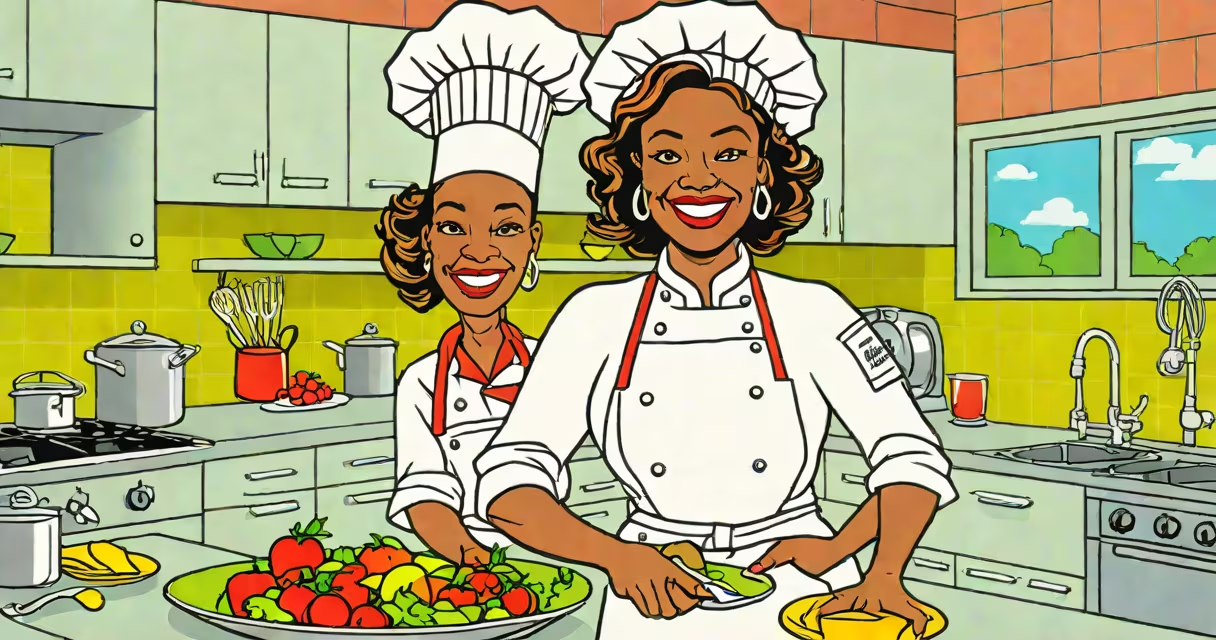
Angie Nixon is a celebrated American chef and restaurateur who founded Don Angie, a critically acclaimed Italian-American restaurant in Manhattan's East Village. Her work blends traditional Italian techniques with modern American ingredients and bold flavor profiles, earning her recognition in major food publications.
Don Angie opened in 2016 and quickly became a destination for diners seeking inventive takes on classics like meatballs, lasagna, and tiramisu. Nixon's menu reflects her upbringing in a family that valued home cooking, combined with formal training at the Culinary Institute of America and experience at high-end kitchens including Eleven Madison Park.
She is one of the few Black women leading a prominent fine-dining restaurant in the U.S., making her presence both rare and influential in a field historically dominated by white male chefs. Her success challenges long-standing norms in the culinary world and has drawn attention from outlets like The New York Times and Bon Appétit.
Don Angie operates on a single, fixed-price tasting menu that changes seasonally. Guests receive a curated sequence of nine to ten courses, each designed to tell a story about regional Italian cuisine while incorporating American influences. The experience emphasizes balance-between rich and light, sweet and savory, familiar and surprising.
The kitchen runs on a tight schedule. Dishes are prepared in small batches, often using house-made pasta and fermented ingredients. For example, the signature "meatball" course features a beef and pork blend served with a warm tomato broth and grilled bread, not as a standalone appetizer but as part of a layered narrative about comfort and memory.
Service is intimate. Tables seat four to six people, and staff are trained to explain each dish's inspiration. This creates a communal atmosphere where guests feel invited into the chef's personal history-her mother's recipes, her time in Italy, her observations on American food culture.
The restaurant's identity rests on three core elements: ingredient sourcing, technique, and storytelling. Nixon prioritizes local purveyors-she sources her ricotta from a dairy in upstate New York and her heirloom tomatoes from a farm in Long Island.
Technique is rooted in precision. Her team uses a 12-hour pasta dough fermentation process to achieve elasticity and texture. Even the salt used in the kitchen is hand-harvested from the Dead Sea, chosen for its mineral profile and subtle sweetness.
Storytelling shapes the menu. A dish called "The Last Supper" includes a deconstructed version of a classic Italian antipasto-marinated artichokes, pickled onions, and cured meats-served on a slate board with a candle in the center. The presentation evokes ritual and reflection, turning a meal into a performance.
While the restaurant offers only one seating option-the seasonal tasting menu-guests can choose between standard and wine-pairing versions. The wine pairing adds five curated selections from Italian and American producers, priced separately.
| Menu Type | Price (2024) | Duration | Includes |
|---|---|---|---|
| Standard Tasting | $145 | 2.5 hours | 9 courses, no wine |
| Wine Pairing | $195 | 3 hours | 9 courses, 5 wines |
Both options require reservations at least seven days in advance. Walk-ins are not accepted. The restaurant closes on Sundays and Mondays for kitchen rest and staff training.
Don Angie is located at 167 Second Avenue in New York City, in a neighborhood known for its mix of immigrant-run eateries and experimental restaurants. Its location was intentional-Nixon wanted to place a high-end dining experience in a working-class area, challenging the idea that fine dining belongs only in affluent districts.
It serves as a model for inclusive hospitality. The staff includes people from diverse backgrounds-many are first-generation Americans or immigrants-and the kitchen employs a rotating apprenticeship program for young cooks from underrepresented communities.
Why it matters: According to a 2023 report by the James Beard Foundation, only 3% of chefs in Michelin-starred U.S. restaurants are Black. Nixon's success demonstrates that representation in leadership roles is not just possible-it's essential for innovation in food.
Some assume Don Angie is a "fusion" restaurant because it combines Italian and American elements. But Nixon insists the term misrepresents her intent. "Fusion implies mixing for novelty," she told The New York Times in 2022. "This is about lineage-my family's history, my training, the geography of flavor."
Another misconception is that the restaurant is closed to casual diners. While it's not a grab-and-go spot, it welcomes people from all walks of life. I've seen families, couples, and solo diners-all treated with equal care. One night, a group of college students arrived in jeans and sneakers. They were seated without hesitation, and the server brought them a complimentary amuse-bouche of lemon gelato with black pepper.
A lesser-known fact: Nixon doesn't use a sous-vide machine in her kitchen. She believes temperature control is best achieved through hands-on timing and visual cues. "I learned that from my grandmother," she said during a 2021 interview. "She didn't have a thermometer. She just knew when the sauce was ready."
At the heart of Don Angie's menu is the "Meatball" course. It arrives as a single, perfectly round ball resting on a bed of sautéed spinach and a drizzle of reduced beef stock. The plate is unmarked, no label, no description.
When served, the server says only: "This is what my mother used to make."
Guests break the meatball open with a fork. Inside, they find a molten center of melted mozzarella and a hint of rosemary. The texture is dense yet yielding-like a memory made edible.
This dish is not listed on the menu. It appears only when the kitchen feels the moment is right. On average, it's served 12 times per month. Its inclusion depends on the chef's mood, the quality of the meat, and whether the kitchen feels the emotional weight of the moment is justified.
It's not just food. It's a gesture. And that's what sets Don Angie apart.