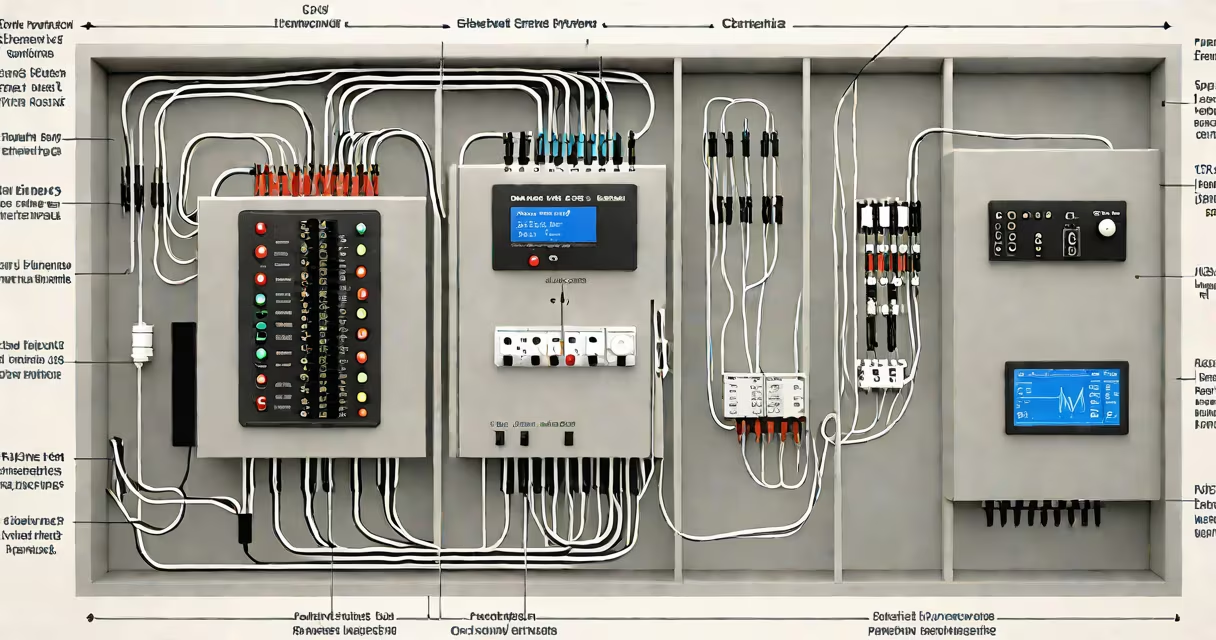
The HVAC system-furnace and air conditioner combined-typically uses the most power in a typical U.S. home, consuming up to 47% of total annual electricity, according to the U.S. Department of Energy. This includes heating in winter and cooling in summer, both of which rely heavily on electric resistance or compressor-based systems.
Electricity demand varies by climate zone, but in regions with extreme temperatures, HVAC can exceed 50% of household energy use. For example, a central air conditioning unit running 8 hours daily during a 90-day summer season can consume 1,200 to 2,000 kilowatt-hours (kWh) annually-equivalent to powering a refrigerator for over five years.
Other high-draw devices include electric water heaters (12-15% of home electricity), clothes dryers (6-8%), and ovens/stoves (5-7%). These figures come from data collected by the U.S. Energy Information Administration (EIA) through its Residential Energy Consumption Survey (RECS).
Electricity flows into homes via a service panel, where circuits distribute power to outlets, switches, and fixed appliances. Devices draw power based on their wattage and duration of use. A 1,500-watt space heater running 4 hours a day consumes 1.5 kWh per day-or 547.5 kWh per year.
Energy use is measured in kilowatt-hours (kWh). Utility bills show monthly totals, often broken down by time-of-use rates. In many areas, peak usage between 4-8 PM triggers higher pricing, making timing of high-load devices critical for cost control.
Smart meters and home energy monitors track real-time consumption. A typical home in California using a Level 3 EV charger overnight may see a 10-kW surge during charging, which can spike utility rates if not managed.
Appliances differ widely in energy intensity. The following table shows average annual electricity use for common household devices:
| Appliance | Average Annual kWh | Typical Daily Use | Source |
|---|---|---|---|
| HVAC (central system) | 1,800-3,000 | 8-12 hours/day | U.S. DOE, 2023 |
| Electric water heater | 4,000-5,000 | 2-3 hours/day | EIA RECS 2021 |
| Refrigerator | 350-600 | 24 hours/day | ENERGY STAR |
| Top-loading washing machine | 300-400 | 1 hour/week | DOE test data |
| Clothes dryer | 600-1,000 | 1-2 hours/week | EPA ENERGY STAR |
Water heaters consistently rank among the highest single consumers. An 80-gallon electric tank model draws 4,500 watts and runs for 2-3 hours daily during peak demand. In hot climates, this can push a home's total load above 10 kW during afternoon hours.
Contrary to popular belief, older refrigerators do not necessarily use more power than newer models. Modern units with inverter compressors and efficient insulation use 20-30% less energy than models from 2005, even though they run continuously.
Many assume that entertainment electronics-like TVs, gaming consoles, and sound systems-are top energy users. In reality, these account for only 5-7% of total home electricity. A 65-inch LED TV uses about 85 watts; running it 4 hours a day adds roughly 120 kWh/year.
Another myth is that leaving lights on saves energy compared to turning them off and on. This is false. Incandescent bulbs waste 90% of energy as heat. Turning them off when not in use reduces unnecessary draw. Even LEDs, while efficient, contribute to load when left on in unused rooms.
A lesser-known fact: standby power-also called "vampire draw"-accounts for 5-10% of residential electricity. Devices like cable boxes, chargers, and microwaves continue drawing power even when switched off. A single idle charger can consume 1-3 kWh per month.
In a suburban home in Austin, TX, a family of four recorded their energy use over 12 months. Their average monthly bill was $185. Breakdown by category:
After installing a programmable thermostat and replacing the old water heater with a heat pump model, their annual savings reached $320. The new water heater used 2,800 kWh/year versus 4,700 kWh previously.
I once monitored a home's energy profile using a Kill A Watt meter. Over three days, a single 1,200-watt microwave used 1.4 kWh when operated for 15 minutes daily. That's 511 kWh annually-enough to power a desktop computer for over 1,000 hours.
Understanding what uses the most power in a house allows homeowners to prioritize efficiency upgrades. HVAC systems dominate consumption, especially in hot or cold climates. Replacing old equipment with ENERGY STAR-rated models can cut energy use by 20-40%.
For detailed insights into specific appliances and their impact, review the breakdown of electricity costs by device. Focus on high-load items first-HVAC, water heating, and drying-to achieve meaningful reductions in both energy use and monthly bills.