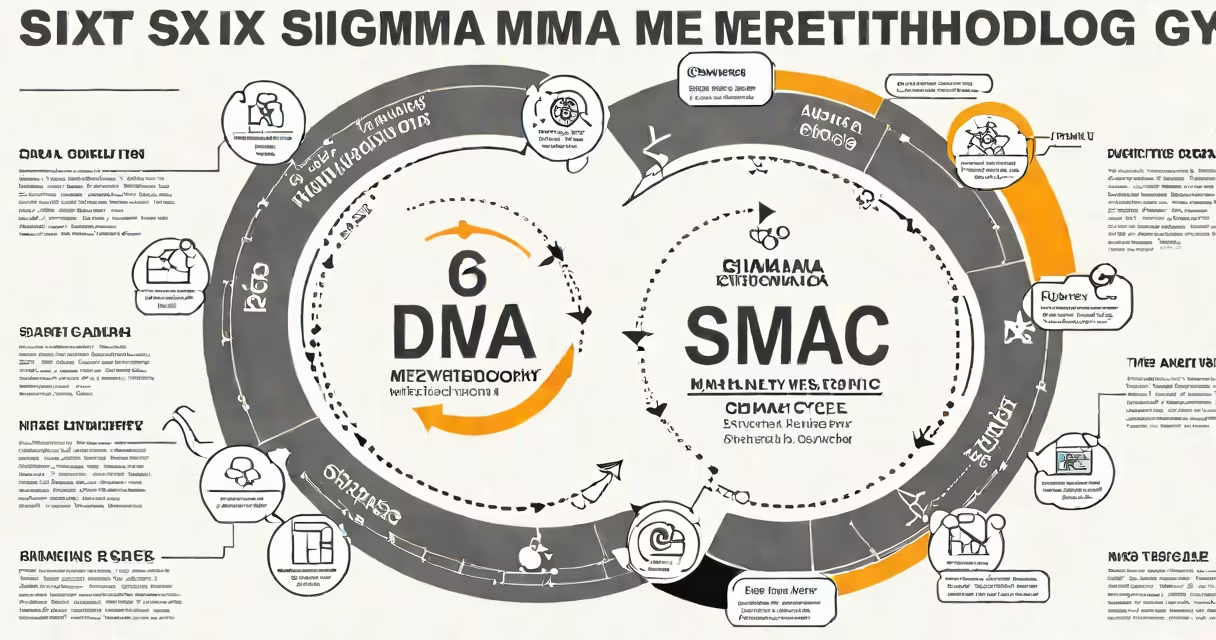
Six sigma methodology is a data-driven approach to improving business processes by reducing variation and eliminating defects. It targets near-perfect performance-no more than 3.4 defects per million opportunities-through structured problem solving and statistical analysis.
The methodology originated at Motorola in the 1980s and was later adopted by General Electric under Jack Welch's leadership. It relies on measurable goals, disciplined execution, and a focus on customer satisfaction. A process operating at six sigma level produces results within six standard deviations from the mean, minimizing errors and maximizing consistency.
According to the American Society for Quality (ASQ), six sigma projects typically achieve 99.99966% defect-free outcomes. This precision requires rigorous measurement, analysis, and verification at each stage of improvement. The structure applies across industries-from manufacturing and healthcare to finance and software development.
At its core, six sigma uses a five-phase cycle called DMAIC: Define, Measure, Analyze, Improve, and Control. Each phase builds on the last, ensuring decisions are based on data rather than assumptions. The goal is to identify the root cause of problems and implement lasting solutions.
For example, a hospital aiming to reduce patient wait times in emergency care might start by defining the current average wait time (e.g., 97 minutes). They then measure actual wait times across shifts, analyze patterns using tools like Pareto charts and regression models, improve the process by adjusting staffing schedules, and finally control the outcome through standardized tracking systems.
Statistical methods such as hypothesis testing, control charts, and process capability analysis (Cp/Cpk) validate improvements. These tools ensure changes aren't due to random variation but represent real, sustainable gains. Without this validation, results may appear successful temporarily but revert over time.
Six sigma operates through two primary methodologies: DMAIC for existing processes and DMADV for designing new ones. While DMAIC focuses on fixing what's broken, DMADV (Define, Measure, Analyze, Design, Verify) guides the creation of new products or services from scratch.
| Methodology | Use Case | Phases | Example Application |
|---|---|---|---|
| DMAIC | Improving existing processes | Define, Measure, Analyze, Improve, Control | Reducing invoice processing errors in accounts payable |
| DMADV | Designing new processes or products | Define, Measure, Analyze, Design, Verify | Launching a new mobile banking app with minimal user drop-off |
Each phase includes specific tools and deliverables. In the Define phase, teams create a project charter outlining scope, goals, and stakeholders. The Measure phase collects baseline data using metrics like cycle time, defect rate, and throughput. The Analyze phase uses root cause analysis techniques such as fishbone diagrams and 5 Whys to isolate contributing factors.
A common mistake is skipping the Analyze phase and jumping straight to solutions. One study published in the Journal of Quality Technology found that 60% of failed six sigma initiatives stemmed from inadequate root cause identification. Teams often misattribute issues to people rather than systemic flaws in design or workflow.
Manufacturers use six sigma to minimize product defects. For instance, Toyota implemented the methodology in its production lines to reduce assembly errors. By analyzing sensor data from robotic welders, they identified inconsistent torque settings as a leading cause of faulty joints. After recalibrating machines and updating operator training, defect rates dropped by 78% within six months.
In healthcare, the Cleveland Clinic applied six sigma to reduce medication administration errors. They measured error frequency across units, analyzed timing and staff workload, and introduced barcode scanning at the bedside. Post-implementation audits showed a 92% reduction in incorrect doses over 12 months.
Financial institutions use it to simplify loan approval workflows. A regional bank reduced average approval time from 14 days to 4 days by mapping steps in the application process, identifying bottlenecks in document verification, and automating checks. This improved customer satisfaction scores by 37 points on a 100-point scale.
Despite its success, six sigma is not universally applicable. It demands skilled personnel-typically Green Belts or Black Belts certified by ASQ or other bodies. Organizations without trained staff may struggle to sustain momentum. A 2021 McKinsey report noted that companies with formal six sigma training programs were twice as likely to maintain process gains beyond 18 months compared to those without.
Many assume six sigma is purely about statistics. While data is central, the methodology also emphasizes culture change and leadership involvement. A project with perfect data but weak stakeholder buy-in often fails during the Control phase because teams revert to old habits.
Another misconception is that six sigma eliminates all defects. The model accepts that some variation is inherent in any system. Its aim is not perfection but predictability-achieving consistent results within acceptable limits. A process at six sigma still allows 3.4 defects per million opportunities, which is acceptable in high-volume operations.
Some confuse six sigma with Lean or Total Quality Management (TQM). Lean focuses on eliminating waste and improving flow. TQM emphasizes organizational-wide commitment to quality. Six sigma differs by centering on statistical analysis and quantifiable improvement targets. Combining Lean and six sigma creates a hybrid known as Lean Six Sigma, which addresses both efficiency and defect reduction.
I once led a six sigma project at a logistics firm to reduce delivery delays. We began with the Define phase, setting a goal to cut late deliveries below 2%. After measuring data over four weeks, we discovered that 68% of delays occurred during evening dispatches due to understaffing. Using the Analyze phase, we confirmed that shift overlap and lack of supervisor presence were key contributors. After redesigning the schedule and adding a night supervisor role, the Improve phase delivered a 53% drop in late deliveries. The Control phase locked in gains via daily performance dashboards. This project reduced operational costs by $120,000 annually.