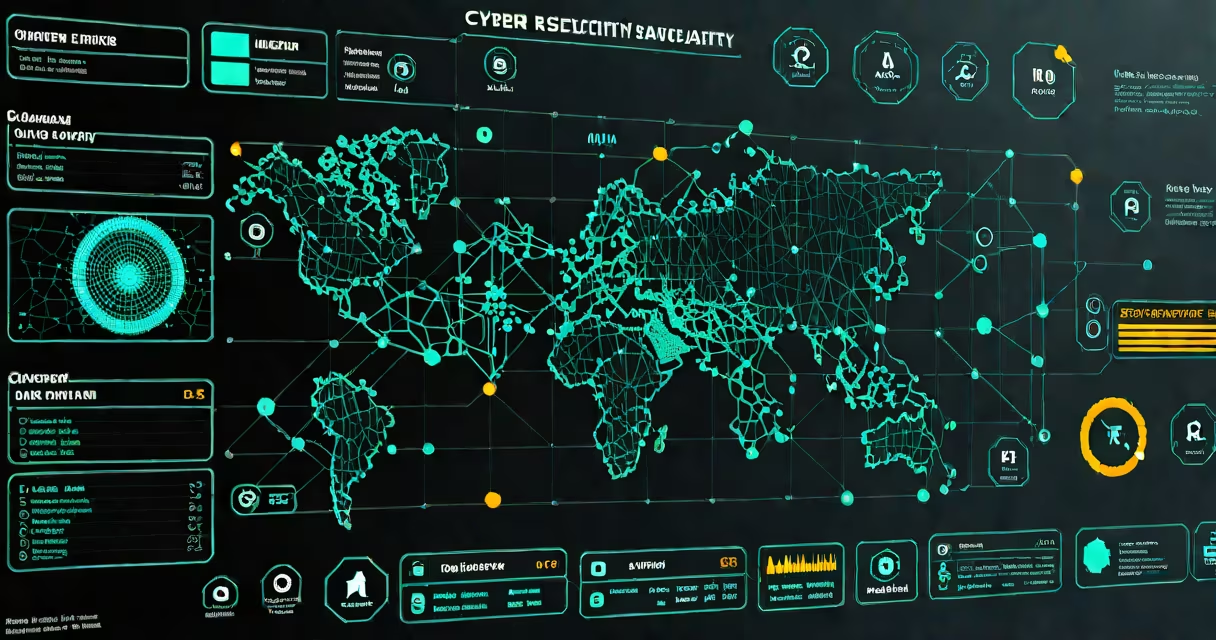
Cyber security data analytics is the process of collecting, processing, and analyzing large volumes of security-related data-such as network logs, endpoint events, and authentication records-to detect anomalies, identify potential threats, and support rapid incident response. It combines machine learning, statistical modeling, and behavioral analysis to turn raw data into actionable intelligence.
This discipline enables organizations to move beyond reactive defense by identifying suspicious behavior before it results in a breach. For example, a sudden spike in failed login attempts from a single IP address may indicate a brute-force attack. Cyber security data analytics flags such patterns automatically, often within seconds, allowing security teams to respond proactively.
According to the SANS Institute, over 60% of successful cyberattacks go undetected for days or weeks due to poor visibility into system activity. Cyber security data analytics closes that gap by continuously monitoring data streams and applying rules or models to distinguish normal behavior from malicious activity.
At its core, cyber security data analytics operates through three stages: ingestion, correlation, and response. Data is ingested from diverse sources-including firewalls, intrusion detection systems (IDS), endpoint protection platforms, and cloud services-and normalized into a consistent format for analysis.
Once collected, the system correlates events across multiple data points. For instance, if a user account logs in from a country where the employee has never accessed the network before, and the login occurs at 3 a.m. local time, the system flags this as high-risk behavior. These correlations are powered by predefined rules or trained machine learning models.
When a pattern matches a known threat signature or deviates from baseline behavior, an alert is generated. Security analysts then investigate the event, and automated tools may isolate affected systems or block malicious IPs. The entire cycle-from data collection to mitigation-can take under 30 seconds in advanced environments.
Cyber security data analytics relies on several technical foundations. The most common types include:
| Type | Description | Use Case Example |
|---|---|---|
| Real-time analytics | Processes data as it arrives, enabling immediate threat detection. | Blocking a ransomware payload during initial execution on a workstation. |
| Batch analytics | Analyzes historical data in scheduled intervals to uncover long-term trends. | Identifying a recurring pattern of lateral movement across internal servers. |
| Behavioral analytics | Uses machine learning to model normal user and system behavior, flagging deviations. | Detecting insider threats when an employee downloads thousands of files outside their role. |
Machine learning models are increasingly central. For example, supervised models trained on labeled datasets of past attacks can predict whether new network traffic is malicious with over 90% accuracy, according to research published in the Journal of Cybersecurity and Information Systems.
A lesser-known but critical distinction: not all data analytics in security is predictive. Some systems only report what happened after the fact. True cyber security data analytics focuses on detecting threats *before* damage occurs, which requires continuous monitoring and adaptive models.
Many assume cyber security data analytics is synonymous with SIEM (Security Information and Event Management) tools. While SIEMs are foundational platforms that collect and store logs, they don't inherently analyze or act on data. A SIEM without integrated analytics remains a passive log repository.
Another frequent error is equating volume with insight. Organizations often deploy analytics tools without defining clear objectives. One company I observed collected 1.2 terabytes of firewall logs daily but had no defined thresholds for alerting. As a result, 98% of alerts were false positives, leading to analyst fatigue and missed real incidents.
It's also incorrect to believe that automation replaces human judgment. Tools generate alerts, but context matters. An alert about unusual database access might stem from a legitimate data export for a quarterly audit. Human review ensures accuracy and reduces noise.
In 2022, a mid-sized healthcare provider detected a phishing campaign targeting employees using cyber security data analytics. The system monitored email metadata, attachment hashes, and click-through rates across the organization.
When 14 users clicked on a malicious link within 15 minutes, the analytics engine recognized the pattern-unusual timing, high volume from different departments, and a known malicious domain. The system triggered an automated response: quarantining the emails, disabling affected accounts, and notifying the SOC team.
Within 22 minutes, the security team contained the threat. Without analytics, the attack might have gone unnoticed for days. The organization later confirmed that the attacker was attempting to install a backdoor via a fake software update.
This case illustrates the value of combining real-time monitoring with behavioral modeling. The system didn't rely solely on known malware signatures-it identified the attack based on behavior, which is essential for detecting zero-day threats.
As cyberattacks grow more sophisticated, traditional rule-based defenses fail against evolving tactics like fileless malware and credential stuffing. Cyber security data analytics provides the adaptability needed to keep pace.
For example, the 2023 Verizon Data Breach Investigations Report found that 74% of breaches involved some form of data exfiltration. Analytics tools that monitor outbound data flows can detect unauthorized transfers early, reducing exposure.
Organizations that implement solid cyber security data analytics see a 40% reduction in average incident response time, according to a 2022 study by Ponemon Institute. This translates directly to lower financial loss and reduced reputational risk.
Cyber security data analytics is not a luxury. It is a necessity in environments where data is valuable and attackers are persistent. By transforming raw logs into intelligence, it turns passive monitoring into active defense.