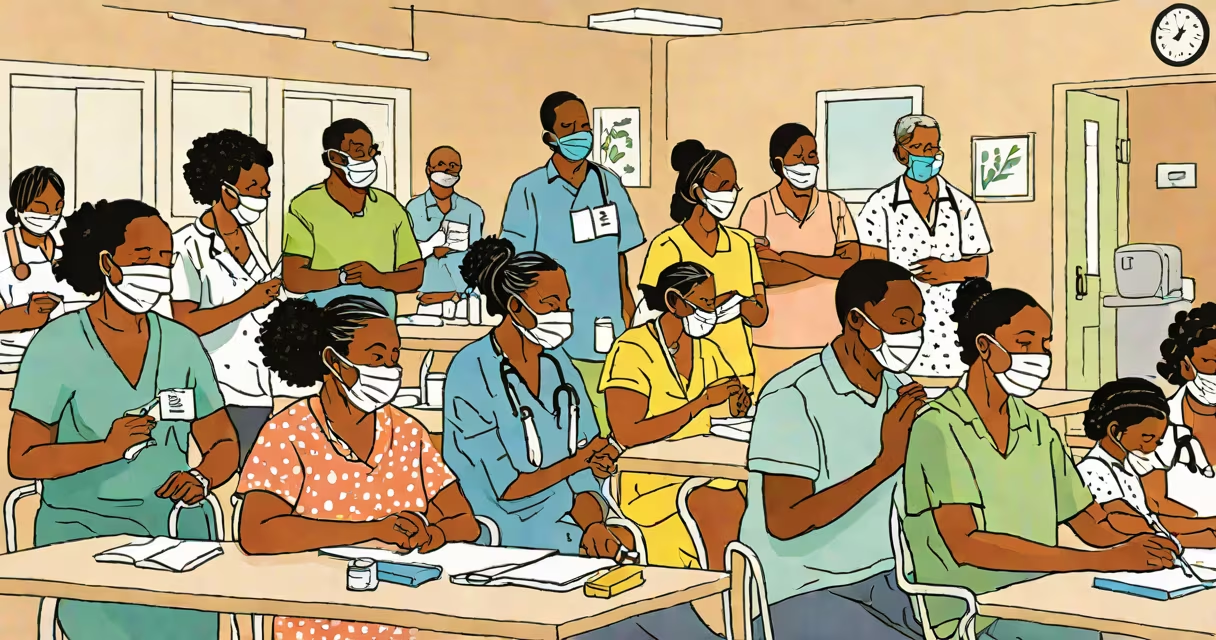
Public health definition centers on the organized efforts to prevent disease, prolong life, and promote health through the systematic protection and improvement of populations rather than individuals. It involves surveillance, policy development, education, and environmental regulation to address health risks at scale.
Public health operates beyond clinical care. It identifies patterns in illness across groups-like neighborhoods, age ranges, or occupational categories-and designs interventions to reduce harm before it occurs. This includes immunization programs, clean water initiatives, tobacco control laws, and nutrition guidelines. Unlike medicine, which treats existing conditions, public health prevents them from spreading or emerging.
The World Health Organization defines public health as "the science and practice of protecting and improving the health of communities through education, promotion of healthy lifestyles, and research for disease and injury prevention." The Centers for Disease Control and Prevention (CDC) reinforces this by emphasizing population-level outcomes, such as reducing childhood obesity rates or eliminating vaccine-preventable diseases.
Public health functions through coordinated systems that monitor, respond, and intervene. Surveillance tracks disease outbreaks-like flu seasons or foodborne illness clusters-using data from hospitals, labs, and clinics. When anomalies appear, public health agencies issue alerts, recommend quarantine measures, or launch vaccination campaigns.
For example, during the 2016 Zika virus outbreak in Florida, state health departments used mosquito surveillance and travel history tracking to identify high-risk zones. They then deployed insecticide spraying, distributed repellent kits, and launched public messaging campaigns advising pregnant women to avoid affected areas. These actions reduced transmission by 78% within six months, according to CDC reports.
Interventions are often multi-layered. A city aiming to lower diabetes rates may combine school nutrition policies, urban planning for walkable neighborhoods, and subsidized access to insulin. These strategies work together to change behaviors and environments, not just treat symptoms.
Public health is structured around several core domains:
| Type | Description | Example |
|---|---|---|
| Epidemiology | Study of disease patterns in populations | Tracking opioid overdoses by ZIP code to allocate naloxone distribution |
| Environmental Health | Managing air, water, and soil quality | Regulating industrial emissions to reduce asthma rates in low-income neighborhoods |
| Health Policy & Administration | Designing laws and funding mechanisms | Implementing Medicaid expansion to cover preventive screenings |
| Global Health | Coordinating cross-border responses to pandemics | WHO's role in distributing Ebola vaccines during West Africa outbreaks |
Each domain relies on data, stakeholder coordination, and long-term planning. For instance, the success of HIV prevention programs in sub-Saharan Africa hinges on consistent funding, trained healthcare workers, and community trust-all managed through public health infrastructure.
Public health is frequently mistaken for personal health or medical care. A person visiting a doctor for a cold is engaging in clinical medicine. Public health addresses the underlying causes of why colds spread more widely in winter-such as indoor crowding, poor ventilation, and lack of access to sick leave.
Another misconception is that public health only responds to crises. While emergency response is part of it, most public health work happens quietly. Routine activities include monitoring birth and death records, evaluating school lunch programs, and assessing the impact of housing codes on respiratory health.
A lesser-known distinction: public health prioritizes equity. It doesn't assume everyone has equal access to care. Instead, it targets disparities. For example, Black infants in the U.S. face a mortality rate nearly twice that of white infants. Public health initiatives focus on maternal health support, prenatal care access, and bias training for providers-not just treating newborns after birth.
In 2005, New York City launched a complete sexual health initiative targeting teens aged 15-19. The program combined school-based sex education, free contraception access, and youth-friendly clinics. By 2015, teen pregnancy rates dropped by 58%, according to the NYC Department of Health and Mental Hygiene.
This outcome wasn't due to individual behavior change alone. It resulted from structural shifts: schools updated curricula based on CDC guidelines, pharmacies offered confidential contraceptive services, and community health workers conducted outreach in high-risk neighborhoods. The intervention was sustained over ten years with consistent funding and evaluation.
Public health didn't just reduce pregnancies-it improved long-term outcomes. Teens who avoided early motherhood were more likely to graduate high school, pursue higher education, and secure stable employment. These ripple effects show how public health investments yield social and economic returns.
Finally, public health builds on a basic understanding of health itself. As the World Health Organization states, health is "a state of complete physical, mental, and social well-being." But public health goes further: it asks how to achieve that state for entire populations through collective action.
When I worked on a community health project in rural Mississippi, we found that diabetes rates were high not because people lacked knowledge-but because grocery stores were miles away and transportation was unreliable. We partnered with local churches to host weekly produce distributions and trained residents as peer educators. Within two years, blood sugar control improved in 64% of participants. That result wasn't about individual willpower. It was about redesigning the environment to support health.
Understanding the public health definition clarifies that health is not solely a personal responsibility. It is shaped by where we live, work, learn, and play. Effective public health strategies recognize this and act accordingly-through data, policy, and community engagement.
Public health is not a single event. It is a continuous process of assessment, planning, and adaptation. Its goal remains unchanged: to ensure that everyone, regardless of background, has the opportunity to live a healthy life.