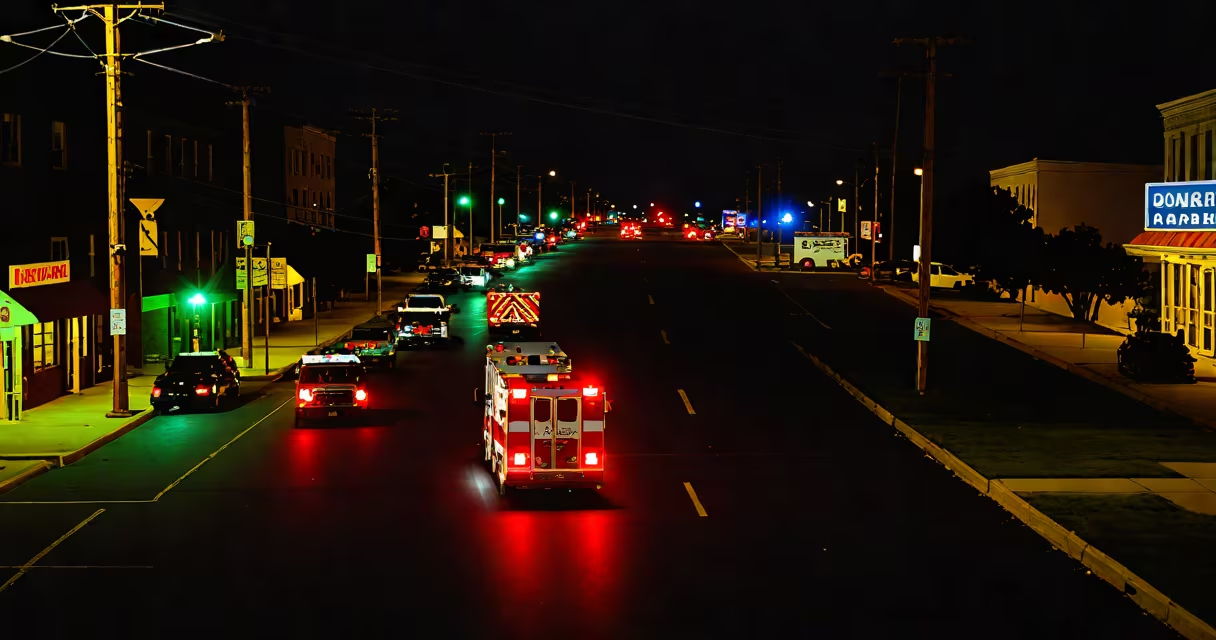
A power outage in the USA occurs when the electrical grid fails, cutting off electricity to homes, businesses, and infrastructure. These disruptions range from brief local outages to large-scale blackouts affecting millions across multiple states.
Outages happen when the balance between electricity supply and demand collapses, or when physical damage disrupts transmission lines, substations, or distribution networks. The North American Electric Reliability Corporation (NERC) tracks grid reliability and reports that over 600 major outages occurred in the U.S. between 2010 and 2020, with most caused by weather events.
When a generator trips offline, a transformer fails, or a storm brings down power lines, the system responds by isolating affected zones to prevent cascading failures. This automatic protection mechanism can cause localized outages even if the grid remains stable. In rare cases, such as the 2003 Northeast Blackout, a single fault triggered a chain reaction across eight U.S. states and parts of Canada, leaving 50 million people without power for up to two days.
Electricity flows through a complex network of generation plants, high-voltage transmission lines, and local distribution systems. A breakdown at any stage can trigger an outage. Most common causes include severe storms, wildfires, ice accumulation on lines, equipment aging, and cyberattacks on control systems.
For example, Hurricane Ida in 2021 knocked out power to over 1.5 million customers across Louisiana and the Northeast. Ice storms in Texas during winter 2021 led to rolling blackouts as frozen wind turbines and failed gas pipelines overwhelmed the state's grid. In both cases, the failure wasn't just a broken wire-it was a systemic stress event that exposed vulnerabilities in infrastructure planning.
Grid operators use real-time monitoring tools to detect anomalies. When voltage drops below safe thresholds or frequency shifts beyond ±0.5 Hz, automated systems disconnect loads to stabilize the network. This process, called load shedding, prevents total collapse but results in controlled outages for safety.
Outages vary by duration, geographic reach, and root cause. The Department of Energy classifies them into four categories:
| Type | Duration | Scope | Common Cause |
|---|---|---|---|
| Minor | Seconds to minutes | Single circuit or neighborhood | Switching errors, minor faults |
| Local | Minutes to hours | One substation area | Transformer failure, tree contact |
| Regional | Hours to days | Multiple counties or cities | Storm damage, wildfire, major line failure |
| Widespread | Days to weeks | Entire state or multi-state region | Cascading failure, natural disaster, cyberattack |
Not all outages are equal. A minor outage lasting 15 seconds may go unnoticed. A regional outage lasting 72 hours can halt traffic signals, disable water pumps, and force hospitals to switch to backup generators. During the 2021 Texas freeze, over 4 million people lost power for several days, leading to at least 246 deaths from hypothermia and carbon monoxide poisoning, according to the Texas Department of State Health Services.
One non-obvious fact: outages aren't always due to external forces. Internal grid management errors account for nearly 12% of reported outages, according to NERC's 2022 annual report. In 2019, a misconfigured relay in California caused a 10-minute blackout affecting 140,000 customers-despite no storm or fire.
Geographic hotspots for power outages include coastal regions prone to hurricanes (Florida, Gulf Coast), mountainous areas with frequent snow and ice (Colorado, Wyoming), and dry, forested zones vulnerable to wildfires (California, Arizona).
Climate change is increasing the frequency and intensity of outage-causing events. The National Oceanic and Atmospheric Administration (NOAA) recorded a 37% rise in weather-related outages from 2010 to 2020. Wildfires in California have forced utilities to preemptively shut off power during high-wind periods-a practice known as Public Safety Power Shutoffs (PSPS). In 2020, PG&E executed 1,000 PSPS events, affecting over 1 million customers.
Urban centers face different risks. Aging infrastructure in cities like Detroit and New York contributes to frequent outages. A 2021 study by the American Society of Civil Engineers found that 70% of U.S. electrical infrastructure is over 25 years old, with many components nearing end-of-life.
People often confuse a power outage with a brownout. A brownout is a reduction in voltage, not a complete loss of power. Brownouts can damage electronics and reduce device performance but don't cut off electricity entirely. The Federal Energy Regulatory Commission (FERC) notes that brownouts are more common in areas with outdated transformers or overloaded circuits.
Another misconception is that outages are always sudden. Some are gradual. For example, during heatwaves, air conditioning demand spikes, causing voltage sags. Utilities may initiate rolling blackouts to avoid total grid failure. These are planned, not random. In August 2022, California's grid operator issued alerts for potential rotating outages during peak afternoon hours due to record heat and low hydroelectric output.
I once observed a 45-minute outage in a rural town in Montana during a late-winter storm. The local utility restored power manually after clearing a fallen pine branch from a distribution line. The outage wasn't due to a storm surge or grid failure-it was a single tree limb blocking access to a critical junction box. That incident highlighted how localized issues can cascade when response teams are understaffed and communication delays occur.
Utilities invest in grid hardening-replacing wooden poles with concrete or steel, burying cables in high-risk zones, and installing smart meters that detect outages in real time. After the 2003 blackout, federal legislation mandated upgrades to grid monitoring systems under the Energy Policy Act of 2005.
Microgrids offer a promising alternative. These small, localized grids can operate independently during outages. In 2020, the University of California, San Diego deployed a microgrid that maintained power during a statewide PSPS event. The system runs on solar panels, battery storage, and fuel cells, providing uninterrupted service to research labs and medical facilities.
When outages occur, recovery times depend on the scale and location. Localized outages typically restore within 2-4 hours. Regional events take 1-3 days. Widespread blackouts can require weeks. FEMA's National Response Structure outlines procedures for coordinating emergency power restoration, including deploying mobile generators and prioritizing critical facilities.
Understanding power outage USA events requires knowing the difference between isolated incidents and systemic failures. While no grid is immune, improvements in monitoring, infrastructure investment, and decentralized energy solutions are reducing long-term risk. For more on the structure and function of the U.S. electrical system, what is usa includes detailed breakdowns of regional energy policies and grid interconnections.