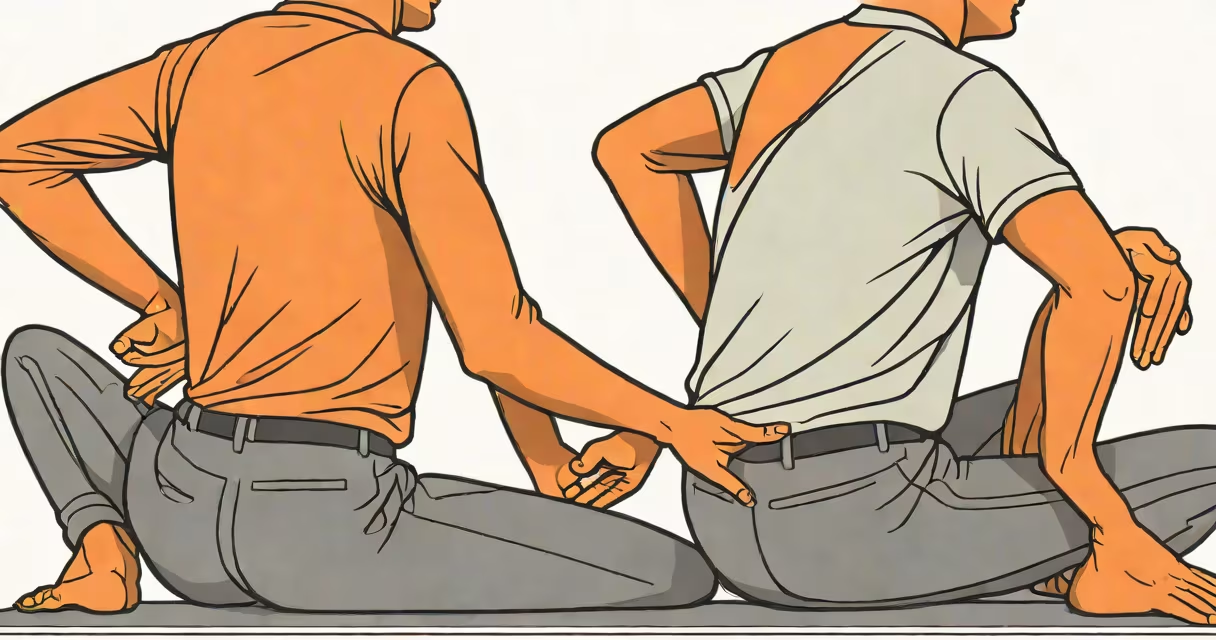
Both sides of my lower back hurt refers to persistent or sharp discomfort affecting the entire lower back region, symmetrically on both left and right sides. This pattern often indicates muscular strain, spinal misalignment, or nerve-related issues rather than a single-sided problem like a herniated disc.
Bilateral lower back pain typically arises from activities involving repetitive bending, prolonged sitting, or sudden twisting. It may develop gradually or appear after lifting heavy objects, exercising, or long periods in a car. The sensation ranges from dull ache to sharp, shooting pain, sometimes radiating into the hips or upper thighs.
According to the American Academy of Orthopaedic Surgeons (AAOS), low back pain affects nearly 80% of adults at some point in life, with most cases resolving within six weeks without surgery. Bilateral pain is more likely to stem from mechanical stress than neurological conditions, though persistent symptoms require medical evaluation.
The lower back, or lumbar spine, consists of five vertebrae (L1-L5) stacked with intervertebral discs between them. These discs act as shock absorbers. Surrounding muscles, ligaments, and nerves stabilize the area and enable movement. When these structures are overstretched or irritated, pain signals travel through the spinal nerves to the brain.
Pain on both sides suggests involvement of the paraspinal muscles-the paired muscles running along each side of the spine. These muscles contract during bending, twisting, and lifting. Overuse or improper form during weightlifting, for example, can cause micro-tears and inflammation, leading to soreness that spreads bilaterally.
Nerve roots exiting the spinal cord at the L4-L5 and L5-S1 levels can also contribute. Compression from a bulging disc or spinal stenosis may irritate both nerves simultaneously, resulting in symmetrical pain. However, true bilateral nerve root compression is rare and usually accompanied by numbness, tingling, or weakness in both legs.
Not all bilateral lower back pain stems from the same source. Identifying the root cause improves treatment accuracy and recovery time.
| Common Cause | Typical Symptoms | When It's Likely |
|---|---|---|
| Muscle strain | Dull ache, worsens with movement, improves with rest | After lifting, sudden twist, or prolonged sitting |
| Poor posture | Constant dull ache, especially after standing or sitting | Working at a desk for hours daily |
| Spinal stenosis | Pain worsens walking, eases when leaning forward | Over 50 years old, history of back issues |
| Pregnancy-related strain | Gradual onset, worsens in third trimester | Carrying extra weight, shifting center of gravity |
One underappreciated factor is pelvic misalignment. The sacroiliac (SI) joints connect the spine to the pelvis. When these joints become inflamed or unstable due to uneven leg length, gait changes, or hormonal shifts during pregnancy, they can trigger bilateral lower back pain. A 2021 study in *The Spine Journal* found SI joint dysfunction accounted for 15-30% of chronic low back pain cases, often missed in initial assessments.
Another frequent confusion: people assume bilateral pain means "not serious." That's incorrect. While unilateral pain often points to a specific injury like a disc herniation, bilateral pain can signal systemic issues such as ankylosing spondylitis-a chronic inflammatory condition affecting the spine. Early signs include morning stiffness lasting over 30 minutes and improvement with activity. If symptoms persist beyond four weeks, consult a rheumatologist.
In 2022, a 38-year-old office worker reported both sides of my lower back hurt after returning from a week-long business trip. He sat for 10 hours daily, used a poorly adjusted chair, and carried a heavy laptop bag. His pain began mildly but intensified over three days, limiting his ability to stand upright.
He initially treated it with over-the-counter ibuprofen and stretching. After seven days, no improvement. A physical exam revealed tightness in the erector spinae and quadratus lumborum muscles, reduced hip mobility, and positive straight leg raise test. MRI showed no disc herniation or nerve compression.
Diagnosis: bilateral muscle strain exacerbated by prolonged sitting and poor ergonomics. Treatment included targeted physical therapy, ergonomic workstation adjustments, and daily core-strengthening exercises. Pain resolved in 14 days with consistent follow-through.
This case illustrates that bilateral pain doesn't rule out treatable musculoskeletal causes. Ignoring early signs can lead to chronic pain patterns.
Both sides of my lower back hurt becomes concerning if it persists beyond four weeks, worsens at night, or interferes with sleep. Red flags include fever, unexplained weight loss, or numbness/weakness in both legs. These may indicate infection, tumor, or cauda equina syndrome-a rare but urgent condition requiring immediate surgery.
Both sides of my lower back hurt is a symptom, not a diagnosis. It reflects strain on muscles, joints, or nerves. Most cases resolve with rest, posture correction, and gentle exercise. Persistent or worsening pain requires professional assessment to rule out structural or systemic causes. Addressing underlying mechanics early prevents chronic disability.