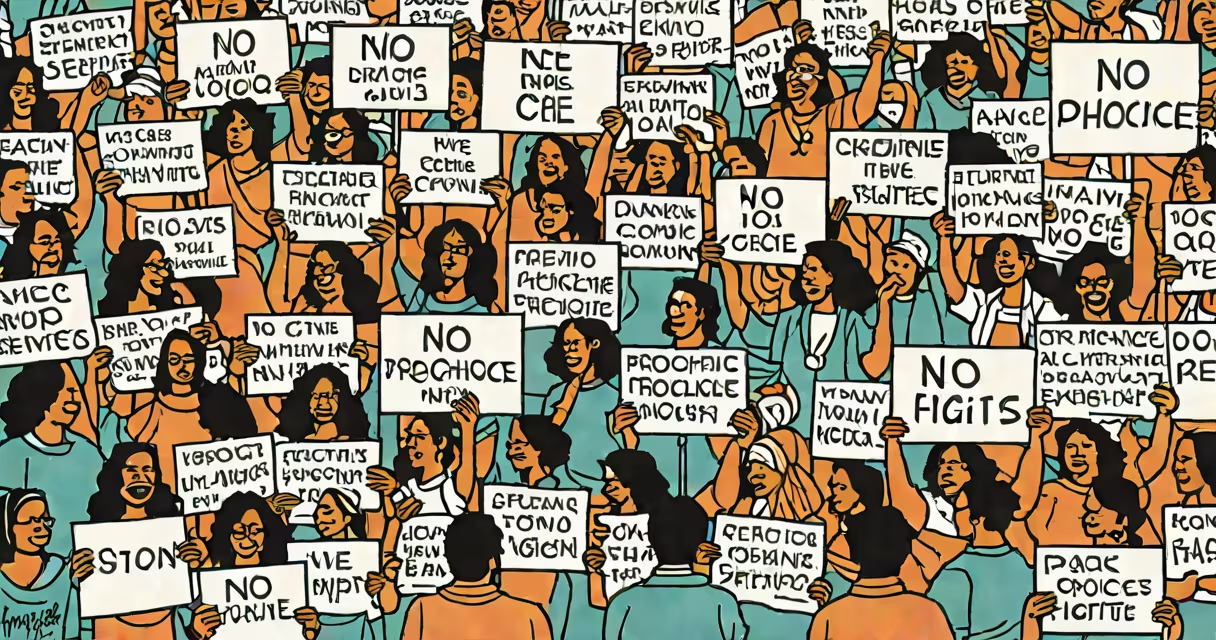
Being prochoice means affirming a person's right to make autonomous decisions about their own body, particularly regarding pregnancy and abortion, without coercion, stigma, or legal barriers. This stance centers on bodily autonomy, healthcare access, and individual agency in reproductive matters.
The term emerged prominently during the 1970s U.S. feminist movement as a deliberate alternative to "pro-abortion," which many activists felt carried negative connotations. "Prochoice" reframed the debate around personal decision-making rather than ideological positions on abortion itself. It emphasizes that individuals-not lawmakers, religious institutions, or medical gatekeepers-should decide whether to continue or end a pregnancy.
According to the Guttmacher Institute, 61% of U.S. adults identify as prochoice, reflecting broad support for reproductive autonomy. The American College of Obstetricians and Gynecologists (ACOG) affirms that reproductive health care, including abortion, is essential medical care and that patient autonomy is central to ethical practice.
Prochoice is not a single policy position but a structure for evaluating laws, healthcare systems, and social norms through the lens of individual rights. A prochoice perspective supports policies that expand access to contraception, prenatal care, and safe, legal abortion services.
For example, in states with restrictive abortion laws, such as Texas's SB 8 ban, which allows private citizens to sue anyone who aids an abortion, the prochoice stance opposes such legislation because it removes decision-making power from patients and places it in the hands of third parties. These laws create fear and legal risk for both patients and providers, undermining autonomy.
In contrast, states like California and New York have enacted laws protecting abortion access, including funding for clinics and legal immunity for providers. These measures reflect prochoice principles by prioritizing patient safety and choice over political or religious influence.
Prochoice is often misunderstood as being synonymous with supporting abortion in all circumstances. That is incorrect. Being prochoice means supporting a person's right to choose-not endorsing any specific outcome. Someone can be prochoice while personally opposing abortion, just as someone can oppose abortion yet still support a woman's right to make her own decision.
A common confusion arises between "prochoice" and "pro-life." While both terms address life and ethics, they differ fundamentally in focus. Pro-life advocates prioritize the fetus's right to life and often seek to restrict or ban abortion. Prochoice advocates prioritize the pregnant person's right to bodily integrity and decision-making authority.
Another misconception is that prochoice implies a lack of moral consideration. On the contrary, many prochoice individuals engage deeply with the ethical dimensions of pregnancy, parenting, and healthcare. The difference lies in where the moral weight is placed: on the person making the decision, not on a predetermined outcome.
Prochoice advocacy takes multiple forms, ranging from grassroots organizing to legislative action and clinical care. The following table outlines key approaches:
| Type | Description | Real-World Example |
|---|---|---|
| Legal Reform | Advocating for laws that protect abortion access and remove barriers. | California's 2022 passage of Proposition 1, which enshrined abortion rights in the state constitution. |
| Healthcare Access | Expanding clinics, funding, and provider training. | Planned Parenthood's network of 600+ clinics offering reproductive health services nationwide. |
| Education and Outreach | Providing accurate information to counter misinformation. | March for Life's annual event in Washington, D.C., which includes educational booths on contraception and abortion. |
| Direct Support | Offering transportation, lodging, or financial aid for those seeking care. | The National Network of Abortion Funds (NNAF) helped over 100,000 people access care in 2023. |
One non-obvious fact: prochoice is not limited to abortion. It includes access to contraception, fertility treatment, and maternal care. The World Health Organization defines reproductive health as encompassing all aspects of sexual and reproductive well-being, not just abortion.
In 2021, I visited a Planned Parenthood clinic in rural Nebraska. The wait time was 45 minutes. The staff were calm, professional, and offered counseling on all options, including continuing the pregnancy. A young woman in her early twenties came in for a medication abortion. She had traveled 120 miles from her home county. Her decision wasn't made lightly-it was shaped by her job, her relationship, and her understanding of her own future. The clinic didn't pressure her. They gave her information, answered questions, and supported her choice. That moment illustrated the core of prochoice: respect, dignity, and informed consent.
Medical professionals are bound by ethics to uphold patient autonomy. ACOG states that physicians must not impose their personal beliefs on patients when providing reproductive care. In states where providers face criminal penalties for performing abortions, this principle is violated. The prochoice stance demands that healthcare remain evidence-based and patient-centered.
Prochoice is not the same as "abortion on demand." It does not imply that abortion should be available without limits. Rather, it opposes laws that ban abortion entirely or force people into unwanted pregnancies. The distinction matters: prochoice supports access, not unrestricted availability.
It is also not synonymous with "feminism." While many feminists are prochoice, the two concepts are distinct. A man can be prochoice; a woman can be anti-choice. The issue is about rights, not gender identity.
Some confuse prochoice with "anti-religious." But many religious groups, including Catholic nuns and Jewish rabbis, advocate for prochoice policies based on ethical principles of compassion, justice, and personal responsibility. The United Church of Christ and the Religious Coalition for Reproductive Choice represent faith-based voices supporting reproductive freedom.
Understanding what it means to be prochoice requires recognizing it as a commitment to bodily autonomy, informed consent, and equitable access to reproductive healthcare. It is not a slogan, nor a political label-it is a lived reality for millions going through complex decisions about their bodies and futures. Whether through policy, direct support, or personal choice, being prochoice means affirming that people deserve the right to decide what happens to their own lives.