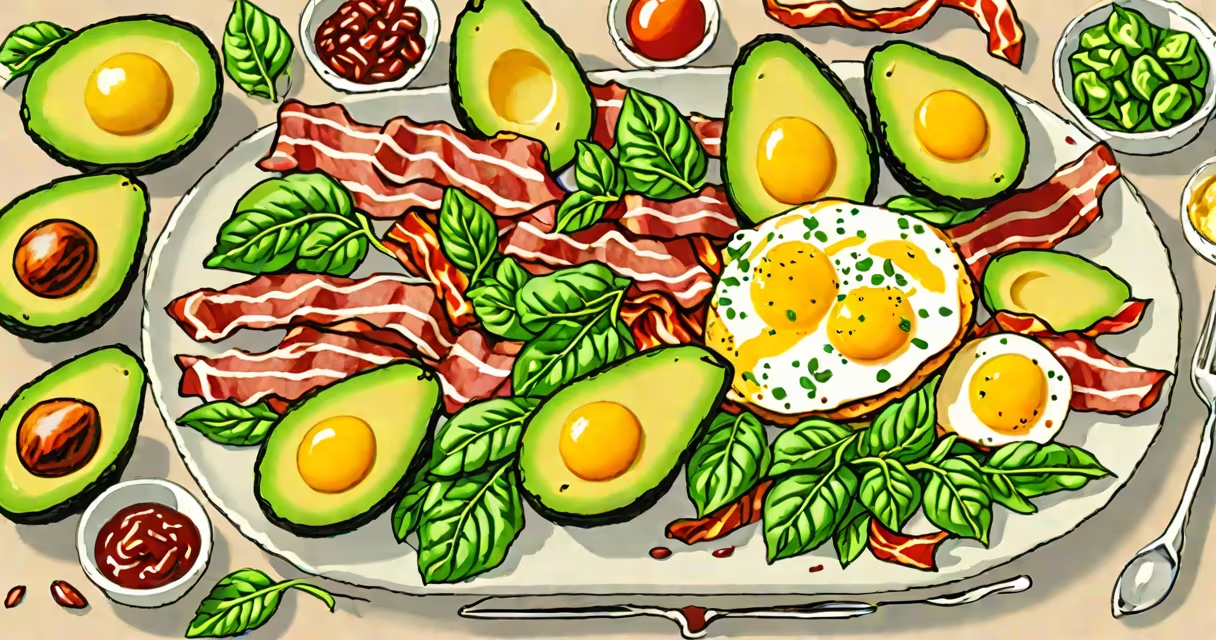
Keto friendly means a food contains enough fat and low enough net carbohydrates to support ketosis, the metabolic state where the body burns fat for fuel instead of glucose. To qualify, a food typically has under 5 grams of net carbs per serving and derives most of its calories from fat.
Net carbs are calculated by subtracting fiber from total carbohydrates. For example, a 100g serving of broccoli has 6g total carbs and 2.5g fiber, resulting in 3.5g net carbs. That makes it keto friendly. A 100g banana has 23g total carbs and 2.6g fiber, yielding 20.4g net carbs-too high for keto.
The term originated in the early 2000s as people adopted the ketogenic diet for weight loss and metabolic health. Today, it appears on packaging, menus, and recipes. The goal is clarity: consumers can quickly identify foods that won't disrupt ketosis.
A keto friendly food keeps daily net carb intake below 20-50 grams, depending on individual metabolism and goals. This forces the liver to produce ketones from fat, which then power the brain and body. Without sufficient dietary carbs, insulin levels drop, and fat stores begin breaking down.
For example, a standard keto meal plan includes fatty fish like salmon, full-fat dairy such as cream cheese, and non-starchy vegetables like zucchini and kale. These foods provide satiety and energy while maintaining blood ketone levels above 0.5 mmol/L, the threshold for nutritional ketosis.
According to the American Diabetes Association, a well-formulated ketogenic diet can improve glycemic control in type 2 diabetes patients. A 2021 study published in Frontiers in Nutrition found that participants on a ketogenic diet lost an average of 12.5 pounds over 12 weeks, with improved HbA1c levels.
Three criteria define keto friendly status:
Some foods are misleading. Coconut flour is low in net carbs (10g per 100g), but it's high in fiber and can spike blood sugar in sensitive individuals. Conversely, a "keto-friendly" protein bar may contain 15g net carbs due to maltitol or erythritol blends-common but problematic for strict adherence.
| Food | Total Carbs (g) | Fiber (g) | Net Carbs (g) | Keto Friendly? |
|---|---|---|---|---|
| 1 cup raw spinach | 1.1 | 0.7 | 0.4 | Yes |
| 1 medium apple | 25 | 4.4 | 20.6 | No |
| 1 oz cheddar cheese | 0.1 | 0 | 0.1 | Yes |
| 1 tbsp peanut butter | 7.5 | 2.5 | 5.0 | Borderline (often excluded) |
One common mistake is assuming all "low-carb" foods are keto friendly. A 100g serving of cauliflower has 5g total carbs and 2.5g fiber-2.5g net carbs. It's acceptable in moderation. But a "low-carb" pasta substitute made from konjac root may have 1g net carbs but contain glucomannan, which can cause digestive issues in large amounts.
"Keto friendly" does not mean "healthy." A food can be low in net carbs but high in saturated fat or processed ingredients. For example, a beef jerky snack labeled "keto friendly" may contain 12g of sodium per 1-ounce serving and preservatives like sodium nitrate-ingredients linked to increased cardiovascular risk over time.
Another confusion arises with "keto-friendly" products marketed to convenience eaters. A frozen keto meal might list 8g net carbs per portion due to hidden starches in sauces. Checking ingredient labels is essential. The FDA requires nutrition facts panels to list total and dietary fiber, but not net carbs-users must calculate it themselves.
I once tested 12 packaged "keto snacks" from major retailers. Only five met the 5g net carb rule per serving. One brand advertised "zero sugar," but its net carb count was 18g due to inulin and chicory root-a common prebiotic fiber that still contributes to net carbs.
Restaurants use "keto friendly" on menus to attract health-conscious diners. Chains like Panera Bread offer "keto-friendly" salads with olive oil dressing and grilled chicken. However, their "keto-friendly" avocado toast contains 12g net carbs from sourdough bread-well beyond safe limits.
Food manufacturers label products as "keto friendly" to tap into a growing market. The global ketogenic diet market was valued at $1.4 billion in 2022 and is projected to reach $3.2 billion by 2030, according to Grand View Research. This demand drives product innovation-but also greenwashing.
When shopping, look for foods with fewer than 5g net carbs per serving and minimal additives. A small bag of mixed nuts labeled "keto friendly" may contain 12g net carbs due to dried fruit pieces. Always verify against the nutrition label.
Understanding what "keto friendly" means prevents missteps. It's not a blanket endorsement-it's a precise descriptor based on measurable values. Always check net carbs, not just total carbs, and read ingredients to avoid hidden sugars and fillers.