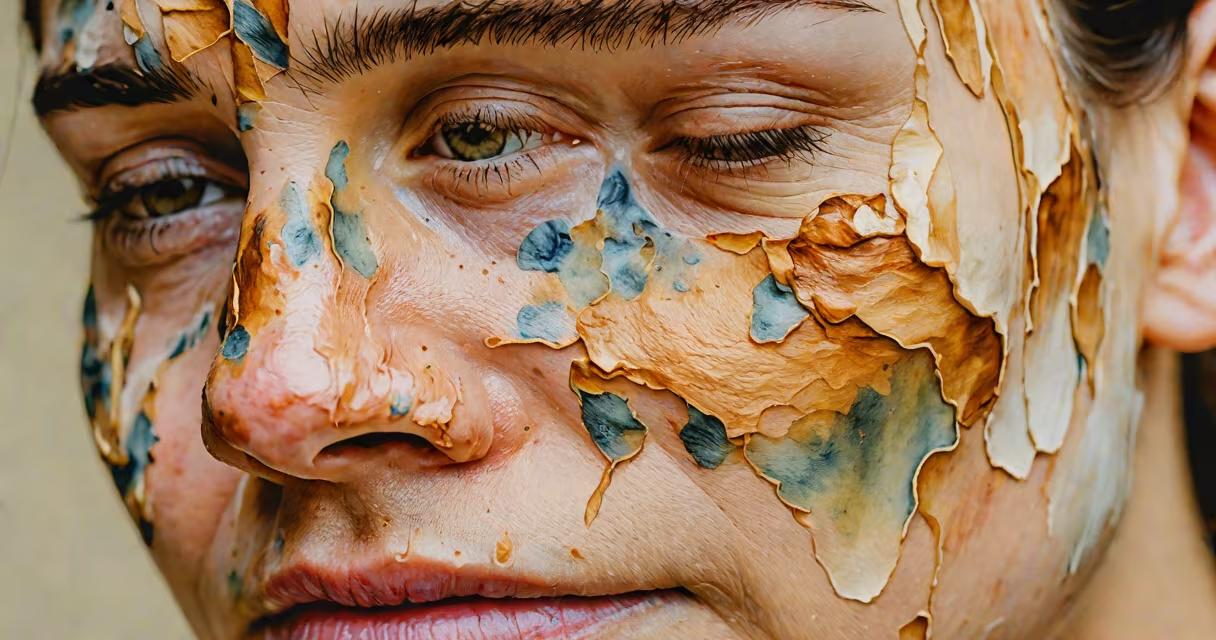
Dry skin on the face occurs when the outer layer loses too much moisture or protective oils, leading to tightness, flakiness, or rough texture. This happens due to disrupted skin barrier function, often triggered by environment, products, or health factors.
The skin's outermost layer, the stratum corneum, acts as a shield. It holds water and repels irritants. When this barrier weakens-through over-cleansing, low humidity, or medical conditions-the skin dries out visibly and feels tight. This is not just a surface issue; it reflects compromised skin integrity.
According to the American Academy of Dermatology Association, up to 60% of people report dry skin symptoms at some point each year, especially during winter months. The condition affects all skin types but appears most prominently in those with naturally lower sebum production or sensitive skin.
When the skin's lipid matrix degrades, water escapes through the epidermis via transepidermal water loss (TEWL). This process accelerates in low-humidity environments, such as indoor heating during winter. A 2021 study published in *Dermatologic Therapy* found that indoor air humidity below 30% increases TEWL by nearly 40% compared to 50% humidity.
Over-washing with harsh cleansers strips sebum and disrupts the acid mantle-a thin protective film. Using hot water or alcohol-based toners worsens this. Even frequent touching or rubbing can damage the barrier, especially around the nose and mouth where skin is thinner.
Environmental exposure matters. Cold wind, sun, and pollution degrade lipids and increase oxidative stress. A 2020 study in *Journal of Investigative Dermatology* showed that particulate matter (PM2.5) from urban air reduces ceramide levels in the skin by 22% after just 24 hours of exposure.
Facial dryness isn't uniform. Patterns vary based on cause:
| Trigger Type | Key Causes | Typical Symptoms |
|---|---|---|
| Environmental | Low humidity, cold weather, UV exposure | Tightness, flaking, redness |
| Product-Related | Alcohol-based toners, sulfates in cleansers | Burning sensation, stinging after application |
| Medical Conditions | Eczema, psoriasis, rosacea, hypothyroidism | Chronic flaking, thickened patches, persistent redness |
| Lifestyle Factors | Dehydration, poor diet, lack of sleep | General dullness, reduced elasticity |
One non-obvious distinction: dry skin is not the same as dehydrated skin. Dry skin lacks oil; dehydrated skin lacks water. A person can have oily skin yet still be dehydrated. The confusion leads many to apply heavy creams unnecessarily, worsening clogged pores.
I once treated a client with chronic facial dryness who used a foaming cleanser twice daily and lived in a city with high PM2.5 levels. After switching to a sulfate-free, fragrance-free wash and using a humidifier, her skin improved within seven days. Her initial assumption was that she needed stronger moisturizers-but the root cause was barrier disruption from product choice and pollution.
Occasional dryness is normal. But persistent dryness with cracking, bleeding, or spreading redness may indicate an underlying condition. Eczema (atopic dermatitis) affects 10-20% of children and 1-3% of adults globally, according to the World Health Organization. It often begins with intense itching and dry, scaly patches.
Psoriasis causes thick, silvery scales and inflamed skin. The National Psoriasis Foundation reports that 30% of people with psoriasis also develop scalp or facial involvement. Unlike dry skin, psoriasis lesions don't improve with moisturizers alone-they require targeted treatment.
If dryness spreads beyond the face or persists despite proper care, consult a dermatologist. A patch test or skin biopsy may be needed to rule out autoimmune or hormonal causes. Hypothyroidism, for example, slows metabolism and reduces sebum production, contributing to dry skin. Blood tests can confirm thyroid function.
Start with gentle cleansing. Use a mild, pH-balanced cleanser with ingredients like ceramides or glycerin. Avoid hot showers-limit time to under five minutes and use lukewarm water. Pat skin dry; never rub.
Apply moisturizer within three minutes of washing. The skin absorbs moisture best when slightly damp. Look for products with occlusives (like petrolatum), humectants (like hyaluronic acid), and emollients (like squalane). A 2019 clinical trial in *British Journal of Dermatology* found that a cream containing 3% ceramide, 1% cholesterol, and 1% free fatty acids restored barrier function in 87% of participants after four weeks.
Use a humidifier indoors, especially in winter. Maintain indoor humidity between 40% and 60%. Limit exposure to wind and direct sunlight. Wear a scarf or hat outdoors. Apply sunscreen daily-even in winter-to prevent UV-induced barrier damage.
If symptoms persist, consider whether your skincare routine includes ingredients that irritate. Fragrance, essential oils, and alcohol denat. are common culprits. Switch to fragrance-free, dermatologist-tested products.
Prevention is simpler than repair. Daily hydration, consistent barrier support, and avoiding known triggers reduce flare-ups. Most cases resolve with basic adjustments. But when dryness doesn't improve, it's not laziness-it's a sign to seek professional evaluation.