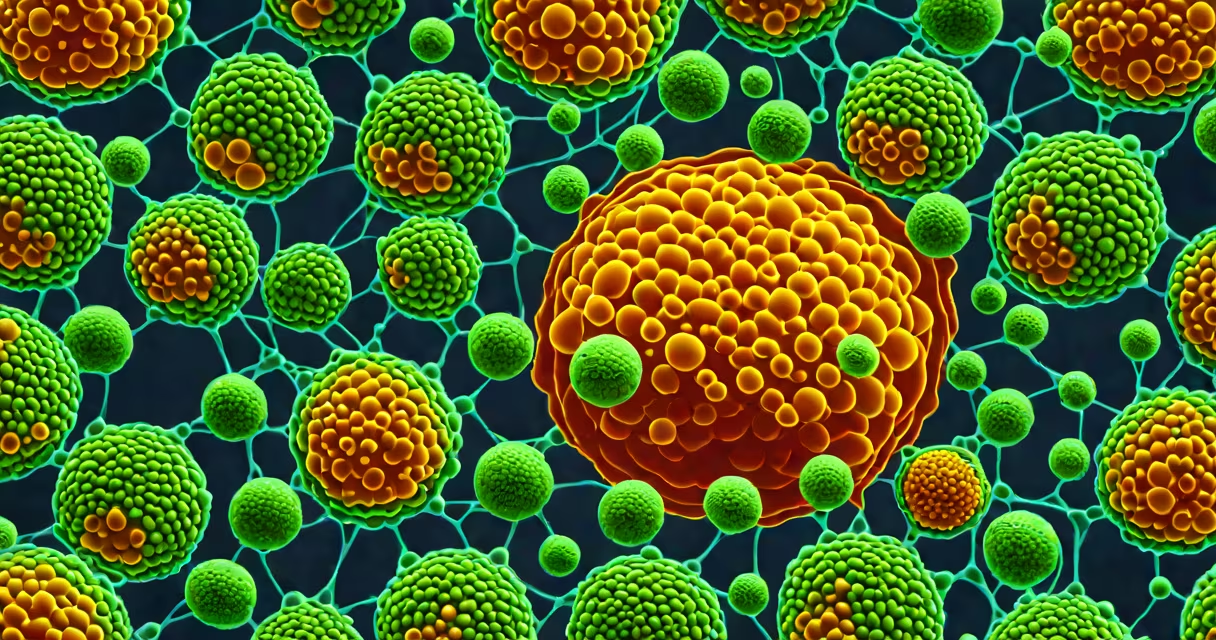
An embryonic cell is a pluripotent cell originating from the inner cell mass of a blastocyst-stage embryo, capable of differentiating into any cell type in the human body. These cells form the foundation of all tissues and organs during early development and are central to regenerative medicine research.
Embryonic cells arise around day 5 after fertilization, when the zygote divides into a hollow ball called a blastocyst. The inner cell mass, a cluster of undifferentiated cells within this structure, gives rise to embryonic stem cells-laboratory-derived lines that retain the ability to become any cell type. This capacity is known as pluripotency, distinguishing them from adult stem cells, which are more limited in potential.
Human embryonic cells are typically isolated from surplus embryos created during in vitro fertilization (IVF) procedures, with informed consent from donors. The process involves culturing these cells in specialized media under strict laboratory conditions to maintain their undifferentiated state. Once established, these cell lines can be expanded indefinitely, making them valuable tools for studying development and disease.
During early embryogenesis, embryonic cells undergo rapid division and begin to specialize through a process called differentiation. They follow precise genetic and epigenetic programs that activate specific gene networks based on signals from neighboring cells and the extracellular environment.
For example, in the developing neural tube, signaling molecules such as BMPs and Shh direct embryonic cells to become neurons or glial cells. Without these cues, cells remain in a default state of pluripotency. This sensitivity to environmental signals allows researchers to mimic developmental pathways in culture to generate specific cell types-such as insulin-producing beta cells or cardiomyocytes-for therapeutic use.
A key feature of embryonic cells is their ability to self-renew. Unlike most mature cells, they divide symmetrically to produce two identical daughter cells, preserving the population. This property enables long-term experimentation and biobanking, critical for drug screening and disease modeling.
While the term "embryonic cell" often refers to embryonic stem cells (ESCs), there are distinct categories based on origin and stage:
| Type | Source | Pluripotency Level | Use Case |
|---|---|---|---|
| Embryonic Stem Cells (ESCs) | Inner cell mass of blastocyst (day 5-7) | Full pluripotency | Research, disease modeling, regenerative therapy development |
| Primordial Germ Cells (PGCs) | Early germ layer, ~week 3-4 | Pluripotent but lineage-restricted | Study of gamete formation and reproductive disorders |
| Epiblast Cells | Pre-implantation embryo, prior to gastrulation | Transient pluripotent state | Understanding earliest lineage decisions |
Embryonic cells differ from induced pluripotent stem cells (iPSCs), which are reprogrammed from adult cells using transcription factors like Oct4, Sox2, Klf4, and c-Myc. While iPSCs share many properties with ESCs, they may carry residual epigenetic memory from their original tissue, affecting differentiation efficiency.
One widespread misunderstanding is that embryonic cells are synonymous with embryos themselves. In reality, embryonic cells are individual cells extracted from an embryo-typically less than 100 cells in total-and not whole organisms. Their use in research requires ethical oversight and adherence to guidelines set by institutions such as the National Institutes of Health (NIH).
Another misconception is that embryonic cells can be directly transplanted into patients. While promising, clinical applications face challenges including immune rejection, tumor formation risk (teratoma), and incomplete maturation. For example, a 2021 study published in *Nature Medicine* reported successful transplantation of lab-grown retinal cells derived from embryonic stem cells in patients with macular degeneration-but only after rigorous purification and quality control.
Embryonic cells are not the same as somatic cells. Somatic cells are differentiated body cells (e.g., skin, liver, muscle) that have lost pluripotency. Embryonic cells represent the earliest, most flexible stage of cellular identity.
One of the most advanced applications of embryonic cells is in treating spinal cord injuries. Researchers at the University of California, San Diego, used human embryonic stem cell-derived neural progenitor cells in a Phase I clinical trial. Patients received injections of these cells into the injury site between 2016 and 2019.
The protocol involved isolating embryonic cells from donated IVF embryos, expanding them in culture, and then differentiating them into neural precursors. After quality testing and cryopreservation, the cells were thawed and injected into the cervical spine region. Over 12 months, seven out of ten participants showed modest motor function improvements, though no complete recovery occurred.
This trial highlights both the promise and limitations of embryonic cell therapies. Success depends on precise timing, delivery method, and patient selection. It also underscores the need for standardized protocols-such as those outlined by the International Society for Stem Cell Research (ISSCR)-to ensure safety and reproducibility.
During my time working in a developmental biology lab, I observed embryonic cells forming early germ layers in mouse models. The cells spontaneously organized into structures resembling the primitive streak-where mesoderm and endoderm emerge-after just 48 hours in culture. Seeing this pattern unfold confirmed how intrinsic the developmental program is, even in isolation.
Embryonic cells are not equivalent to fetal tissue. Fetal tissue refers to cells from a developing fetus beyond the embryonic stage (typically after week 8), and its use raises different ethical considerations. Embryonic cells are harvested before implantation and do not involve continuation of pregnancy.
Regulatory frameworks vary globally. In the U.S., federal funding for research involving human embryonic stem cells is permitted only if the cells were derived from embryos created for IVF and no longer needed, with donor consent. The NIH maintains a registry of approved stem cell lines to ensure compliance.
Despite controversy, embryonic cells remain irreplaceable for understanding early human development. As noted in a 2020 review by *Cell Stem Cell*, "The unique developmental potential of embryonic cells provides insights unattainable through adult or induced stem cells."
Understanding what is an embryonic cell begins with recognizing its biological significance: a foundational unit of life with extraordinary plasticity. These cells are not just scientific curiosities-they are essential to advancing treatments for Parkinson's, diabetes, and heart disease. Their potential lies not in replacing tissue, but in revealing how life builds itself from a single cell.