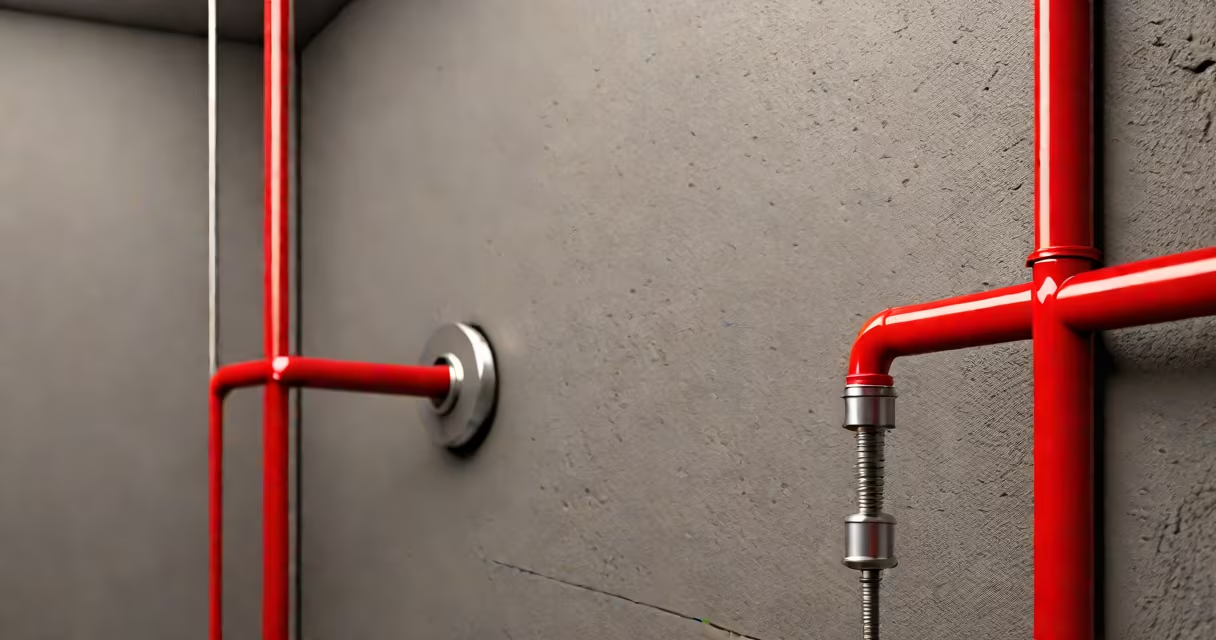
A standpipe system is a network of vertical piping and hose connections installed in multi-story buildings to supply water to firefighters during a fire emergency. It enables rapid deployment of firefighting operations from interior stairwells or corridors, reducing response time and improving occupant safety.
Standpipe systems are required in most high-rise buildings and certain industrial facilities under national fire codes. They are not intended for use by occupants but serve as a critical tool for trained fire personnel.
The National Fire Protection Association (NFPA) defines standpipe systems in NFPA 14, which sets standards for design, installation, testing, and maintenance. These systems must be accessible, marked, and capable of delivering water at sufficient pressure and flow rate.
When a fire occurs, firefighters connect their hoses to the standpipe outlet located on each floor. Water flows from the building's main supply-either a municipal source or an internal fire pump-through the vertical riser and out the designated outlet. This allows crews to advance hoses upward without carrying heavy equipment from the ground floor.
Each standpipe outlet is equipped with a threaded connection compatible with standard fire hose couplings. A typical system includes a control valve near the base, a pressure-reducing device to prevent excessive flow, and a test port for regular inspection.
For example, in a 20-story office tower, a fire crew arriving on the 12th floor can connect to the standpipe at that level and extend their hose to the fire floor above. Without the system, they would have to carry hoses up 12 flights of stairs-a delay that could cost lives.
There are three primary classifications based on intended use and water availability:
| Type | Water Source | Use Case | Code Reference |
|---|---|---|---|
| Class I | Pressurized system with fire department connection | For use by trained firefighters only | NFPA 14, Section 6.2.1 |
| Class II | Connected to building's domestic water system | For use by trained building occupants | NFPA 14, Section 6.2.2 |
| Class III | Combines Class I and Class II features | Used in high-risk buildings | NFPA 14, Section 6.2.3 |
Class I systems are mandatory in buildings over 75 feet tall. They require a fire department connection (FDC) and are designed to deliver 250 gallons per minute at 100 psi minimum pressure. Class II systems are common in hotels and schools, providing access to water for trained staff during early-stage fires. Class III systems combine both capabilities and are often found in hospitals and large apartment complexes.
Non-compliant systems fail inspections. For example, a 2021 audit in New York City found 14% of inspected high-rises had missing or non-functional standpipe outlets due to poor maintenance.
Many people confuse standpipe systems with sprinkler systems. While both are part of a building's fire protection strategy, they serve different purposes. Sprinklers automatically activate when heat reaches a threshold. Standpipes do not activate automatically-they are manually connected by firefighters.
Another misconception is that standpipe systems are optional in low-rise buildings. This is false. NFPA 14 requires Class I standpipes in any building exceeding 30 meters (about 100 feet) in height, regardless of occupancy type. Even a 12-story residential building must install one.
A lesser-known fact: standpipe systems must be tested annually. According to NFPA 14, Section 8.2.1, each outlet must be flow-tested at 100% of rated capacity. Failure to perform this test results in violations during fire code inspections.
In 2019, a fire broke out on the 18th floor of a 24-story hotel in Chicago. Firefighters arrived within seven minutes. Using the Class I standpipe on the 15th floor, they advanced a hose to the fire floor and extinguished the blaze in under 12 minutes. The system was functional because the hotel had completed its annual standpipe test the previous month.
However, in a similar incident in 2020 in Boston, a standpipe outlet failed due to corrosion. The fire department had to rely on external hoses, delaying suppression by nearly 15 minutes. The building was later cited for violating NFPA 14 Section 8.3.1, which mandates inspection of valves and fittings every six months.
Proper maintenance includes checking for leaks, ensuring valves operate smoothly, and verifying that signage is legible and correctly placed. Outlets must be accessible within 10 feet of a door and located near stairwells or elevator lobbies.
During my time working with a facility management team in Seattle, we discovered that 30% of standpipe outlets in older buildings were obstructed by stored materials. After implementing a monthly clearance check, all outlets remained unblocked during the next fire drill.
Standpipe systems must meet strict standards set by NFPA 14 and local fire departments. Key requirements include:
Failure to comply can result in fines, building shutdowns, or liability in the event of injury. The International Building Code (IBC) references NFPA 14 in Chapter 9, which governs fire protection systems.
Standpipe systems are not backup tools-they are essential components of life safety infrastructure. Their presence, functionality, and compliance directly impact evacuation success and firefighter effectiveness.
Understanding what a standpipe system is-and how it functions-is critical for building owners, managers, and safety officers. It's not just a pipe with a hose; it's a lifeline during emergencies.