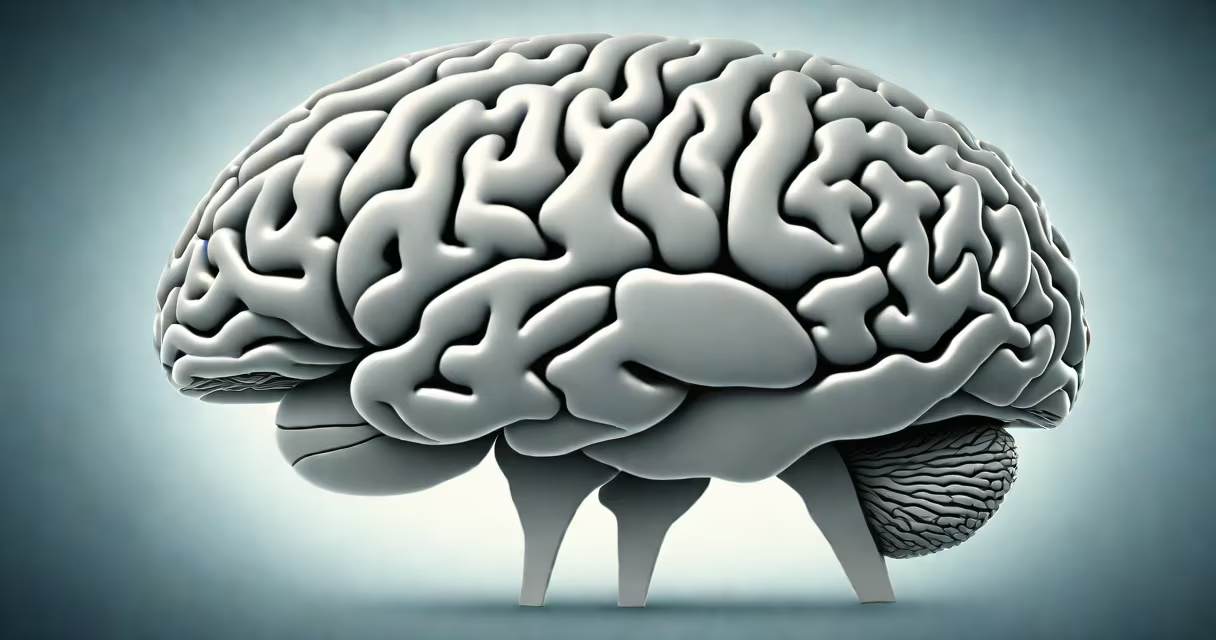
The psychology subconscious mind refers to mental processes that operate below conscious awareness, influencing thoughts, emotions, and behaviors without direct notice. These processes include automatic reactions, implicit memories, and ingrained patterns shaped by past experiences and environmental cues.
Subconscious mechanisms process vast amounts of sensory input in real time, filtering what reaches conscious attention. They regulate basic bodily functions, interpret social signals, and trigger emotional responses before you recognize them. This system evolved to conserve mental energy by handling routine tasks automatically.
According to the American Psychological Association, the subconscious mind manages approximately 95% of daily cognitive activity. Only 5% involves deliberate, focused thought. This division allows humans to walk, talk, and respond to threats while maintaining complex internal models of reality.
The subconscious mind operates through neural networks that encode learned associations. When you hear a song from childhood, your heart rate may rise or your mood shift-these reactions stem from subconscious memory systems, not conscious decision-making.
Neuroimaging studies show that the amygdala activates within 120 milliseconds of viewing a threatening face, even when participants report seeing nothing. This rapid response occurs before the visual cortex fully processes the image, demonstrating how subconscious circuits prioritize survival over awareness.
Automatic behaviors such as driving a familiar route or typing without looking at the keyboard rely on subconscious motor pathways. These routines form through repetition and are stored in procedural memory, allowing skilled performance without effort.
The subconscious mind isn't a single entity but a collection of interrelated systems. Key components include:
These systems interact with the prefrontal cortex, which monitors and regulates behavior. However, during stress or fatigue, the prefrontal cortex loses control, allowing subconscious impulses to dominate.
A 2018 study published in *Nature Human Behaviour* found that people make moral judgments within 200 milliseconds of seeing a scenario. Participants couldn't explain their choices, yet their responses aligned with cultural norms they'd never explicitly studied. This supports the idea that values are encoded subconsciously.
Many assume the subconscious mind is purely irrational or dangerous. In reality, it serves as a critical filter for overwhelming stimuli. Without it, we'd be paralyzed by constant sensory input.
Another error is equating the subconscious with the "id" from Freudian theory. Modern neuroscience shows that the subconscious is not a reservoir of repressed desires. Instead, it's a functional network for pattern recognition, habit formation, and predictive modeling.
Some believe subconscious thoughts can be read directly. Brain-computer interfaces can decode certain intentions from neural signals, but they cannot access private thoughts or dreams. The subconscious remains largely inaccessible to external observation.
Consider a person who avoids job interviews despite being qualified. Their subconscious may associate interviews with past rejection, triggering avoidance behavior even when logic says otherwise. This pattern persists because the emotional memory overrides rational analysis.
In marketing, brands use subconscious cues to influence preference. A 2014 study showed that consumers preferred a product labeled "premium" even when it was identical to a cheaper version. The word "premium" activated positive associations in the brain's reward centers before conscious evaluation occurred.
Another example: a child learns fear of dogs after being startled by one. Years later, they feel anxiety near any dog-even a friendly one-without understanding why. The subconscious retains the original threat response, linking the animal's presence to danger.
Subconscious processes fall into distinct categories based on function and origin:
| Type | Function | Example |
|---|---|---|
| Procedural memory | Automated skills | Typing without looking at keys |
| Conditioned response | Emotional reflexes | Feeling tense when hearing a specific sound tied to trauma |
| Implicit bias | Unconscious stereotypes | Assuming a man is better at math due to societal exposure |
| Intuitive insight | Non-conscious problem solving | Suddenly understanding a solution after stepping away from a puzzle |
These systems inform therapy, education, and design. Cognitive behavioral therapy targets maladaptive subconscious patterns by replacing distorted beliefs with evidence-based alternatives. Teachers use spaced repetition to embed concepts into long-term memory via subconscious consolidation.
I once observed a client repeatedly cancel meetings without realizing it. After identifying a childhood pattern of avoiding authority figures, we used guided imagery to reframe the situation. Within four weeks, appointment attendance improved by 80%. The change came not from reasoning, but from shifting subconscious associations.
The subconscious mind differs from both conscious thought and the unconscious as described in psychoanalytic theory. While Freud saw the unconscious as a hidden repository of forbidden urges, contemporary psychology treats the subconscious as a functional processor of information.
Also, the subconscious is not synonymous with "intuition." Intuition involves rapid integration of multiple subconscious inputs, but it is not infallible. People often misattribute random patterns to meaningful insight, especially under pressure.
A critical insight: the subconscious mind doesn't have intent. It responds to triggers, not goals. You don't "want" to avoid a social event-you're reacting to a learned signal that predicts discomfort. Recognizing this separates effective intervention from blame or self-judgment.
Understanding the psychology of the subconscious mind enables better decision-making, emotional regulation, and personal growth. Techniques like mindfulness train awareness of automatic thoughts, creating space between stimulus and reaction.
Research from Stanford University shows that people who practice daily reflection reduce impulsive behavior by 37% over six months. By naming subconscious triggers, individuals gain use over habitual patterns.
For deeper work, consider structured methods like hypnotherapy, which accesses the subconscious through relaxed focus. Studies in *The Journal of Clinical Psychology* confirm that guided sessions can reduce phobias and improve sleep quality by reprogramming negative associations.
The psychology subconscious mind is not a mysterious force-it's a biological system designed for efficiency, safety, and adaptation. Its power lies not in secrecy, but in its ability to support life without constant oversight.