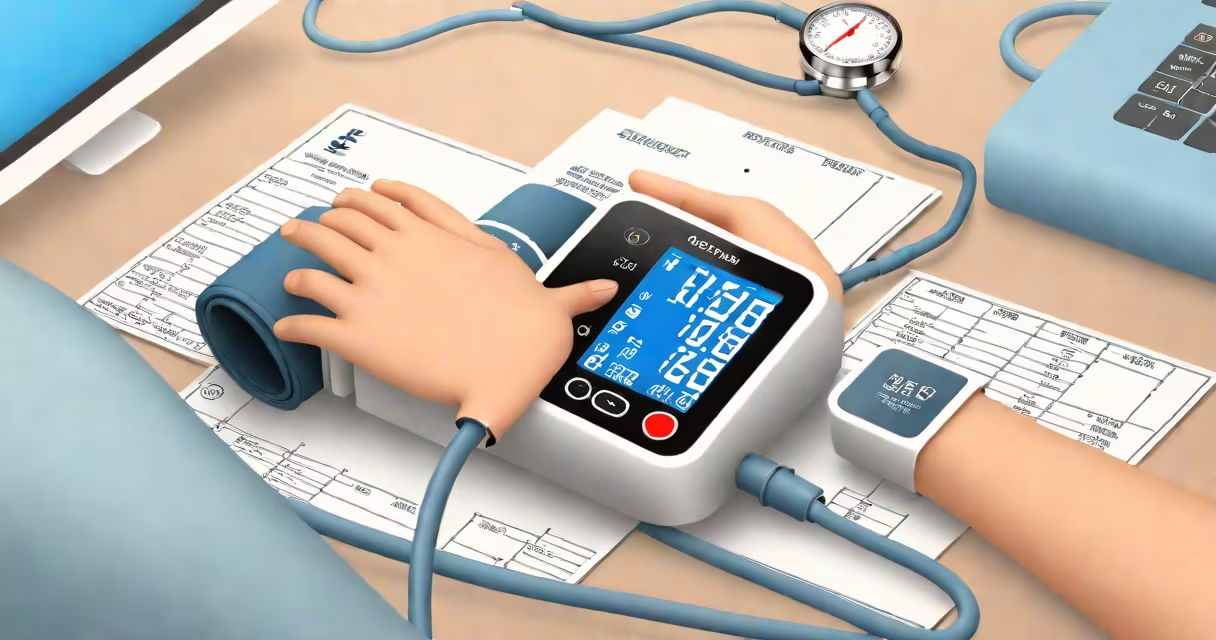
A normal blood pressure count is 120/80 mm Hg, representing systolic pressure of 120 millimeters of mercury and diastolic pressure of 80 mm Hg. This value indicates optimal cardiovascular function and is the benchmark used by medical professionals worldwide.
Blood pressure measures the force exerted by circulating blood against the walls of arteries. Systolic pressure (the first number) reflects pressure during heart contractions. Diastolic pressure (the second number) reflects pressure between beats. A consistent reading below 120/80 mm Hg is considered normal, according to the American Heart Association (AHA).
Readings consistently above 130/80 mm Hg indicate stage 1 hypertension, requiring lifestyle changes or medication. Values above 140/90 mm Hg qualify as stage 2 hypertension. The AHA emphasizes that even small elevations increase long-term risk of stroke, heart attack, and kidney disease.
Healthcare providers measure blood pressure using a sphygmomanometer-a device with an inflatable cuff, gauge, and stethoscope. The cuff is placed around the upper arm and inflated until blood flow stops. As pressure is slowly released, the first sound heard (Korotkoff sound) corresponds to systolic pressure. The point where sounds disappear marks diastolic pressure.
Home monitoring devices use oscillometric technology. They detect vibrations in the artery wall caused by blood flow. These devices are accurate when calibrated properly and validated by clinical standards. The U.S. Food and Drug Administration (FDA) requires home monitors to meet specific accuracy thresholds before sale.
For reliable results, patients should rest quietly for five minutes before measurement. Arms must be supported at heart level. Measurements taken in the morning and evening provide better insight into daily patterns than single readings.
The following table outlines official classifications based on the 2023 ACC/AHA guidelines:
| Category | Systolic (mm Hg) | Diastolic (mm Hg) |
|---|---|---|
| Normal | <120 | <80 |
| Elevated | 120-129 | <80 |
| Stage 1 Hypertension | 130-139 | 80-89 |
| Stage 2 Hypertension | ≥140 | ≥90 |
Readings between 120-129 systolic and less than 80 diastolic are labeled "elevated." While not yet hypertension, this range signals increased risk. The AHA recommends dietary changes and physical activity to prevent progression.
Some individuals exhibit white coat hypertension-elevated readings in clinical settings due to anxiety. Ambulatory blood pressure monitoring (ABPM), which records readings over 24 hours, can confirm whether high values are persistent or situational.
Many assume that a single elevated reading confirms hypertension. That's incorrect. Diagnosis requires multiple measurements over time. A single reading above 140/90 mm Hg doesn't equate to a diagnosis.
Another misconception is that low blood pressure is always safe. While rare, hypotension (typically below 90/60 mm Hg) can cause dizziness, fainting, or organ underperfusion. Some people with consistently low readings remain asymptomatic and healthy.
Non-obvious fact: Blood pressure varies throughout the day. It typically peaks in the morning and drops at night. This circadian rhythm is linked to reduced cardiovascular risk when nighttime pressure remains below 120/80 mm Hg. Studies show that nocturnal dipping protects against stroke and heart failure.
Consider a 52-year-old woman with no known heart disease. Her initial clinic reading was 138/86 mm Hg. She returned for follow-up two weeks later, with a similar result. Her home monitor recorded an average of 132/84 mm Hg over seven days.
Based on the AHA criteria, she met the threshold for stage 1 hypertension. Her doctor recommended reducing sodium intake to less than 1,500 mg per day, increasing aerobic exercise to 150 minutes weekly, and checking her blood pressure monthly. After three months, her average dropped to 124/78 mm Hg.
This case illustrates that early intervention prevents complications. The AHA notes that lifestyle changes alone can lower systolic pressure by 10-15 mm Hg in many patients.
Abnormal blood pressure often coexists with other health issues. High blood pressure increases the risk of kidney damage, vision loss, and cognitive decline. It's also strongly associated with insulin resistance and metabolic syndrome.
When abnormal readings persist, doctors may order tests such as urine albumin-to-creatinine ratio (UACR) to assess kidney function, or echocardiograms to evaluate heart structure. These help determine if organ damage has occurred.