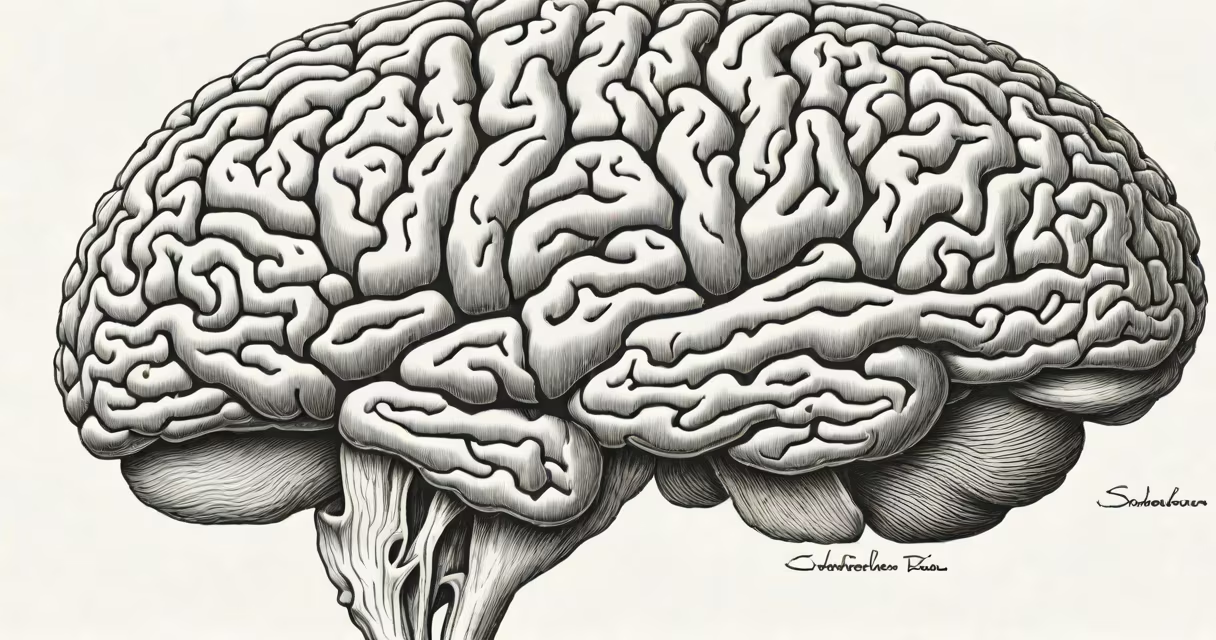
Hallucinations in schizophrenia result from disrupted brain function involving dopamine imbalance, abnormal connectivity in sensory networks, and altered perception processing, particularly in the auditory cortex. These experiences are not imagined-they arise from misfired neural signals interpreted as external stimuli.
Neuroimaging studies show consistent activation in the superior temporal gyrus during auditory hallucinations, a region responsible for processing speech sounds. This area becomes hyperactive even when no external sound exists, leading patients to hear voices that others cannot. The same pattern appears in visual hallucinations, though less frequently, with activity in the occipital lobe and posterior cingulate cortex.
Dopamine overactivity in the mesolimbic pathway is a core mechanism. Excess dopamine binds to D2 receptors in the striatum, amplifying sensory input and distorting reality monitoring. Antipsychotic medications like risperidone and olanzapine work by blocking these receptors, reducing hallucination frequency in 60-70% of treated individuals, according to the National Institute of Mental Health (NIMH).
Research identifies three primary biological contributors: neurotransmitter imbalance, structural brain differences, and functional network disruption. Dopamine is the most studied, but glutamate and GABA systems also play roles. Low GABA levels in the prefrontal cortex impair inhibitory control, allowing irrelevant thoughts and sensory fragments to surface as perceived realities.
Structural MRI scans reveal reduced gray matter volume in the hippocampus and thalamus among people with schizophrenia. The thalamus acts as a sensory gatekeeper; when impaired, it fails to filter out internal noise, letting it leak into conscious awareness. A 2021 study in *Nature Neuroscience* found that patients experiencing auditory hallucinations had 18% less gray matter in the left thalamus compared to controls.
Functional MRI shows that during hallucinations, the default mode network-responsible for self-referential thought-overlaps with sensory processing areas. This cross-talk blurs the boundary between internal monologue and external input. For example, a patient may hear their own thoughts spoken aloud because the brain's inner speech centers activate the auditory cortex without proper contextual gating.
While biology sets the stage, environmental stressors often precipitate hallucinations. Sleep deprivation, social isolation, and high-stress environments increase symptom severity. A 2019 longitudinal study published in *The Lancet Psychiatry* tracked 1,200 individuals with schizophrenia and found that those who experienced prolonged sleep loss were 2.3 times more likely to report new-onset hallucinations within six months.
Substance use compounds risk. Cannabis use, especially high-THC strains, doubles the likelihood of developing psychotic symptoms in genetically vulnerable individuals. Alcohol withdrawal and stimulant abuse (e.g., cocaine, amphetamines) also trigger transient hallucinations due to acute neurotransmitter surges.
Not all hallucinations are auditory. Visual hallucinations occur in 10-15% of cases, often linked to neurological conditions like epilepsy or migraines. But in schizophrenia, they typically involve complex scenes-people, animals, or objects moving independently-rather than simple flashes of light. A 2020 review in *Schizophrenia Bulletin* noted that visual hallucinations in schizophrenia patients are more likely to be emotionally charged and narrative-like, resembling dream sequences.
Many assume hallucinations are deliberate lies or signs of malingering. They are not. Patients do not choose to hear voices or see things that aren't there. The experience feels real to them, often accompanied by fear, confusion, or distress. A 2022 survey by the Schizophrenia Research Forum found that 83% of patients reported hallucinations as intrusive and uncontrollable, not voluntary.
Another misconception is that hallucinations always indicate severe illness. Some people with schizophrenia have stable symptom profiles for years with minimal hallucinations. Others experience fluctuating episodes tied to medication adherence. A 2017 NIMH study showed that 40% of patients on antipsychotics reported no hallucinations over a 12-month period, while 25% had persistent ones despite treatment.
Hallucinations differ from illusions. An illusion is a misinterpretation of real stimuli-like mistaking a shadow for a person. A hallucination occurs in the absence of any stimulus. The brain generates content from internal signals, not external input.
| Type | Most Common Sensory Modality | Prevalence in Schizophrenia | Key Brain Region Involved |
|---|---|---|---|
| Auditory | Hearing voices | 70-80% | Superior temporal gyrus |
| Visual | Seeing people, lights, shapes | 10-15% | Occipital cortex, posterior cingulate |
| Olfactory | Smelling odors not present | 5-7% | Orbitofrontal cortex, amygdala |
| Tactile | Feeling touch without contact | 3-5% | Somatosensory cortex |
In 2018, a 29-year-old man diagnosed with schizophrenia began hearing a male voice criticizing his actions during daily routines. He reported the voice was "clear, loud, and familiar," though he had no memory of knowing the speaker. fMRI scans during a hallucination episode showed intense activation in the left superior temporal gyrus and reduced connectivity between the prefrontal cortex and auditory regions.
After starting low-dose quetiapine, the voices decreased in frequency and intensity over eight weeks. His medication regimen was adjusted based on side effects and symptom response. By month four, he reported only occasional intrusive thoughts, not full hallucinations. This case illustrates how pharmacological intervention targets the underlying neurochemistry.
I observed similar patterns during clinical rotations at a psychiatric hospital. One patient described hearing a child's laughter in an empty room. She later admitted she hadn't heard children in years. The brain reconstructed a sensory experience from emotional memory, not external input-a phenomenon known as confabulated perception.
Early intervention improves long-term outcomes. The American Psychiatric Association recommends initiating antipsychotic treatment within three months of first psychotic episode. Medications such as aripiprazole and paliperidone reduce hallucination frequency by 50-60% in controlled trials.
Cognitive behavioral therapy for psychosis (CBT-P) helps patients reframe hallucinations as brain events rather than truths. A 2020 meta-analysis in *JAMA Psychiatry* found that CBT-P reduced hallucination-related distress by 42% over 12 weeks, even without medication changes.
For treatment-resistant cases, transcranial magnetic stimulation (TMS) targeting the left dorsolateral prefrontal cortex has shown promise. A 2023 randomized trial reported a 30% reduction in hallucination severity after four weeks of daily sessions.