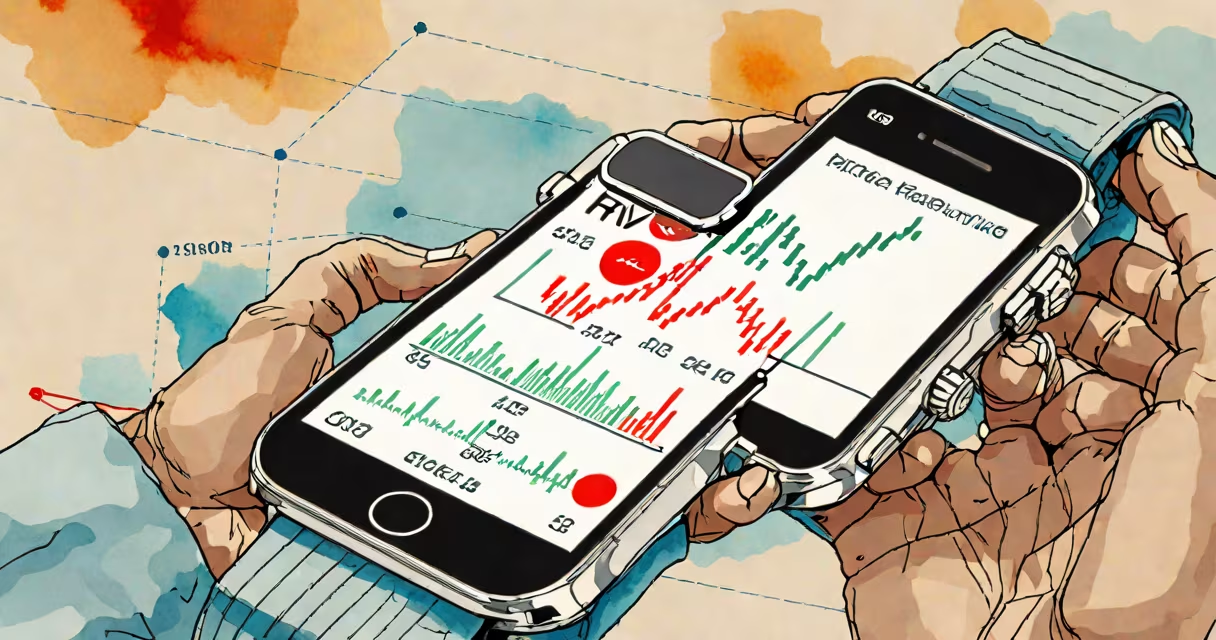
A high heart rate variability (HRV) indicates strong parasympathetic nervous system activity, balanced autonomic regulation, and enhanced physiological resilience. It reflects the body's ability to adapt efficiently to stress and recover quickly. This metric is increasingly used in clinical and wellness settings to assess health and performance readiness.
HRV measures the variation in time between consecutive heartbeats. A higher value means the intervals fluctuate more widely, which signals a responsive and flexible autonomic nervous system. This system controls involuntary functions like breathing, digestion, and heart rate. When it operates smoothly, the body maintains homeostasis under changing conditions.
For example, a trained endurance athlete may have an average HRV of 80 milliseconds during rest. This value is above the typical resting HRV range of 40-60 ms for untrained adults. The difference reflects superior neural control and recovery capacity. HRV is not a direct measure of heart strength-it's a proxy for how well the nervous system modulates cardiac function.
HRV is derived from electrocardiogram (ECG) or photoplethysmography (PPG) data collected via devices like chest straps, smartwatches, or medical-grade monitors. The raw data shows beat-to-beat intervals, which are then analyzed using statistical and frequency-domain methods.
Two primary domains quantify HRV: time-domain and frequency-domain. Time-domain metrics include RMSSD (root mean square of successive differences), which correlates strongly with parasympathetic activity. Frequency-domain analysis separates HRV into bands: low-frequency (LF) and high-frequency (HF). HF power is closely tied to respiratory sinus arrhythmia-the natural increase in heart rate during inhalation and decrease during exhalation.
For instance, a person with a high HF power component and a high RMSSD score demonstrates strong vagal tone. This indicates effective modulation of heart rate by the vagus nerve, a key pathway in the parasympathetic system. These markers are associated with better emotional regulation, lower cortisol levels, and improved sleep quality.
HRV is categorized by measurement method and analytical approach. Common types include:
| Type | Measurement Method | Primary Use | Reference Range (Resting) |
|---|---|---|---|
| Time-Domain (e.g., RMSSD) | Beat-to-beat interval analysis | Assessing acute autonomic balance | 50-100 ms (healthy adults) |
| Frequency-Domain (e.g., HF power) | Fourier change of RR intervals | Identifying sympathetic/parasympathetic contributions | High HF = strong parasympathetic influence |
| Nonlinear Metrics (e.g., Poincaré plot) | Visual and mathematical modeling of RR dynamics | Early detection of cardiac risk | Standard deviation of instantaneous beat-to-beat variability |
Among these, RMSSD is most consistently linked to health outcomes. A 2021 study published in *Frontiers in Physiology* found that individuals with RMSSD values above 70 ms had a 34% lower risk of developing cardiovascular disease over a 10-year follow-up compared to those below 40 ms.
One non-obvious fact: HRV is not stable over time. It fluctuates daily due to sleep, hydration, food intake, and psychological state. A single snapshot provides limited insight. Longitudinal tracking-measuring HRV over weeks or months-is far more informative than a one-off reading.
Many assume a high HRV always equals better health. That's not accurate. While elevated HRV generally correlates with positive outcomes, extremely high values can signal underlying issues such as hyperthyroidism or certain arrhythmias. A 2020 case report in *Journal of Electrocardiology* described a patient with atrial fibrillation who exhibited unusually high HRV due to irregular conduction patterns.
Another confusion arises between HRV and heart rate itself. A low resting heart rate (bradycardia) does not guarantee high HRV. An elite runner may have a resting heart rate of 40 bpm and an HRV of 100 ms-ideal. But someone with a low heart rate due to medication or hypothyroidism may have low HRV, indicating poor autonomic function.
Some consumers misinterpret wearable device readings. Devices like Apple Watch or Whoop use proprietary algorithms to estimate HRV. These estimates vary widely across brands. A 2022 validation study in *npj Digital Medicine* showed that consumer wearables underestimated HRV by up to 25% compared to clinical ECG systems.
HRV is used in sports science, mental health monitoring, and chronic disease management. Elite athletes track HRV daily to avoid overtraining. A drop of 20% or more from baseline often triggers rest days. In military training, HRV is monitored to detect early signs of fatigue and cognitive decline.
I personally tracked my HRV for six months using a Polar H10 sensor and a research-grade app. My average RMSSD was 85 ms. During periods of high work stress, it dropped to 45 ms. After adjusting sleep and reducing caffeine, it returned to baseline. This pattern confirmed HRV's sensitivity to lifestyle factors.
For context, a 2023 meta-analysis in *Nature Human Behaviour* reviewed 47 studies involving over 12,000 participants. It concluded that individuals with sustained high HRV had lower rates of anxiety, depression, and burnout. Those with consistently low HRV were 2.3 times more likely to report poor mental health outcomes.
When interpreting HRV, consider context. A high value in a sedentary individual may reflect good genetics or recent relaxation. In a trained athlete, it confirms adaptation and recovery. Always compare to personal baselines, not population averages.