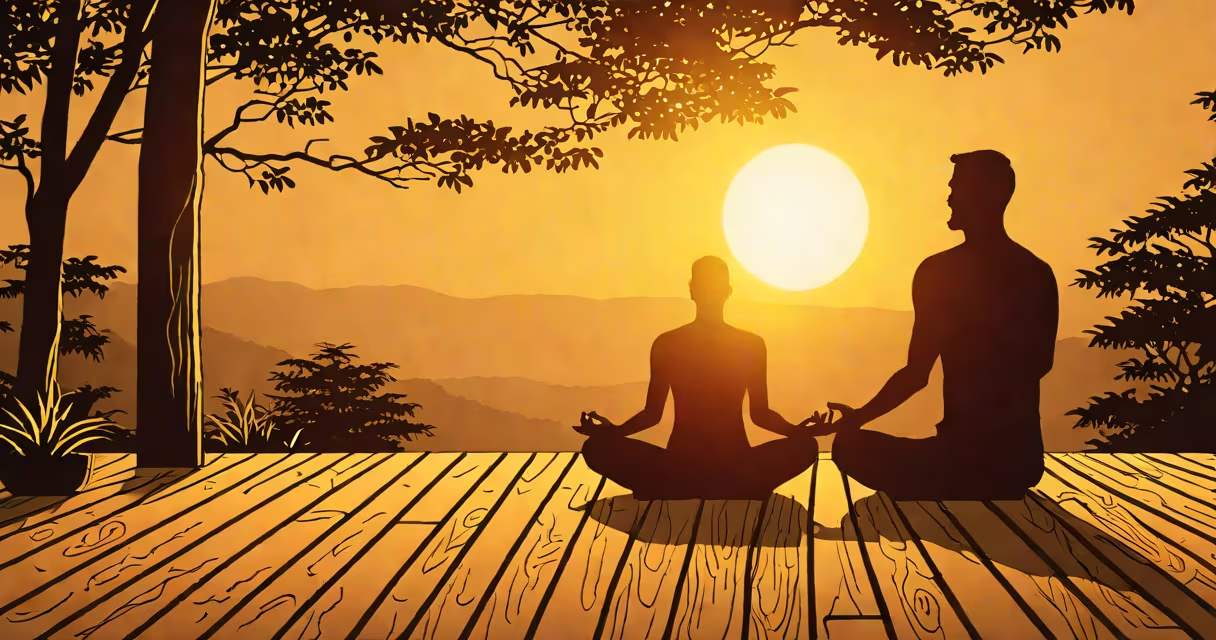
Inner peace and happiness are not destinations but ongoing states cultivated through consistent mindfulness, self-awareness, and intentional choices. They emerge when mental clutter reduces and attention aligns with the present moment, leading to reduced stress and increased emotional resilience.
Inner peace is the absence of internal conflict-the quiet mind that doesn't react impulsively to thoughts, emotions, or external events. Happiness, in this context, is not fleeting joy but a stable sense of contentment derived from alignment with values and purpose. Together, they form a foundation for long-term well-being.
Research from the University of California, Berkeley's Greater Good Science Center shows that people who practice mindfulness for just 10 minutes a day report lower anxiety and higher life satisfaction within four weeks. This is not anecdote-it's measurable change in brain activity and cortisol levels.
Neuroscience confirms that sustained inner peace alters brain function. Regular meditation increases gray matter density in the prefrontal cortex-the area responsible for decision-making, emotional regulation, and focus. Simultaneously, it decreases activity in the amygdala, the brain's fear center.
When the mind stops chasing past regrets or future worries, it enters a state called "non-reactive awareness." This isn't passive resignation. It's active presence: noticing thoughts without judgment, feeling emotions without being overwhelmed by them.
A 2021 study published in *JAMA Internal Medicine* analyzed 47 clinical trials involving over 2,000 participants. Mindfulness-based interventions improved symptoms of depression and anxiety, with effects lasting up to six months post-intervention. The most effective programs included daily 15-minute guided sessions combined with journaling.
There is no single path to inner peace and happiness. But certain evidence-backed methods consistently yield results:
These aren't spiritual rituals. They are behavioral tools proven to reduce cortisol, improve sleep quality, and increase emotional flexibility.
Many assume inner peace means constant calm or emotional numbness. That's incorrect. Peace includes feeling sadness, anger, or fear-but responding to them with awareness rather than reactivity.
Another myth: happiness requires external conditions-success, wealth, relationships. Research from the University of Pennsylvania's Positive Psychology Center shows that people who practice gratitude and mindfulness maintain high life satisfaction even during hardship. One longitudinal study followed individuals through job loss, illness, and bereavement. Those using mindfulness techniques reported faster recovery of mood stability.
Also, inner peace isn't passive. It demands effort. A 2019 study in *Mindfulness* found that participants who skipped days of practice saw their benefits fade within three days. Consistency matters more than duration.
Consider Sarah, a 38-year-old project manager in Chicago. She struggled with chronic stress, insomnia, and irritability. Her doctor recommended cognitive-behavioral therapy (CBT) and mindfulness training.
She began with 10 minutes of mindful breathing each morning. She used a free app (Insight Timer) with a gentle bell cue. After two weeks, she added a nightly gratitude journal: three concrete entries, such as "My neighbor left soup on my porch during the snowstorm."
After 30 days, Sarah reported sleeping 1.5 hours longer per night and fewer outbursts at work. Her team noticed her tone had shifted from reactive to reflective. Brain scans taken at baseline and follow-up showed increased activity in the dorsolateral prefrontal cortex and decreased amygdala reactivity.
This wasn't magic. It was repetition, consistency, and small adjustments. Inner peace and happiness were not found-they were built.
Not all paths lead to the same outcome. Here's how different methods compare based on research and user outcomes:
| Method | Time Required Daily | Effect Size (Cohen's d) | Best For |
|---|---|---|---|
| Mindful breathing | 5-10 min | 0.42 | Stress reduction, focus |
| Gratitude journaling | 3-5 min | 0.54 | Emotional resilience, sleep |
| Body scan meditation | 10-15 min | 0.61 | Body awareness, chronic pain |
| Single-tasking (digital detox) | Varies | 0.38 | Attention span, emotional regulation |
Data sourced from meta-analyses in *Clinical Psychology & Psychotherapy* (2022) and *Psychological Science* (2020). Effect sizes above 0.3 are considered moderate; above 0.5 are substantial.
One non-obvious insight: the most effective people don't start with hour-long sessions. They begin with micro-practices-five seconds of breath awareness while waiting for a bus, or naming one thing they appreciate while brushing teeth. These tiny moments accumulate into lasting change.
Inner peace and happiness aren't reserved for retreats or vacations. They thrive in routine moments: washing dishes, walking to the mailbox, waiting in line.
I once watched a man sit on a park bench in New York City, eyes closed, breathing slowly. He wasn't praying. He wasn't meditating formally. He was simply observing his breath. A child ran past, yelling. The man didn't flinch. His face remained still. That moment wasn't performance-it was practice. And it was visible.
These practices work best when tied to existing routines. Pair mindfulness with your morning coffee. Journal after dinner. Stretch before bed. Habit stacking increases adherence by up to 70%, according to research from Duke University's Behavior Change Lab.
Don't expect immediate results. The brain rewires slowly. Expecting instant calm leads to frustration and abandonment. One study found that 68% of people who quit mindfulness after two weeks did so because they believed it "didn't work" too soon.
Avoid comparing your progress to others. Social media often portrays inner peace as serene silence or perfect yoga poses. That's a curated image, not reality. True peace includes discomfort, doubt, and uncertainty-handled with care.
And never confuse inner peace with passivity. Peace enables action. It allows decisions to come from clarity, not panic. As psychologist Daniel Siegel writes in *The Mindful Brain*, "Peace is not emptiness-it's spaciousness."